Karakol, Kyrgyzstan to Tamga, Kyrgystan
I guess this map has trouble finding Kyrgyz towns?
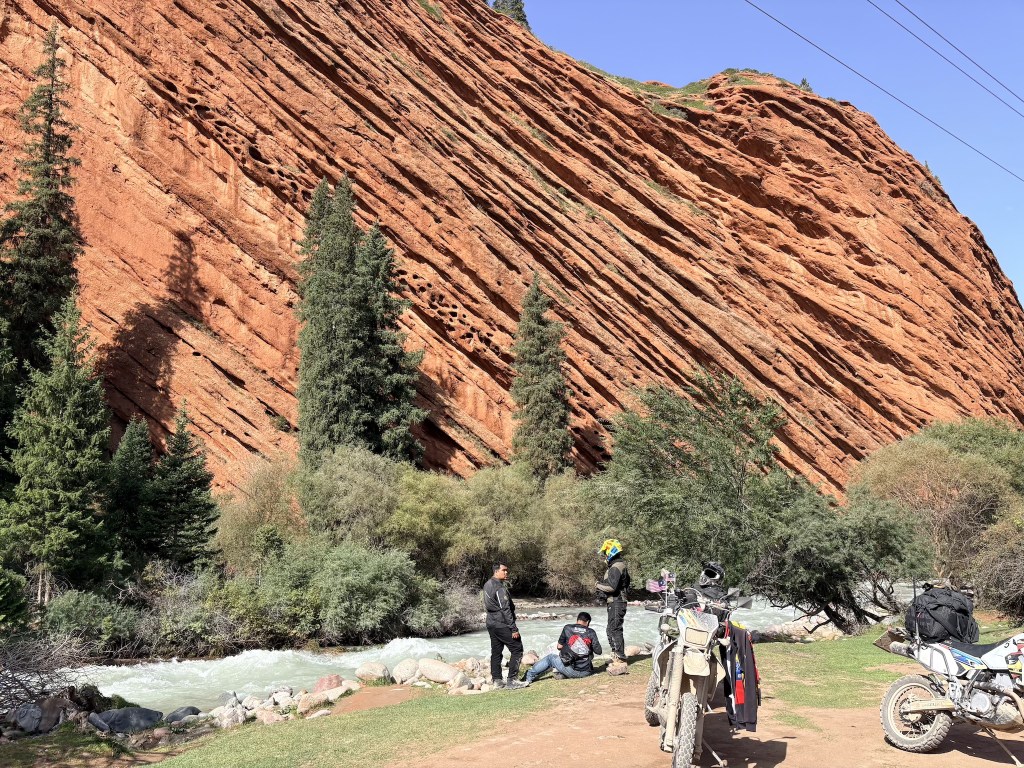
Jeti-Oguz Gorge
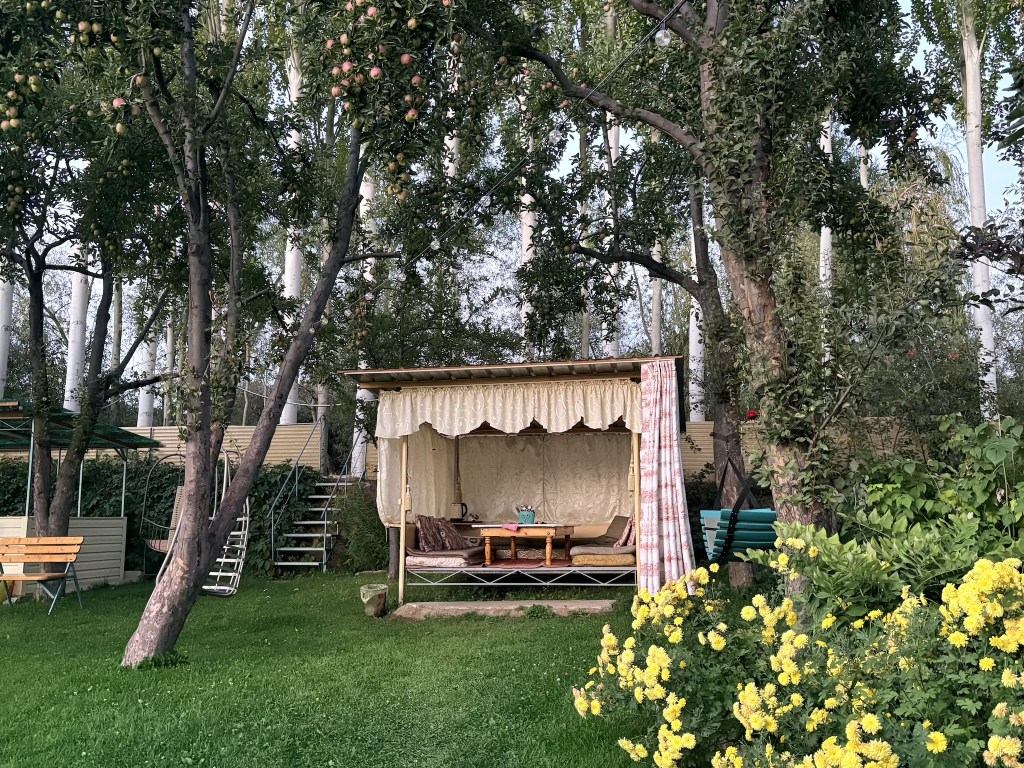
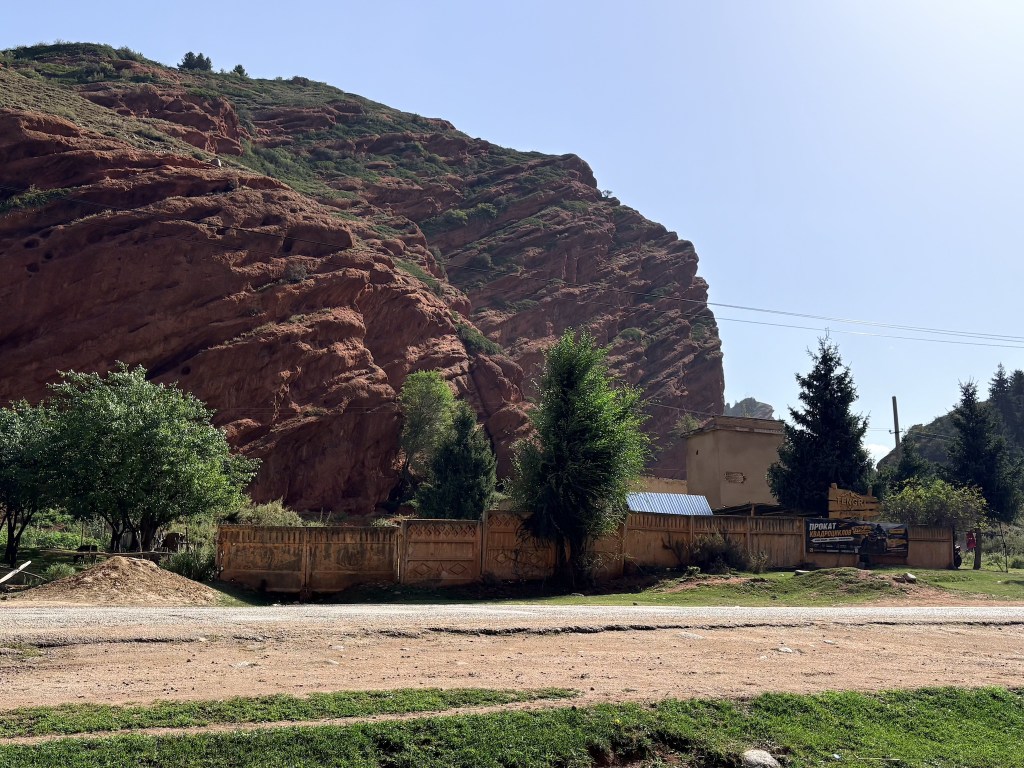
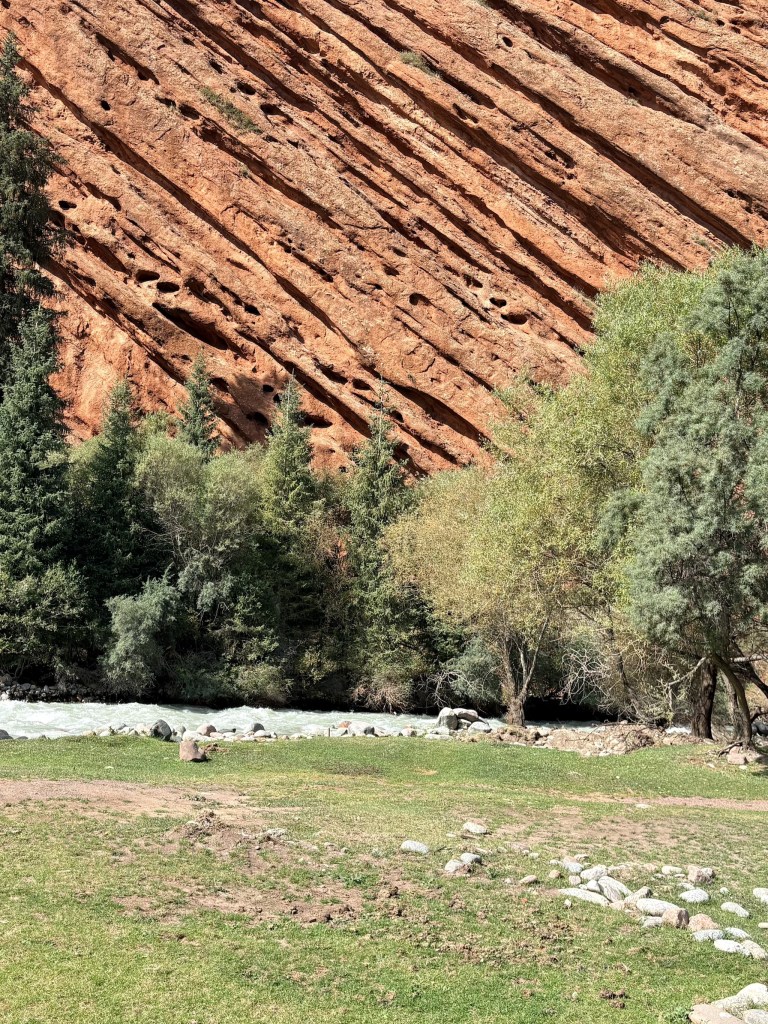
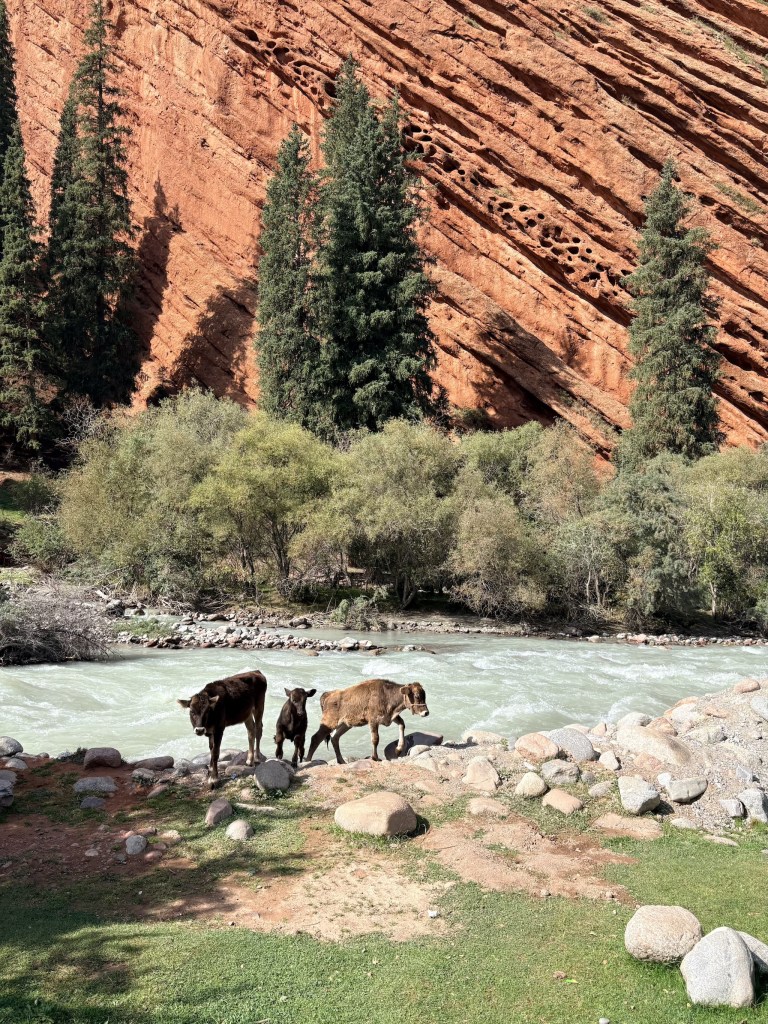
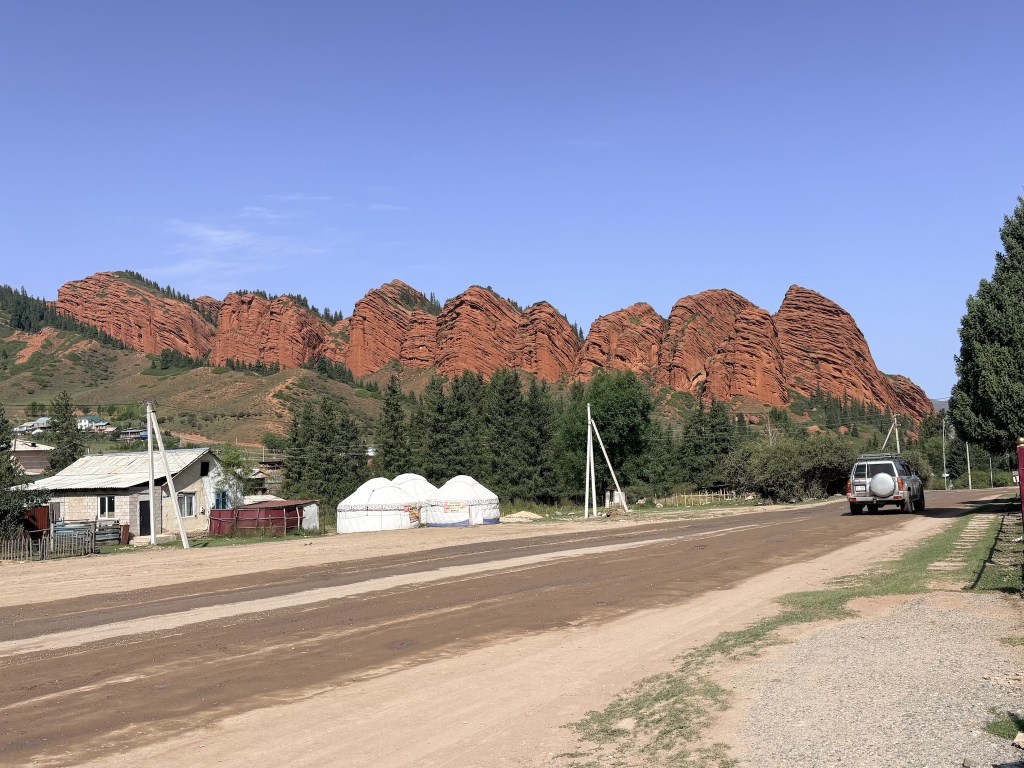
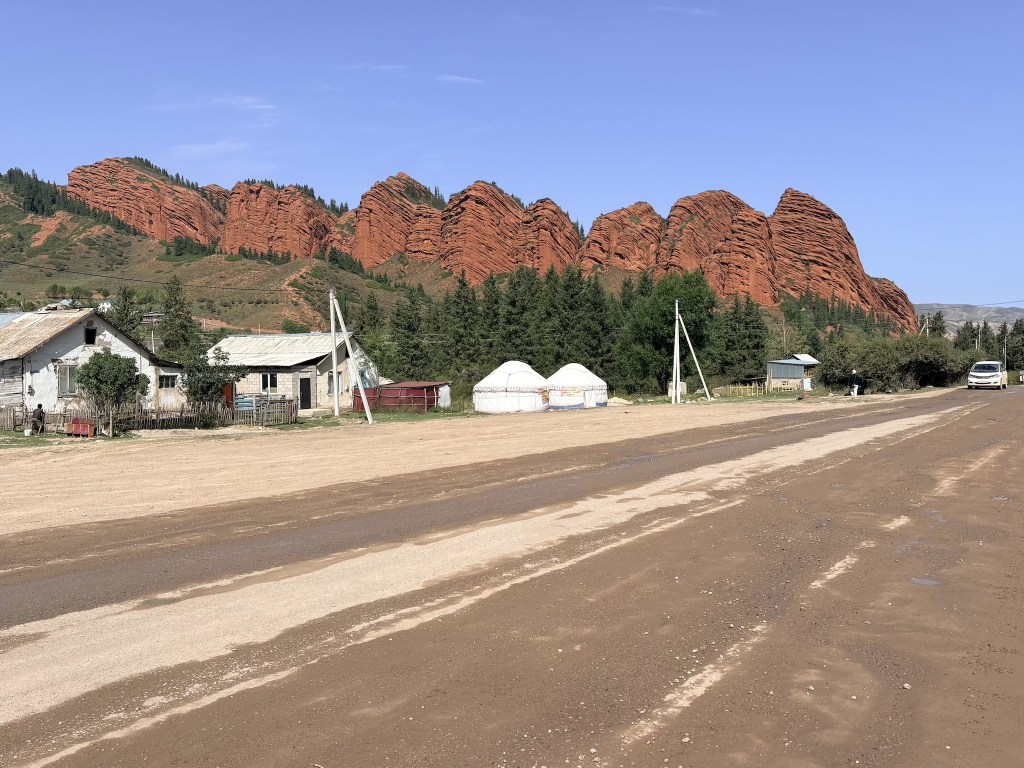
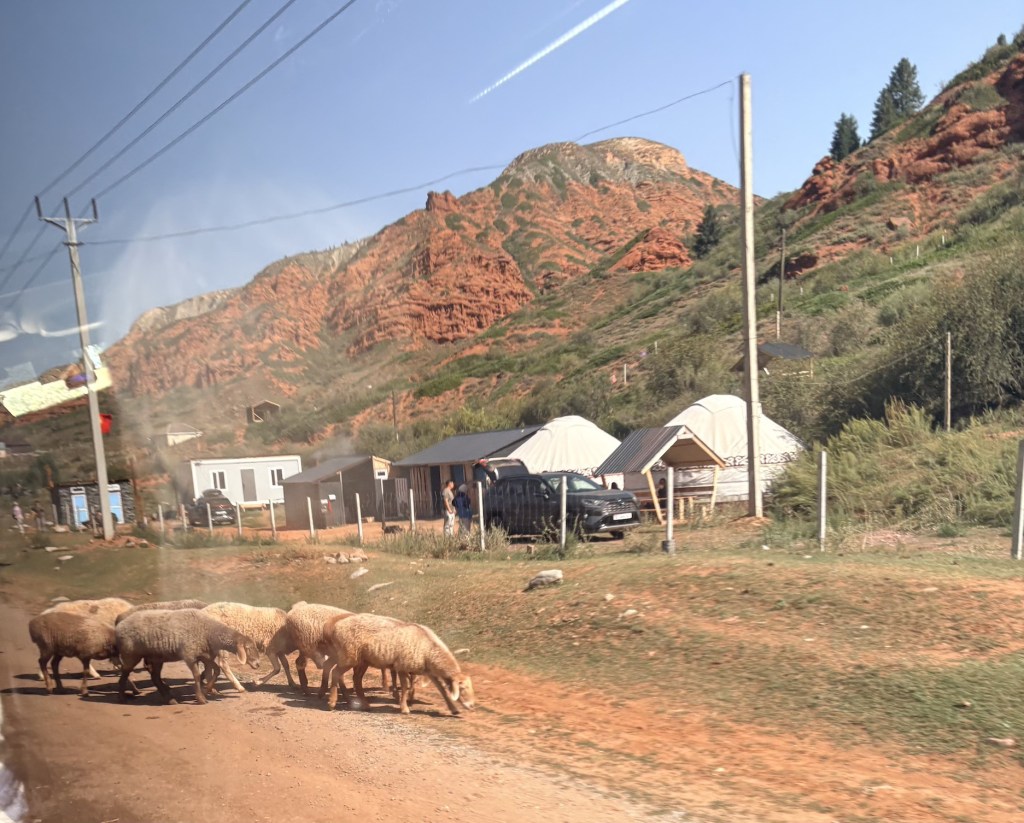
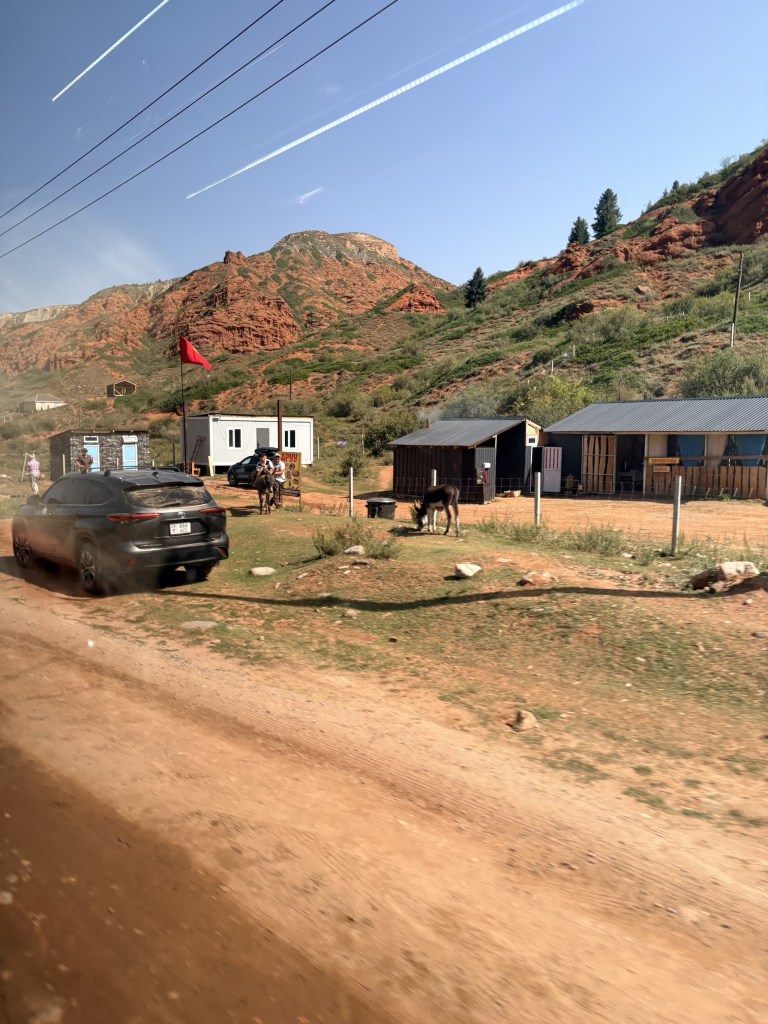
Today we drove from Karakol to the lovely guest house of Anna and Sergei in Tamga Village by Lake Issyk Kul. Came across a group of guys who rode dirt bikes here from Malaysia. That’s around 5,000 km/3,000 mi! Stopped to admire the Seven Bulls formation.
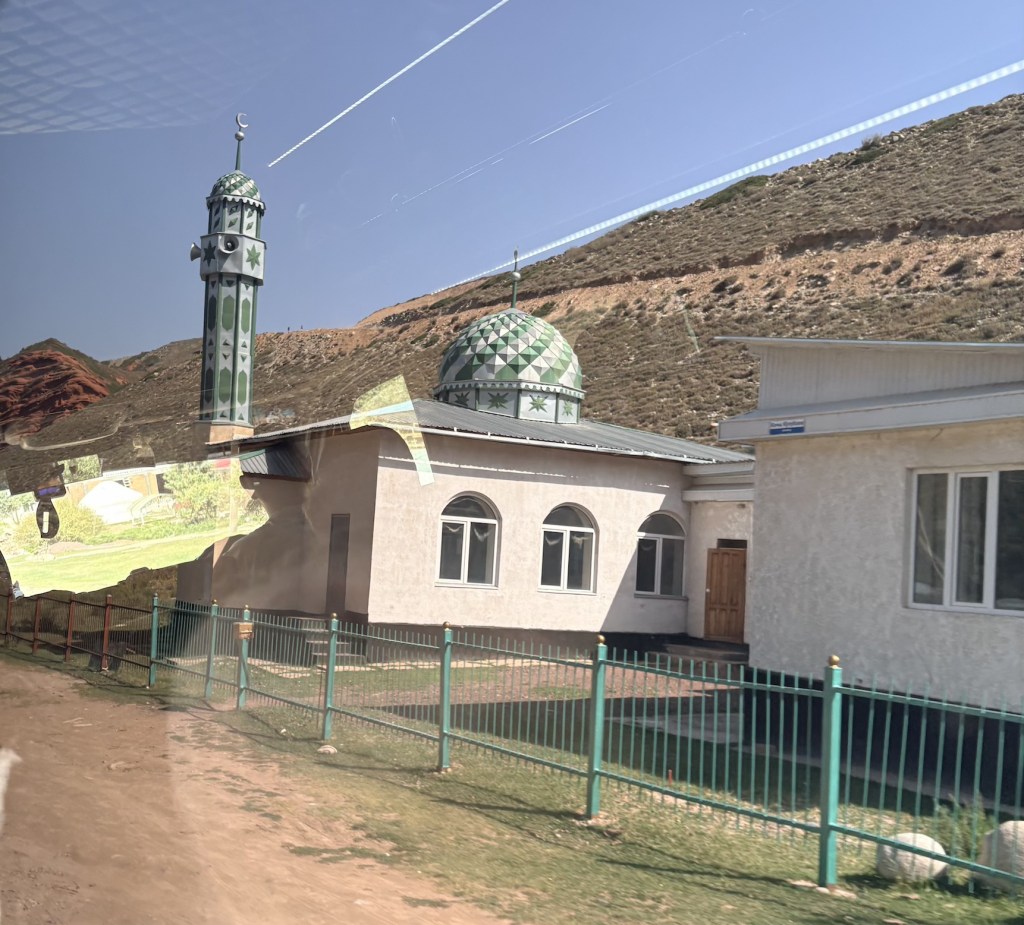
From what we were told the Saudis are paying to build mosques in the villages (example below). Turkiye builds some religious-focused schools. Qatar and UAE help with religious buildings. Only China helps with infrastructure. Half the national debt is to China.
“We’ve got Angela Davis peak, Boris Yeltsin peak…we’ve got plenty to name”
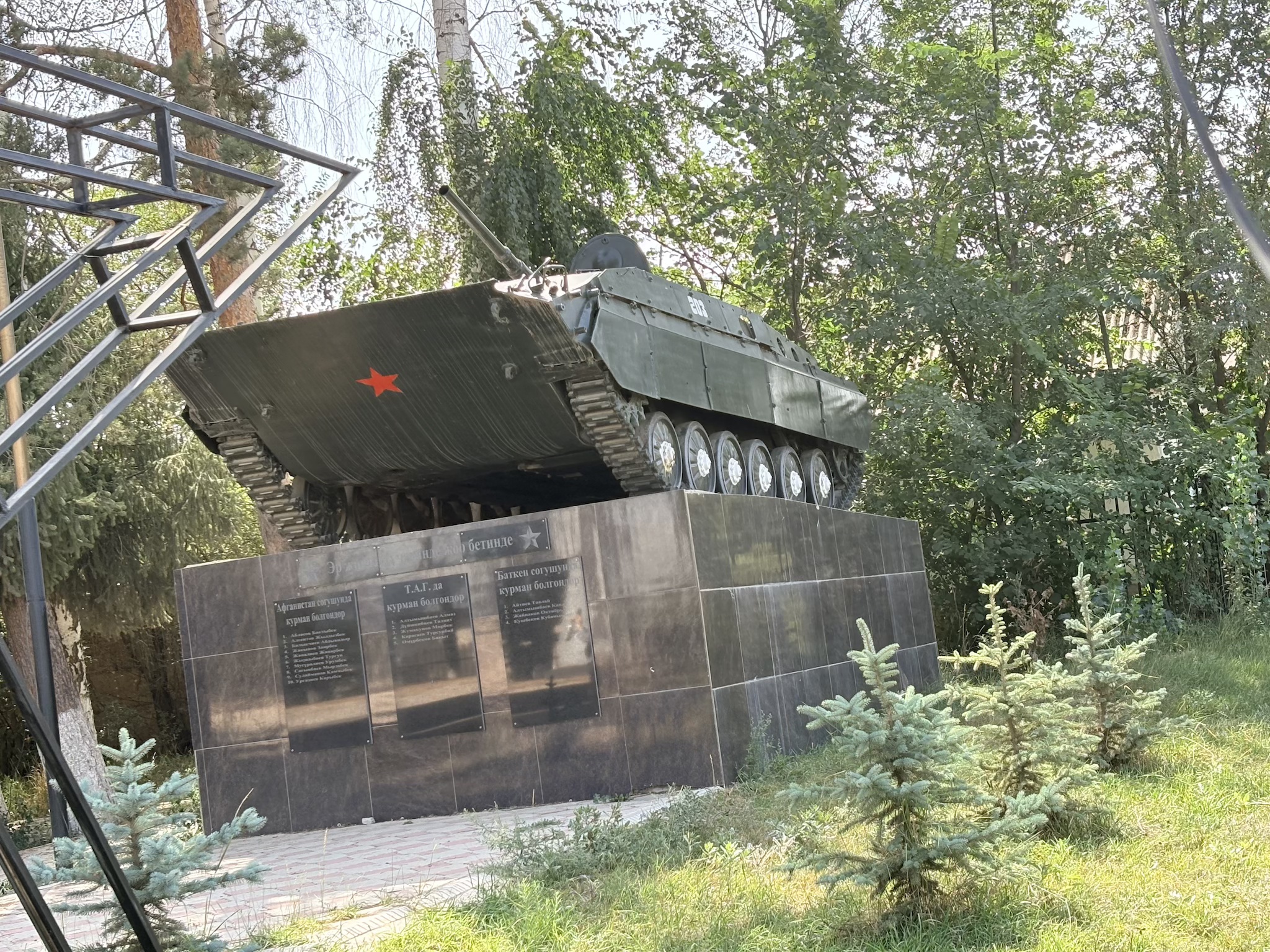
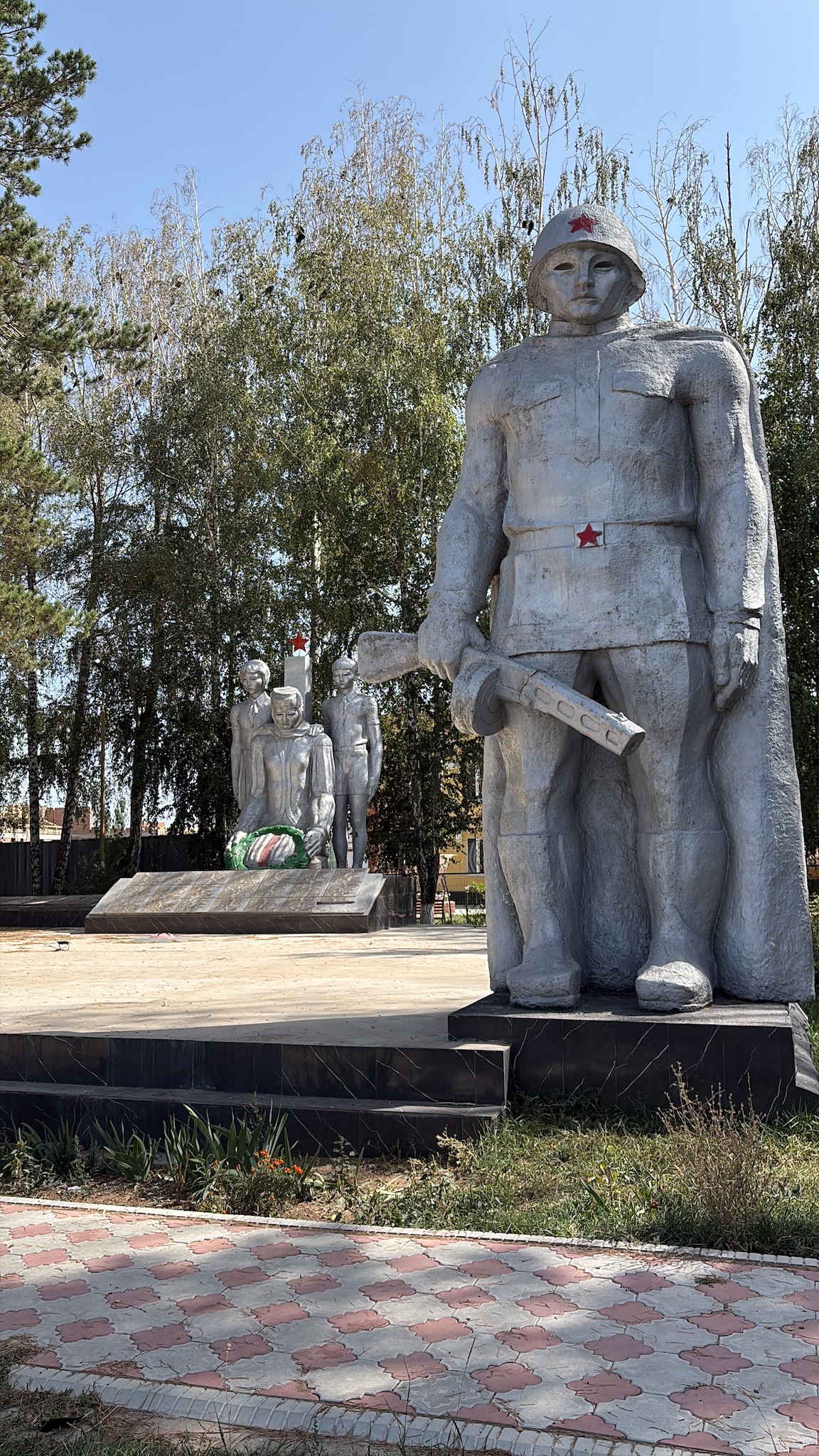
War memorial
We are told in Kyrgyzstan they are not familiar with the term “World War II”. It is called The Great Patriotic War. 10% of the Kyrgyz population died. The sculpture represents the man defending his family and them mourning his death. The plaques below the tank are men who died in later battles (i.e., Afghanistan). But the right-most plaque are the names of four men who died in the 2002 Al Qaida invasion of Kyrgyzstan. I admit I know nothing about that. Feeling like the self-centered American I am.
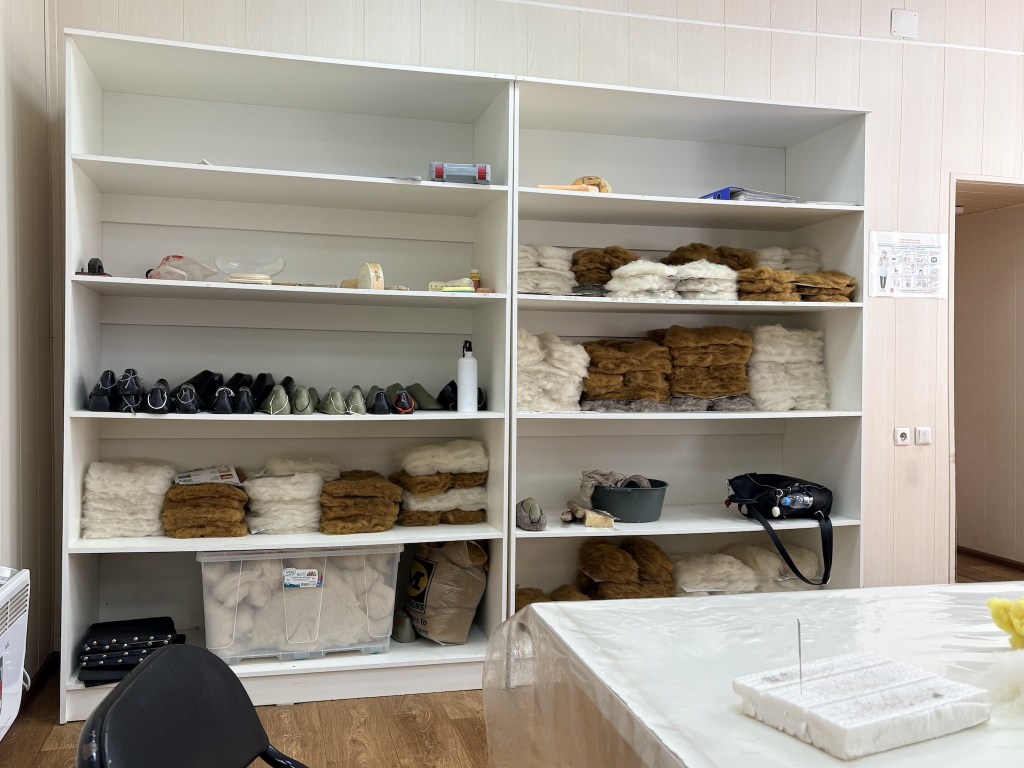
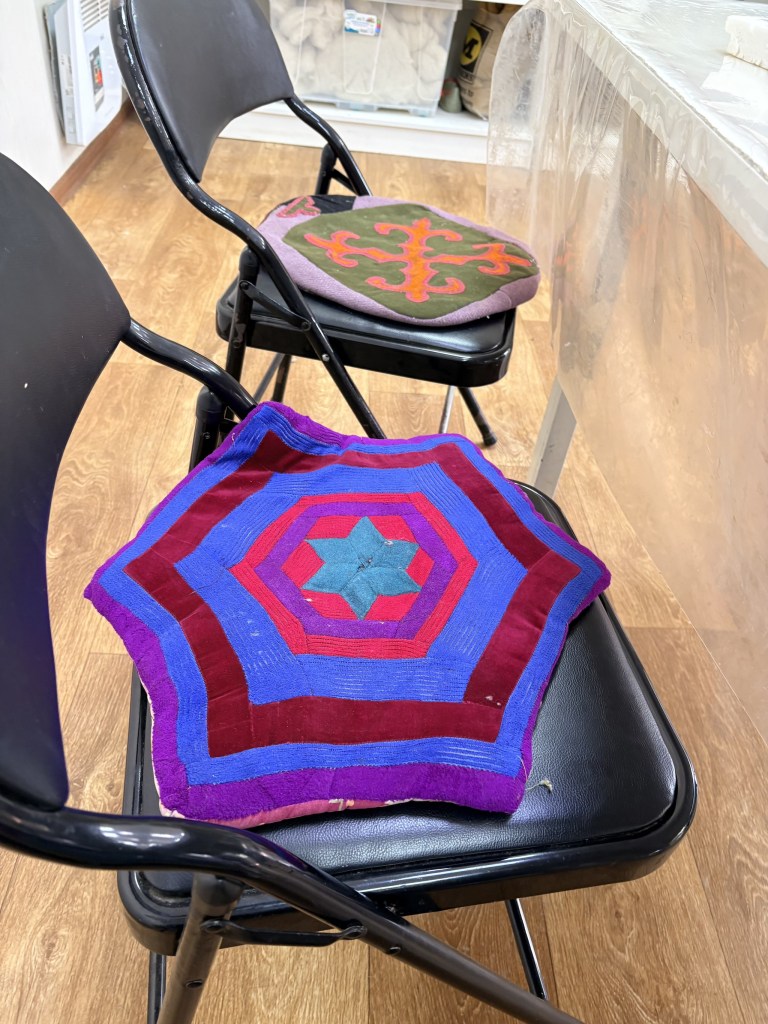
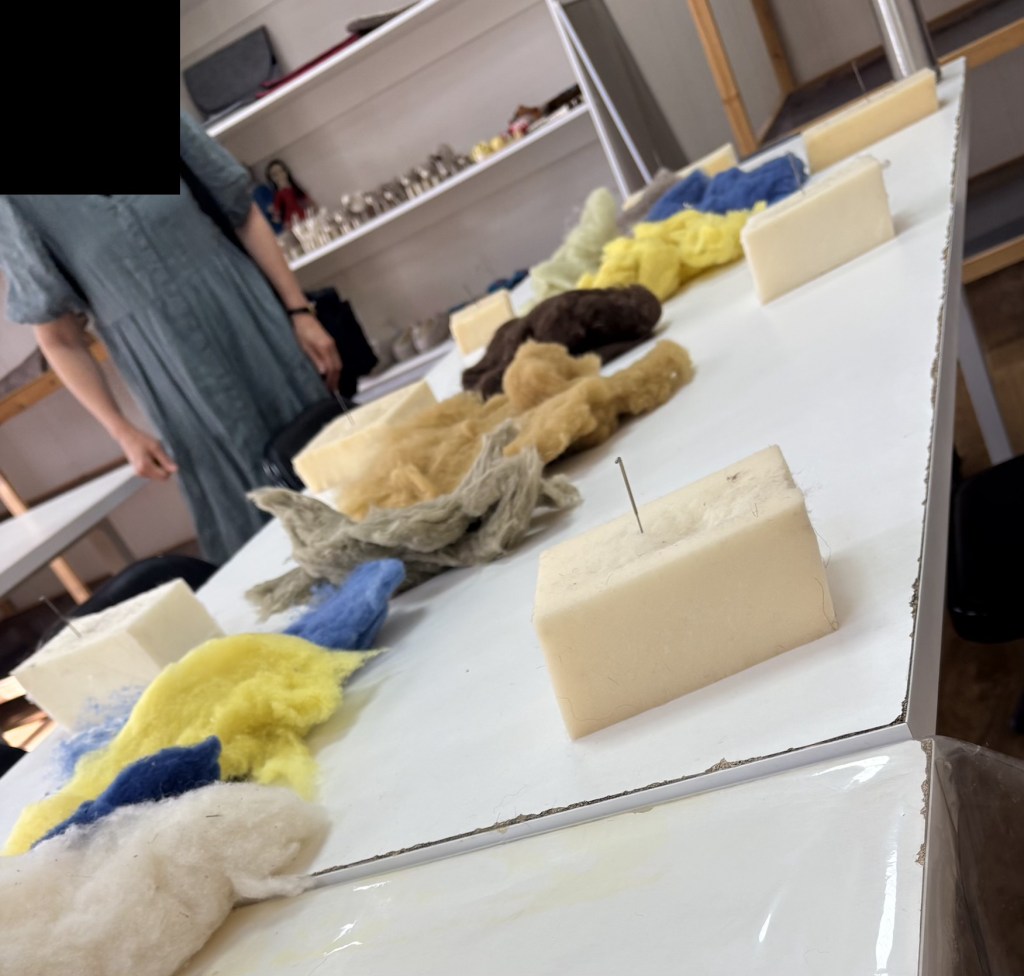
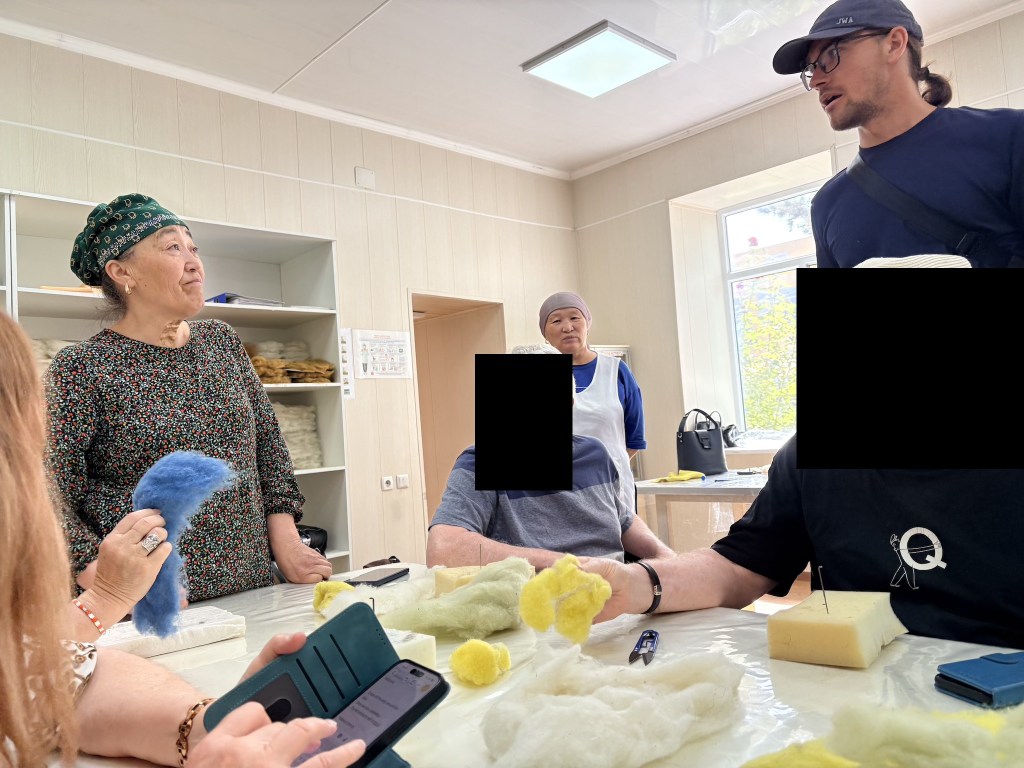
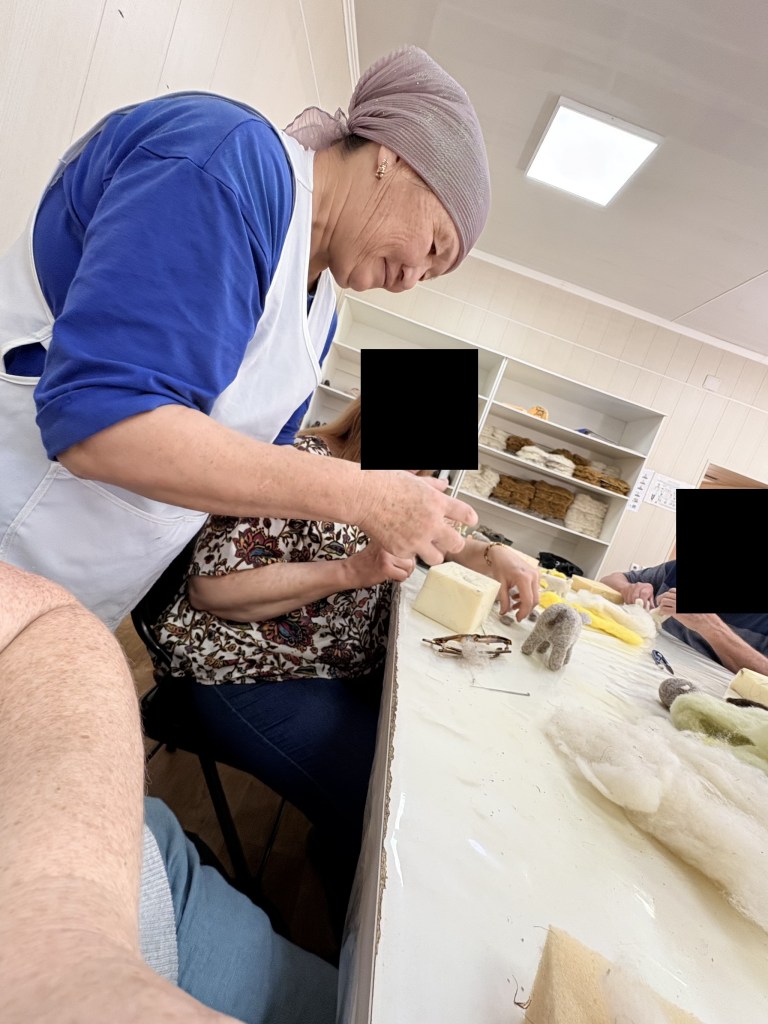
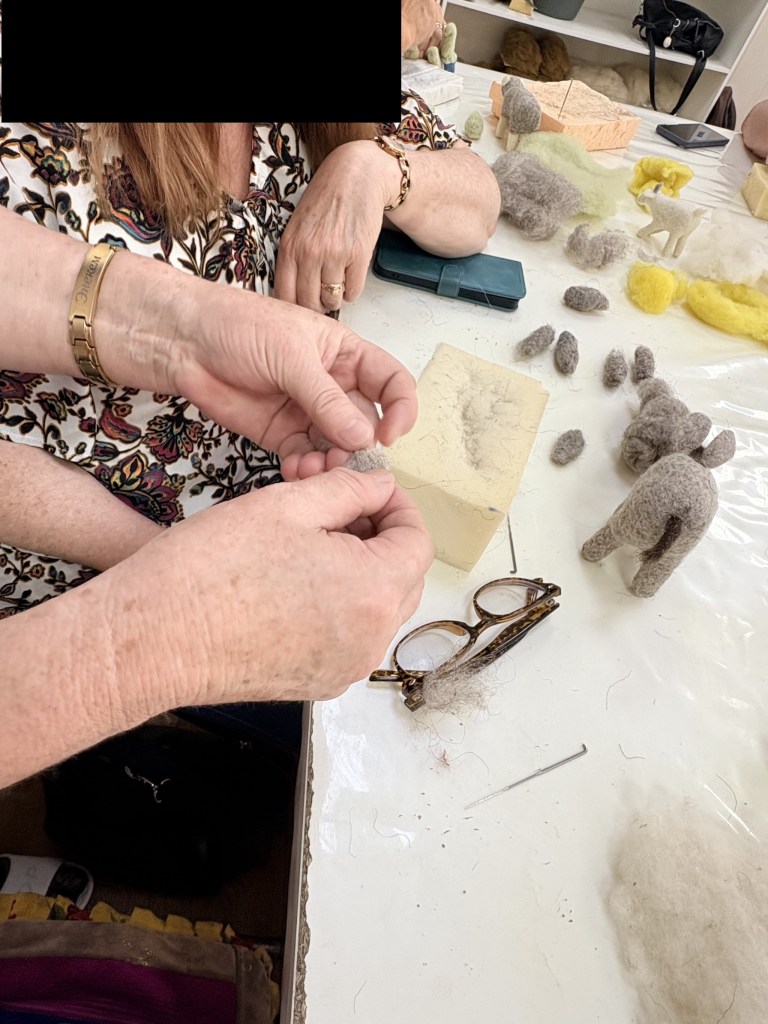
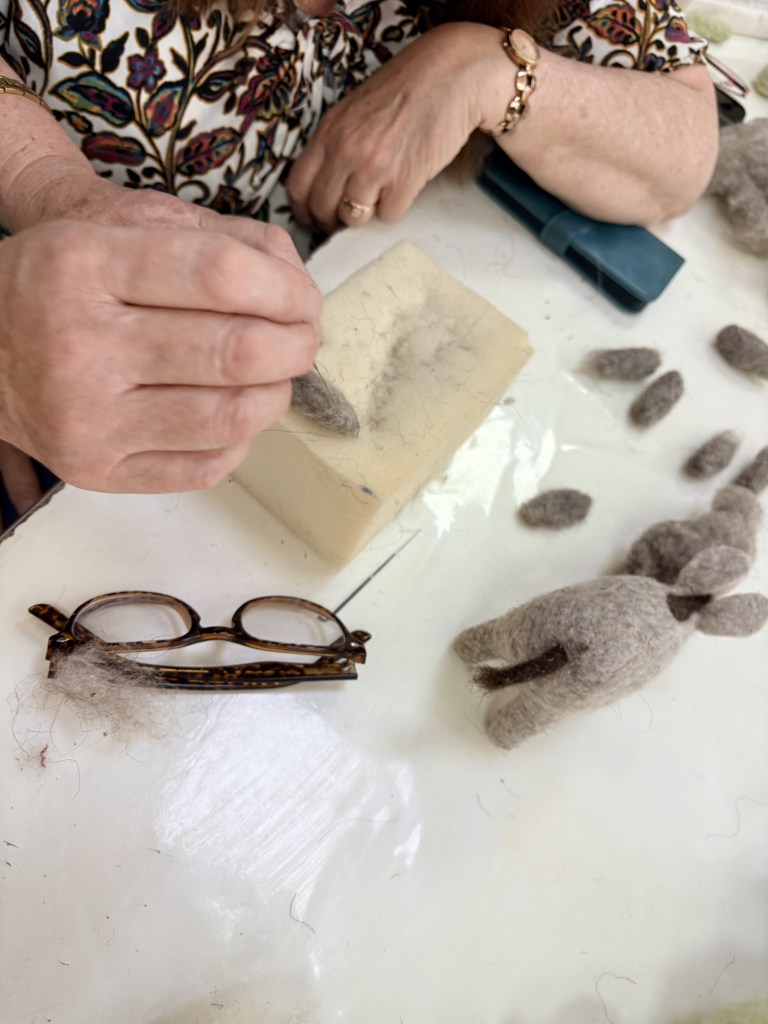
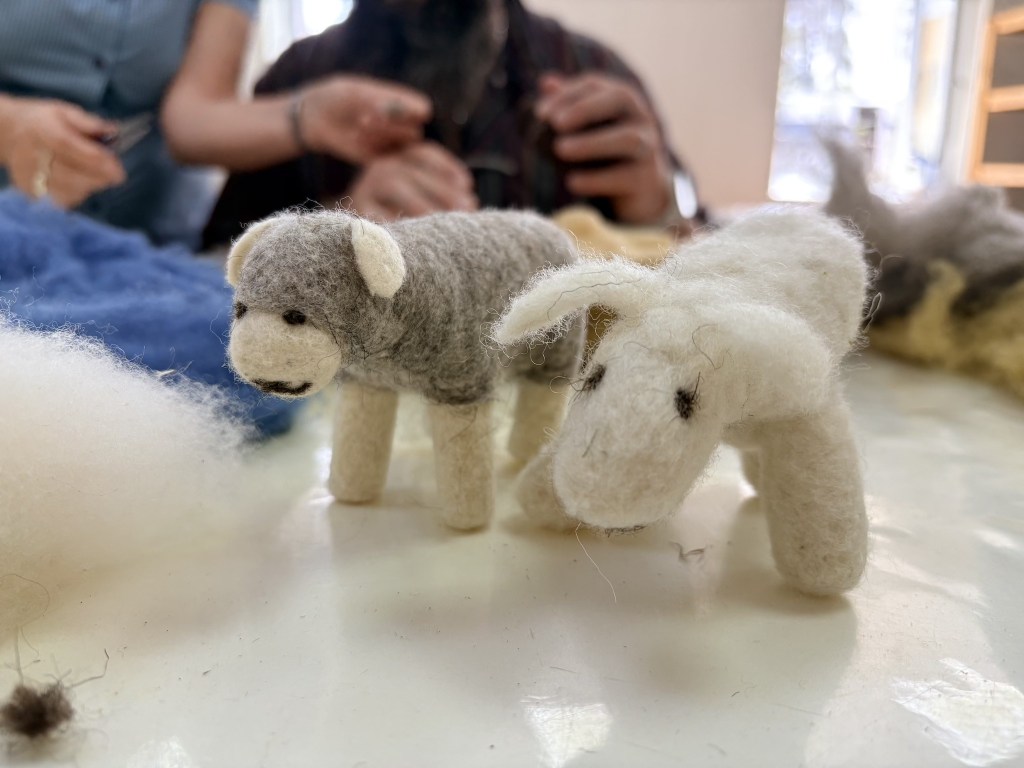
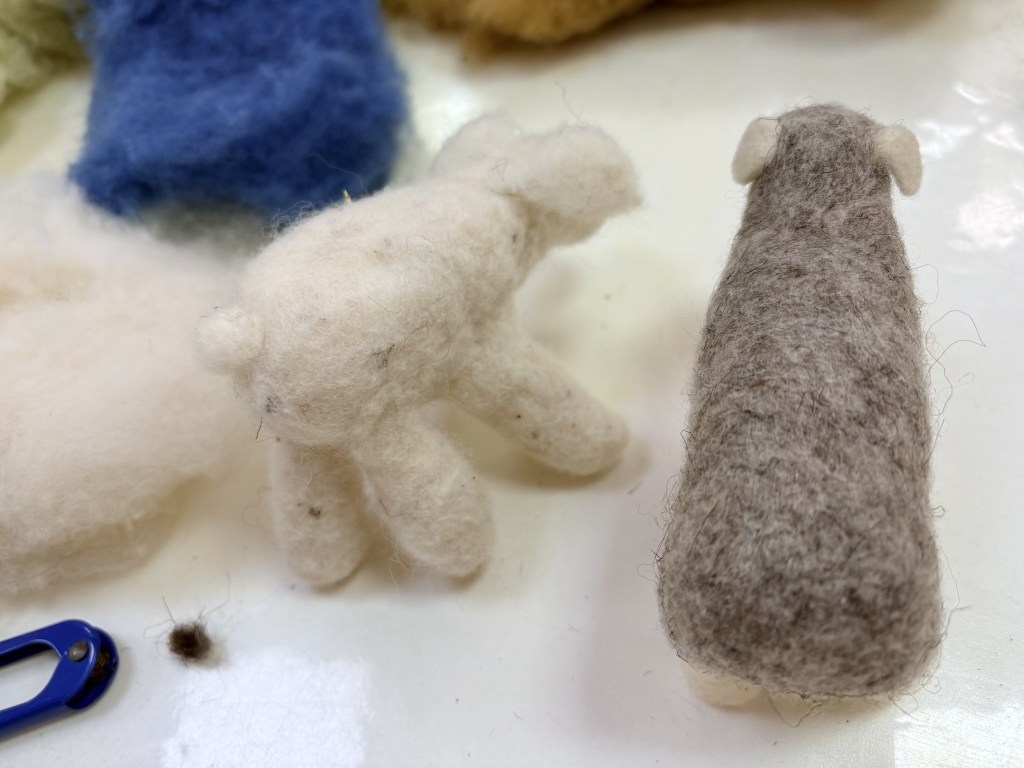
Felt Workshop
A highlight of our trip was this visit to the Jety-Oguz Community Felt Workshop in Yrdyk. It is a cooperative of women who create felt animals to sell. They let us try our hand. Mine is the white sheep next to the brown sheep done by the craftswomen. Admittedly I ran short on time – so I rushed the next project, which turned out to be unnecessary. Oh well. Still had loads of fun and a little souvenir to take home.
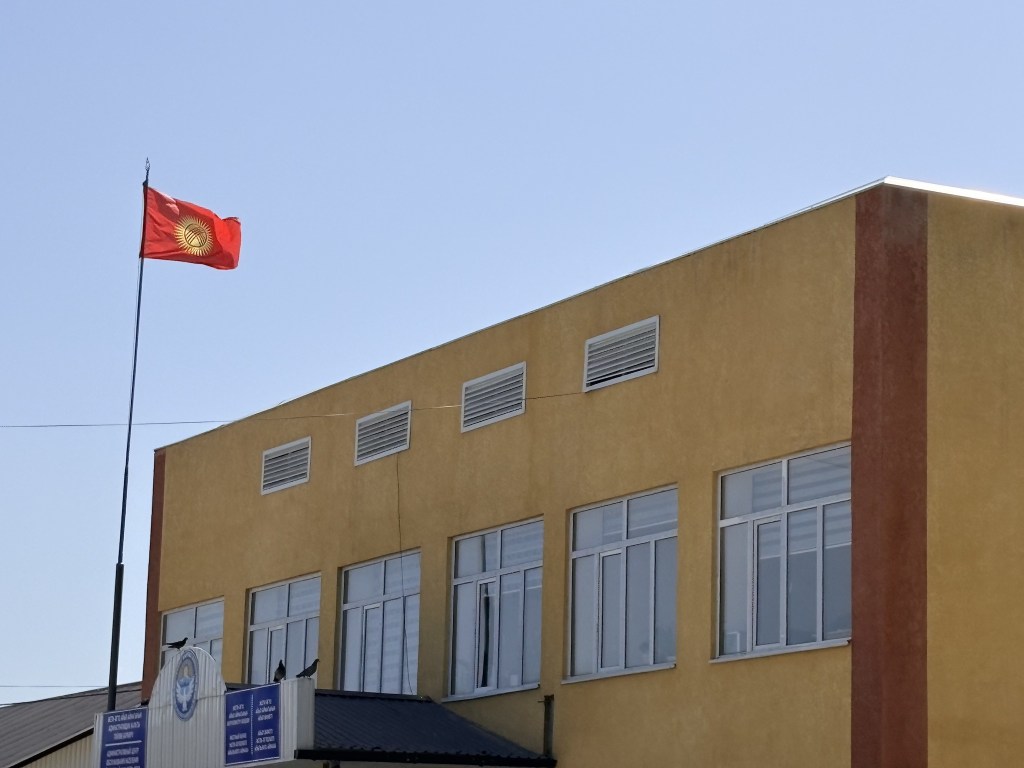
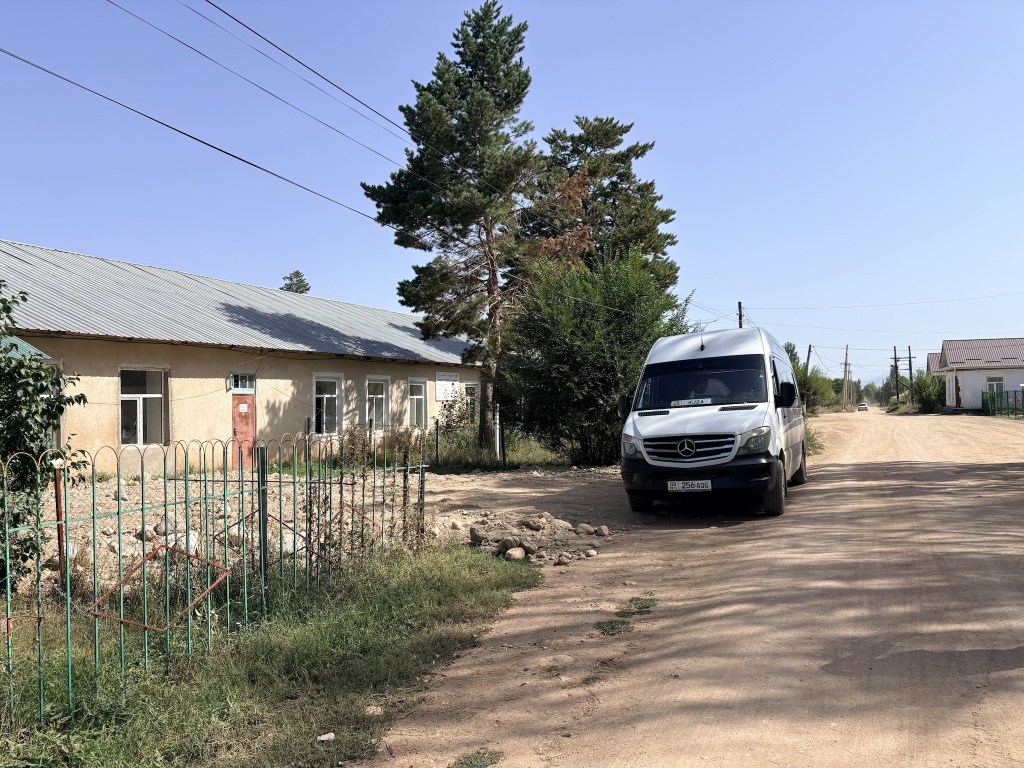
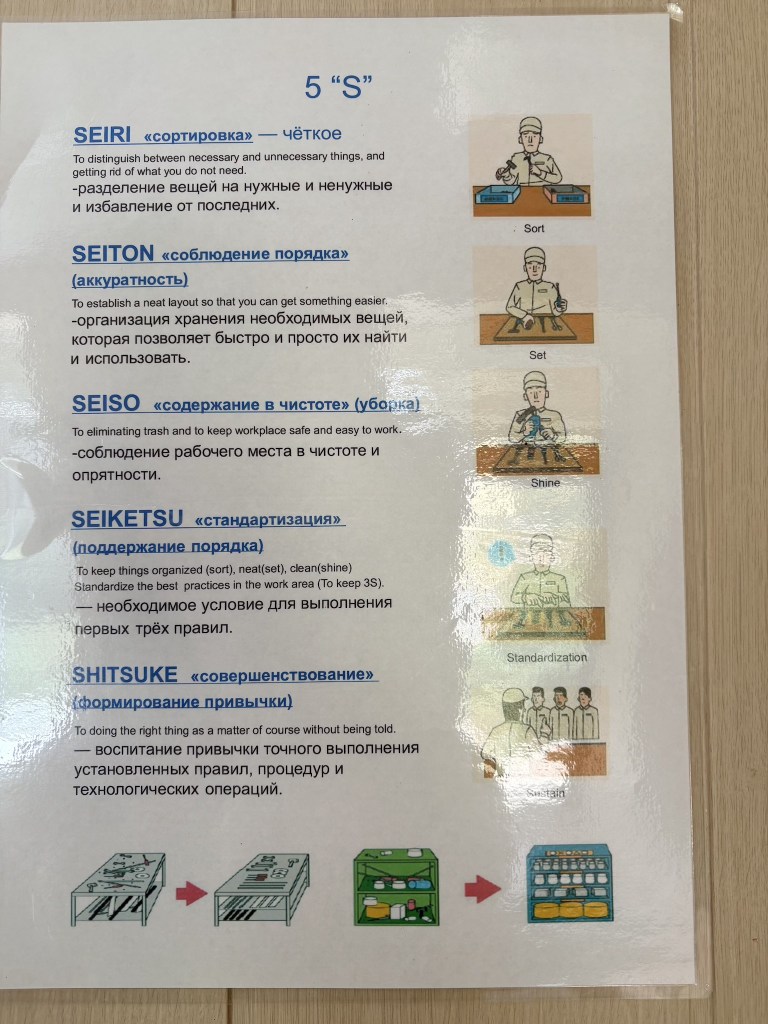
As an American growing up during the Cold War, I found this sign fascinating!
Dungan Village lunch
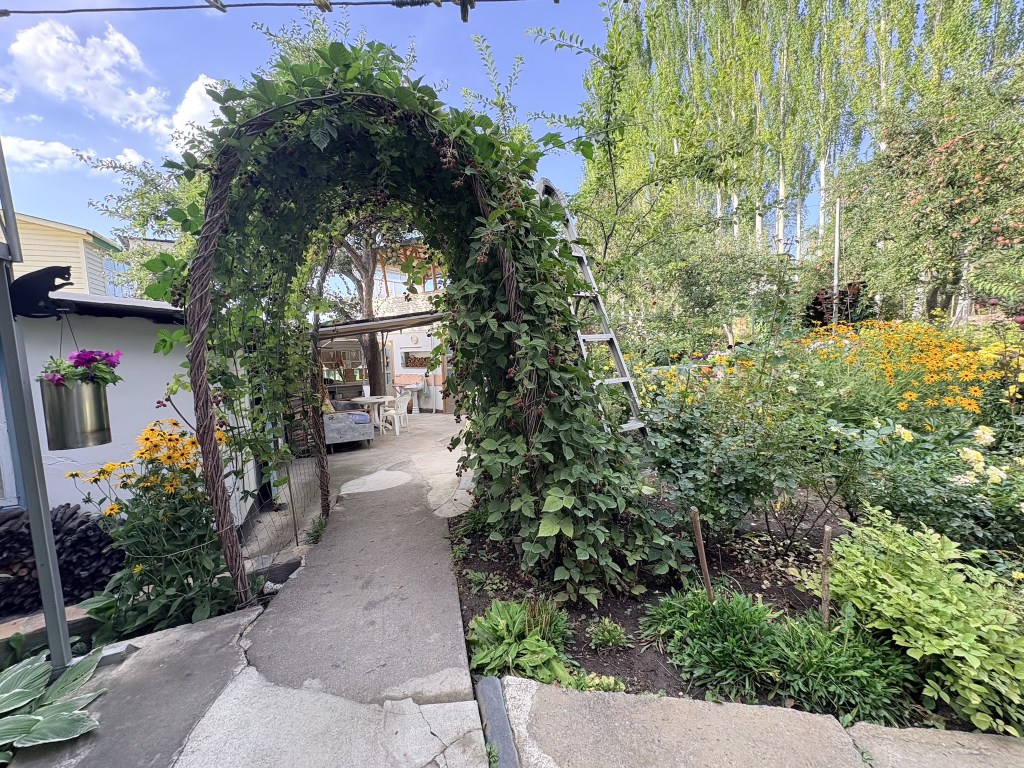
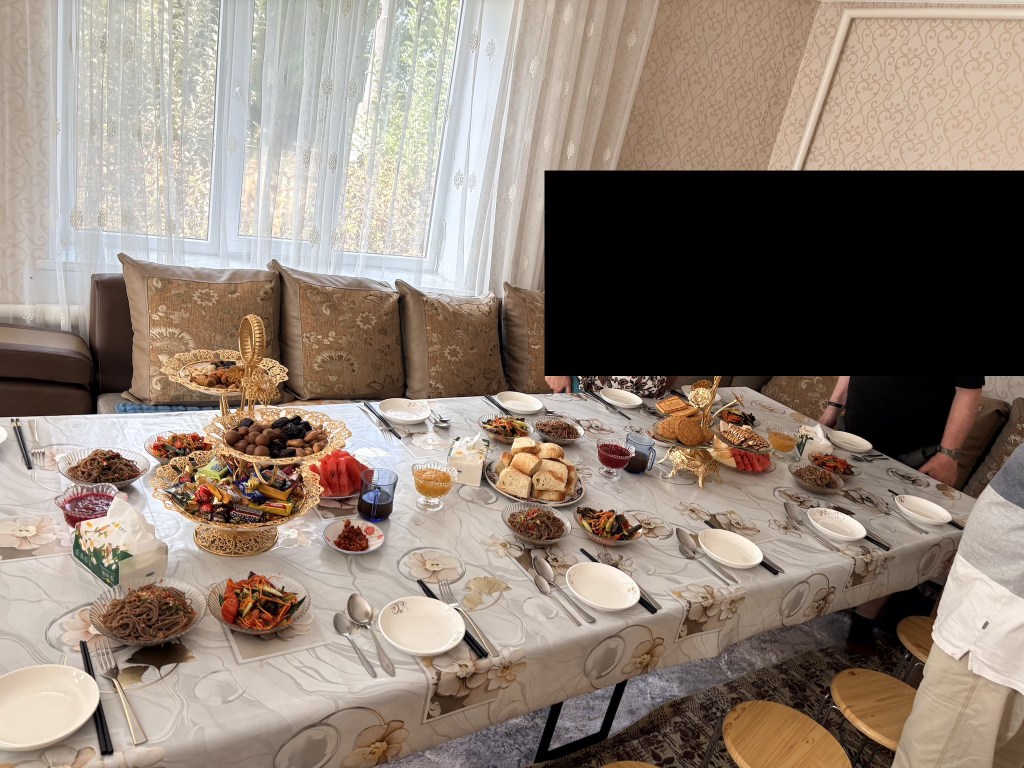
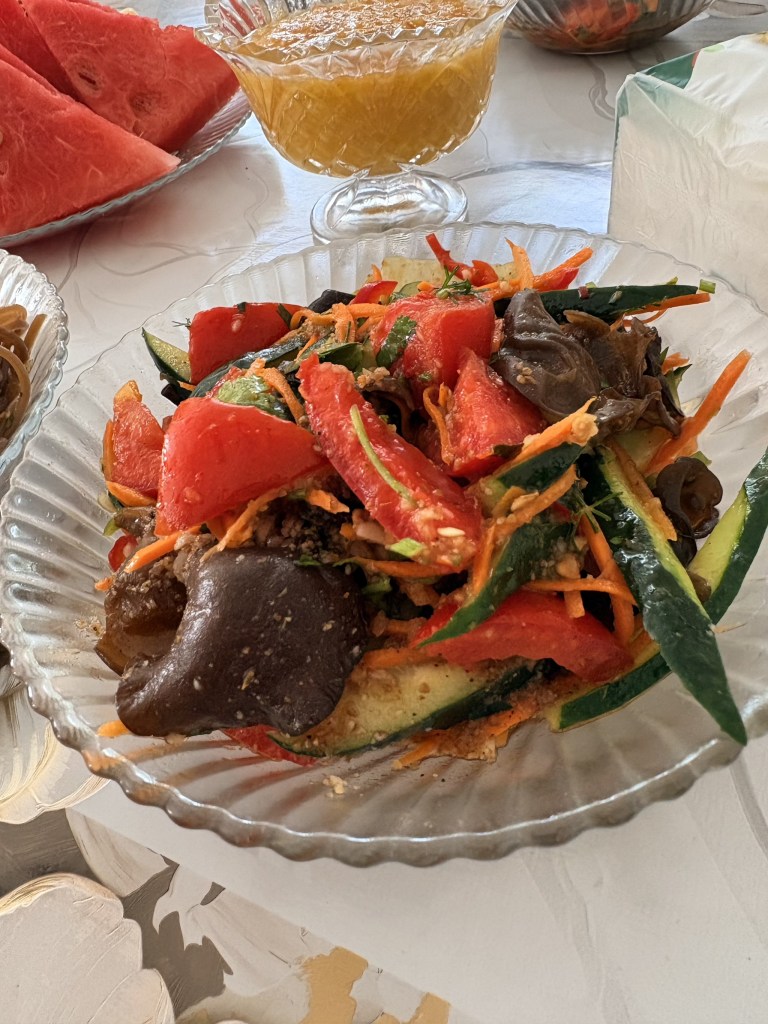
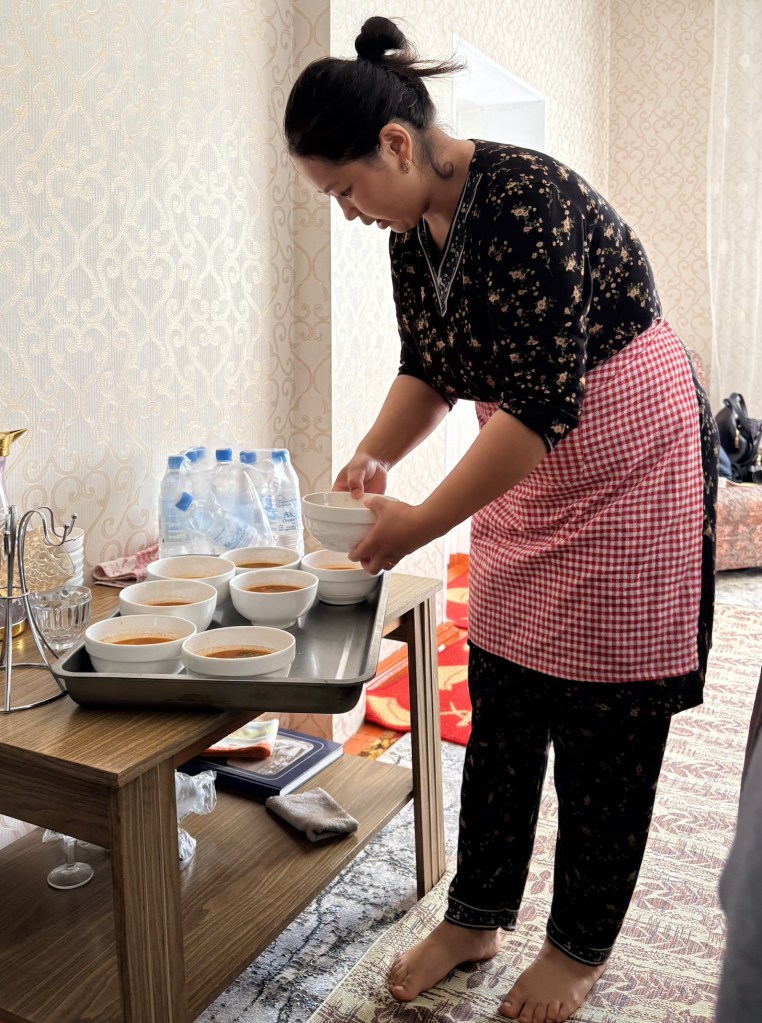
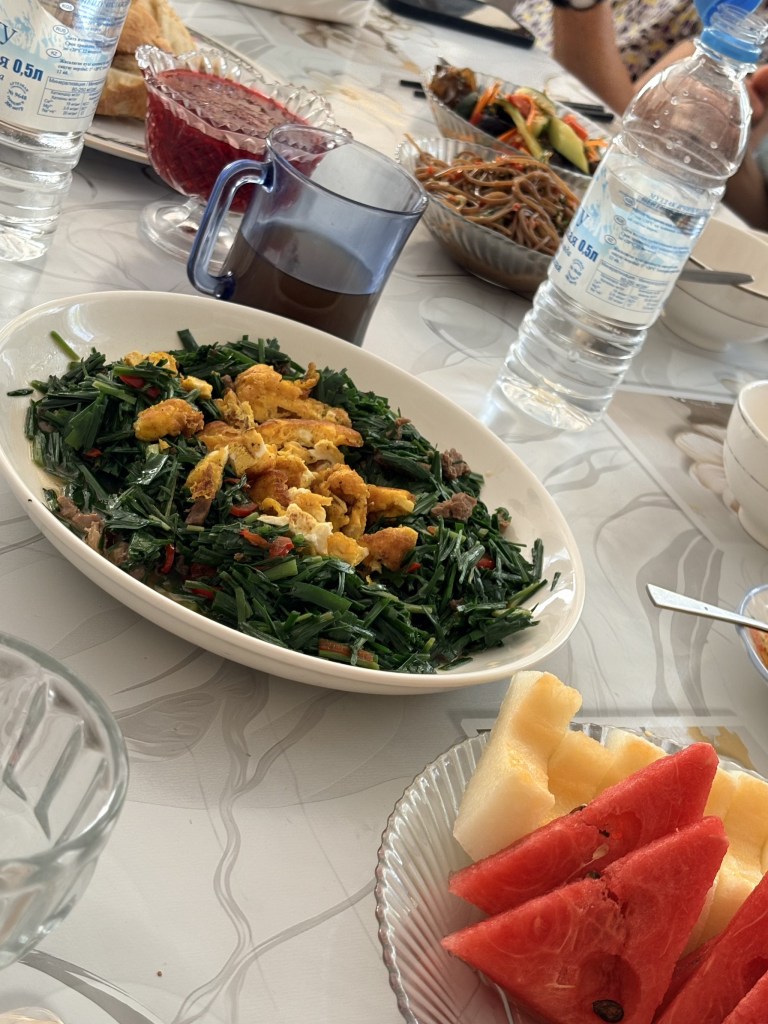
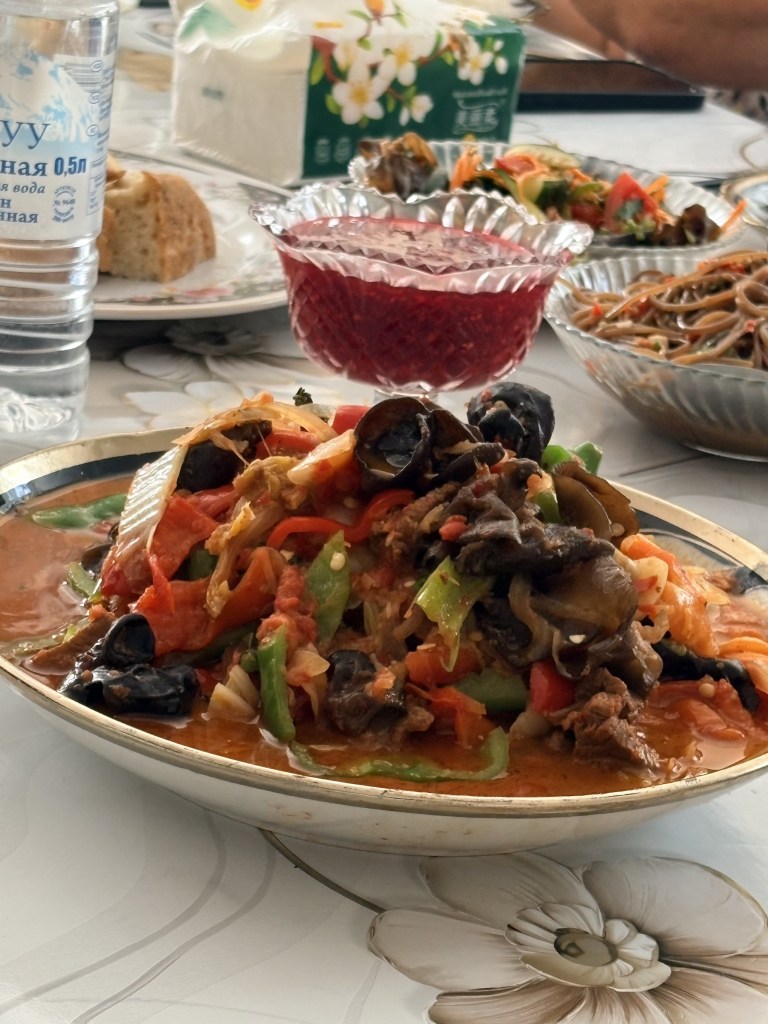
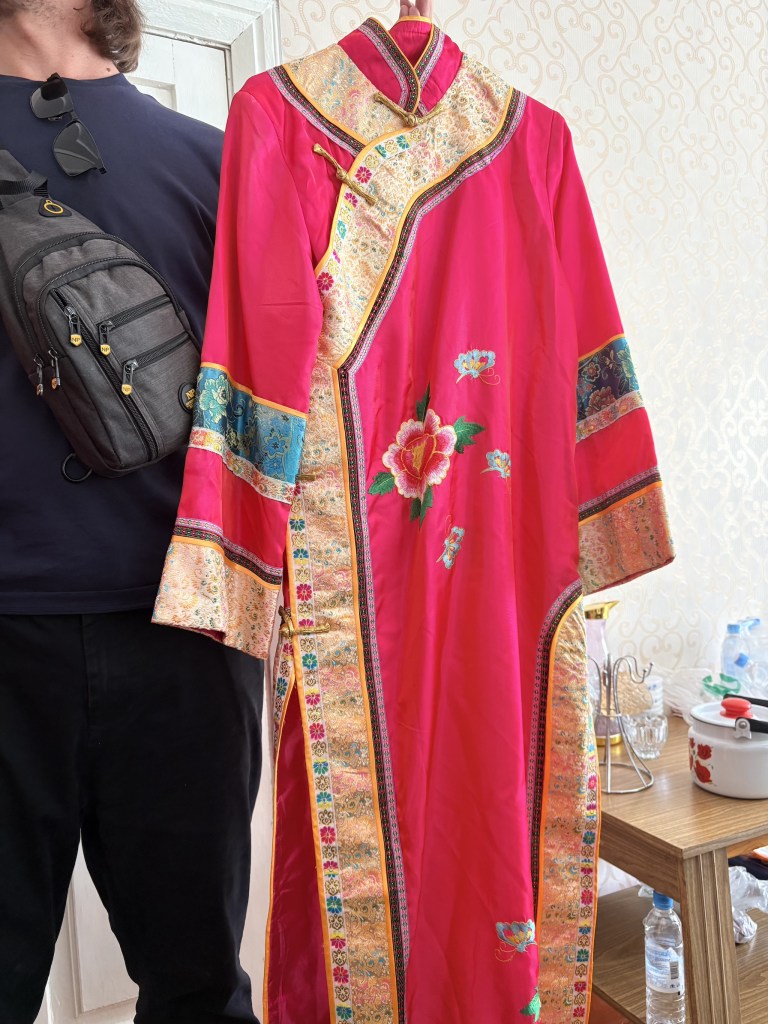
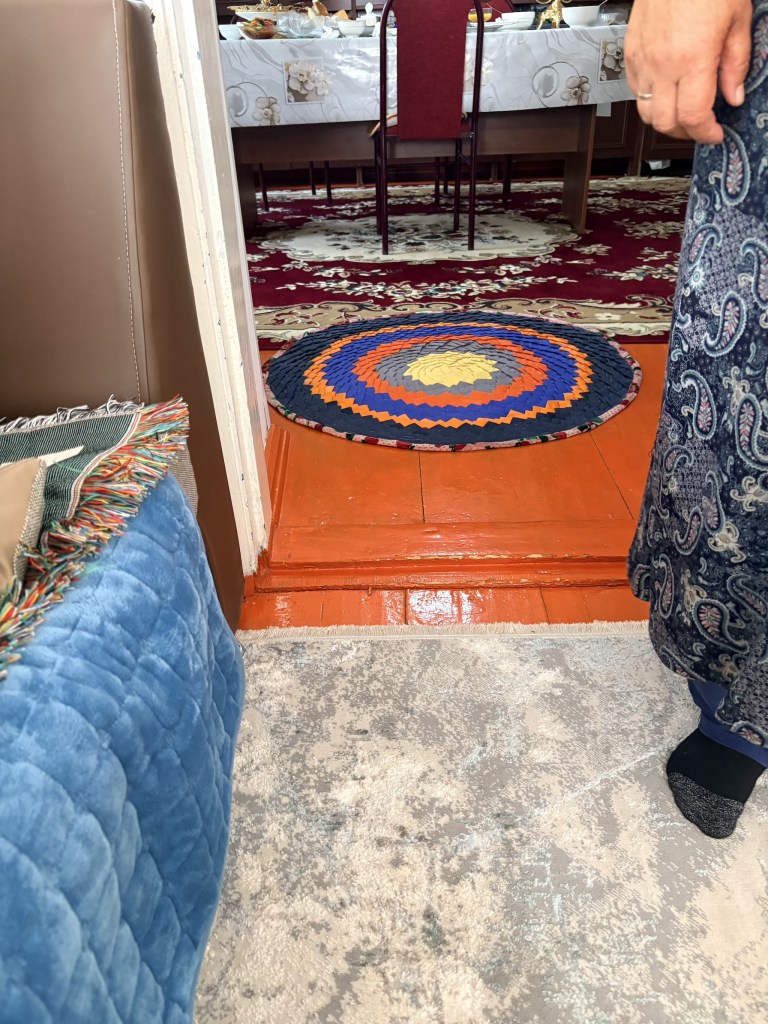
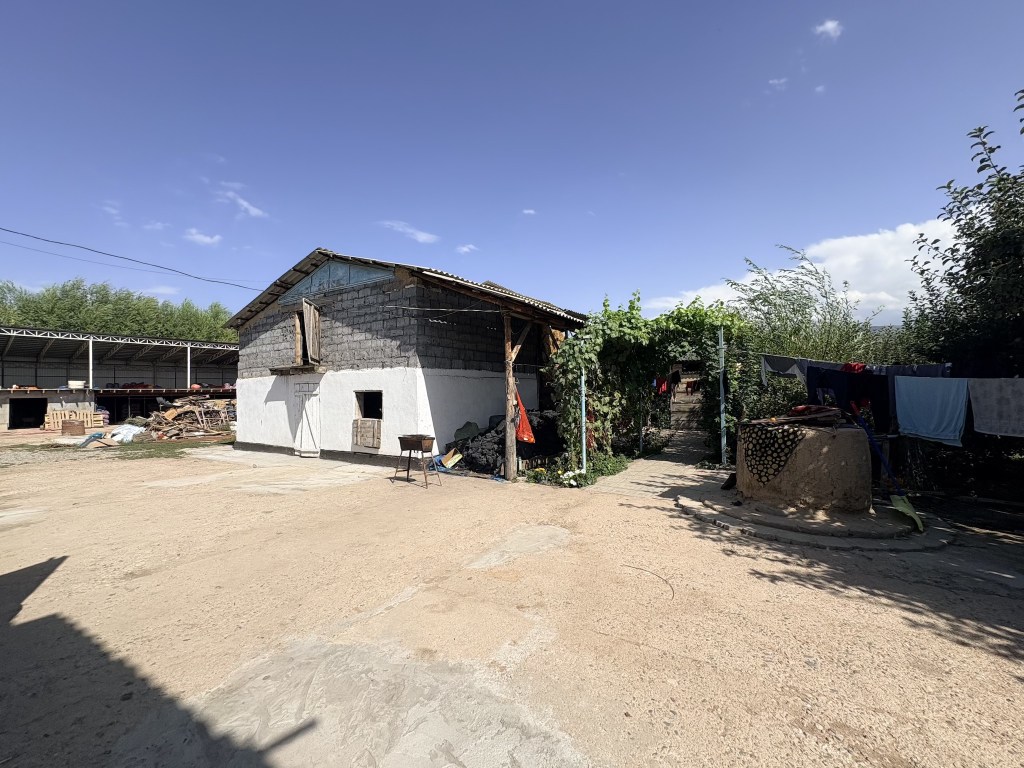
For lunch we were hosted by a Dungan family. The Dungan people are descendants of the Shaanxi-Gansu Hui people who migrated to Central Asia from China in the 19th century. After seeing it in their garden, we were gifted some cannabis for tea.
Sanatorium
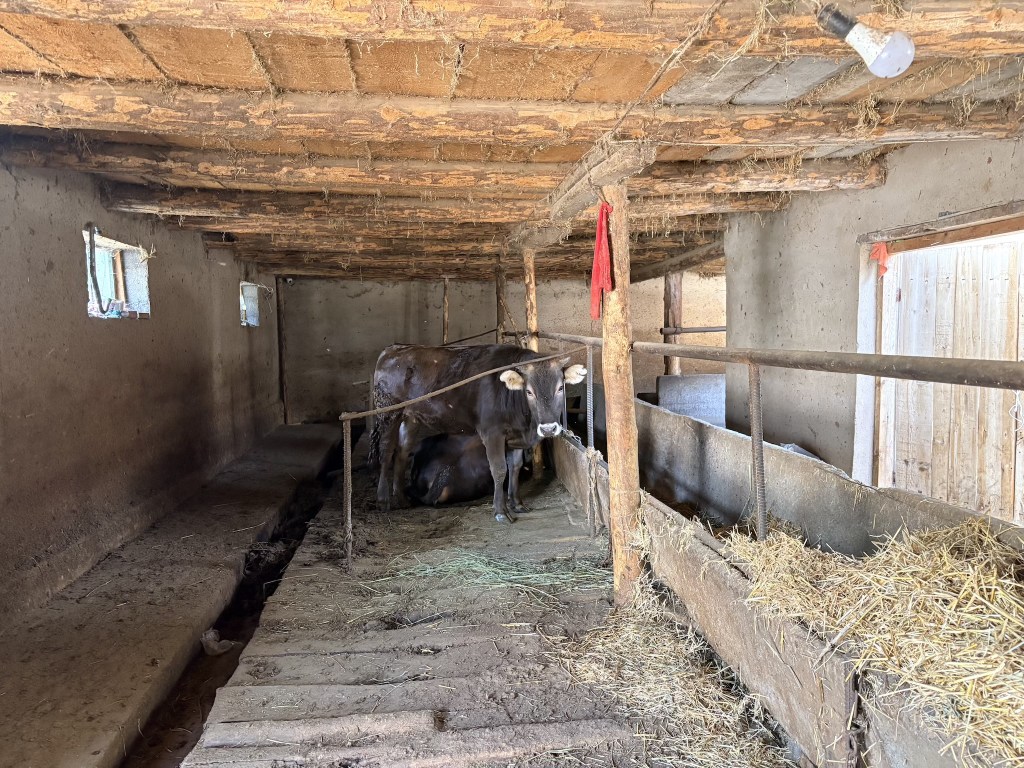
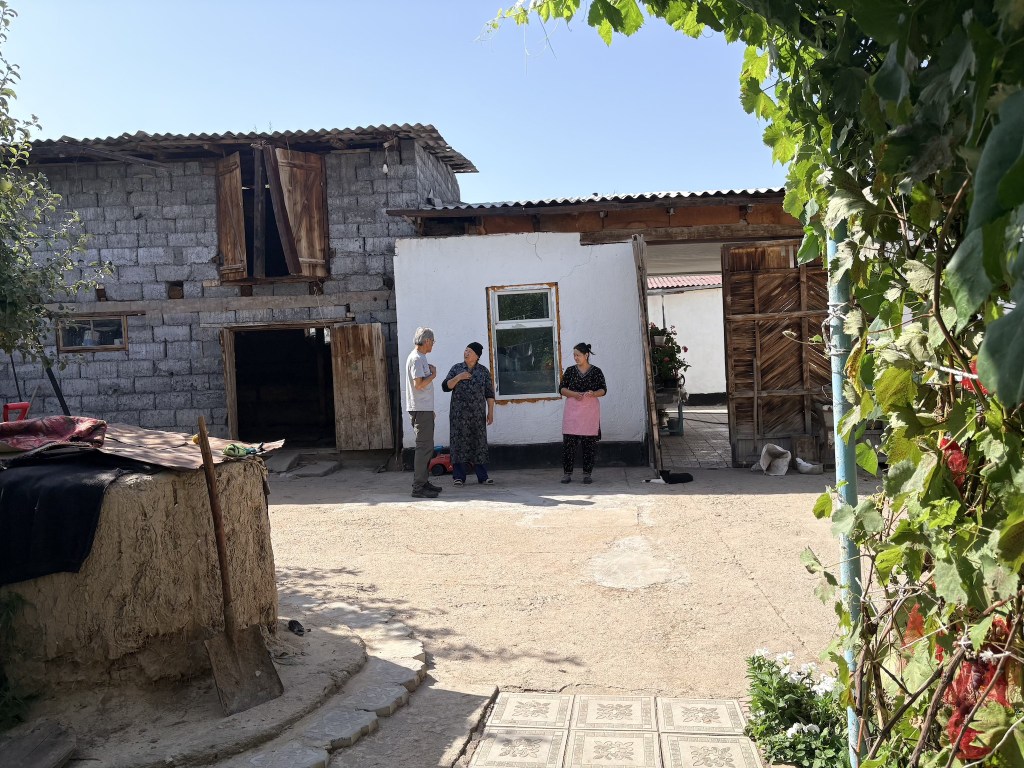
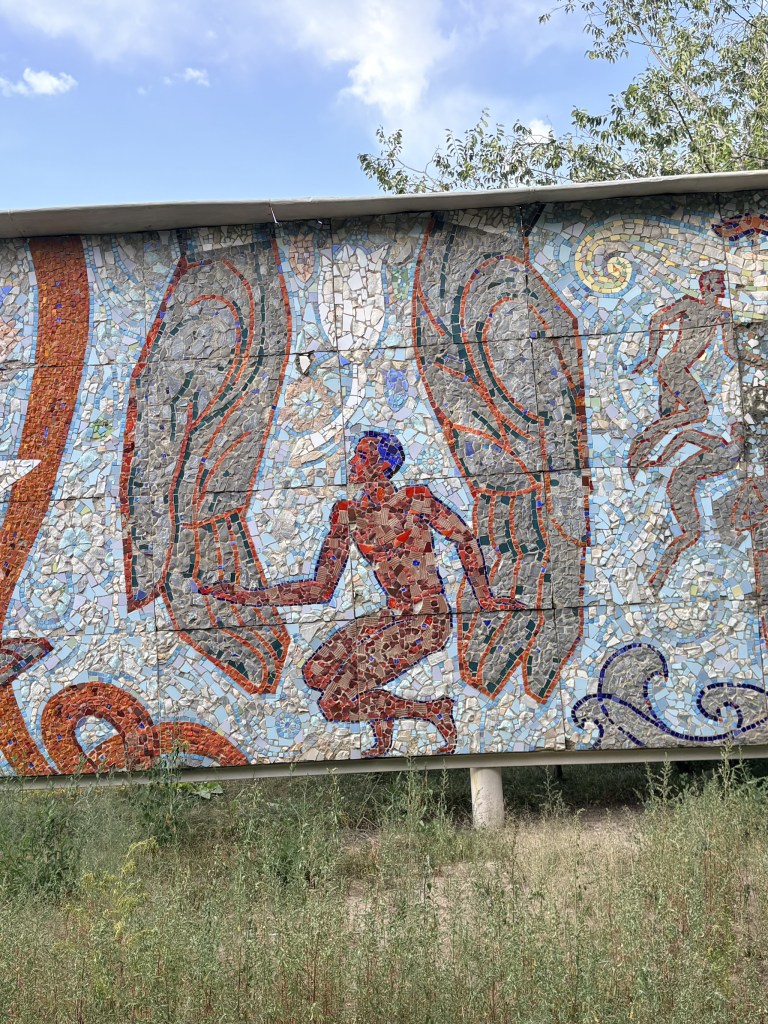
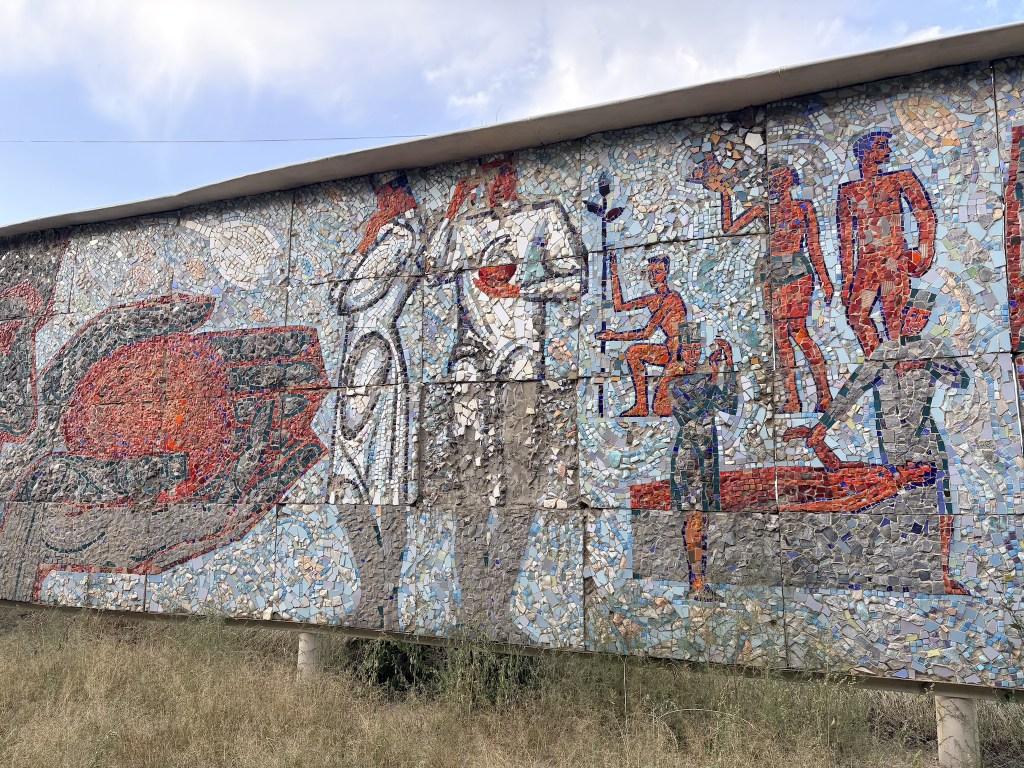
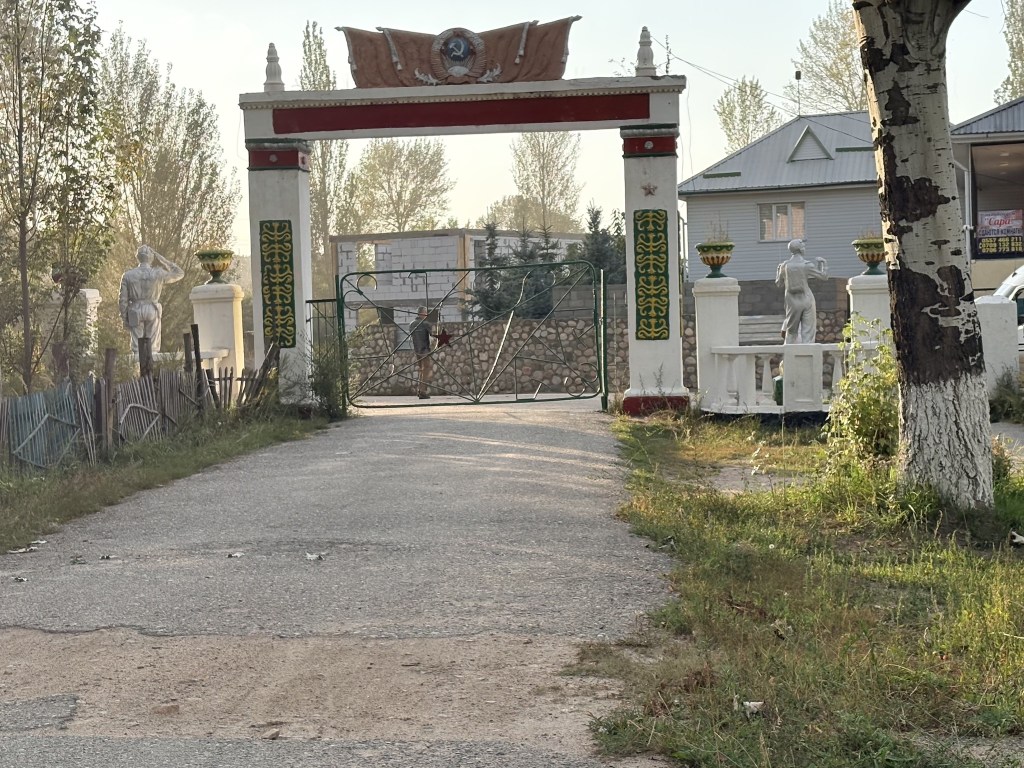
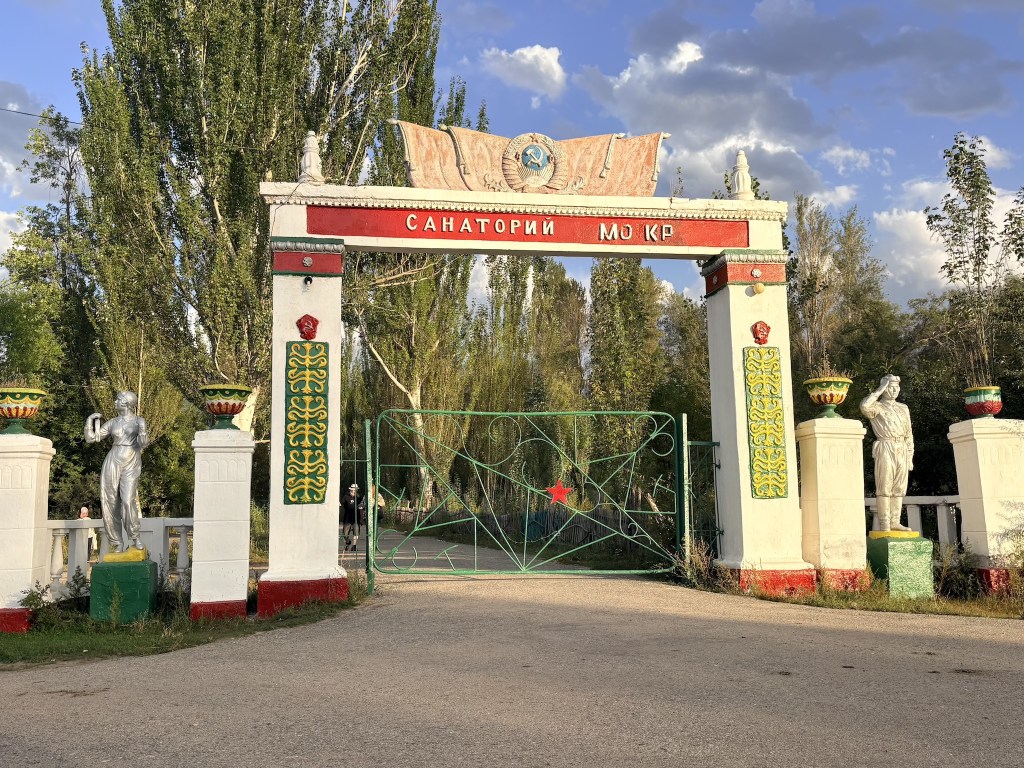
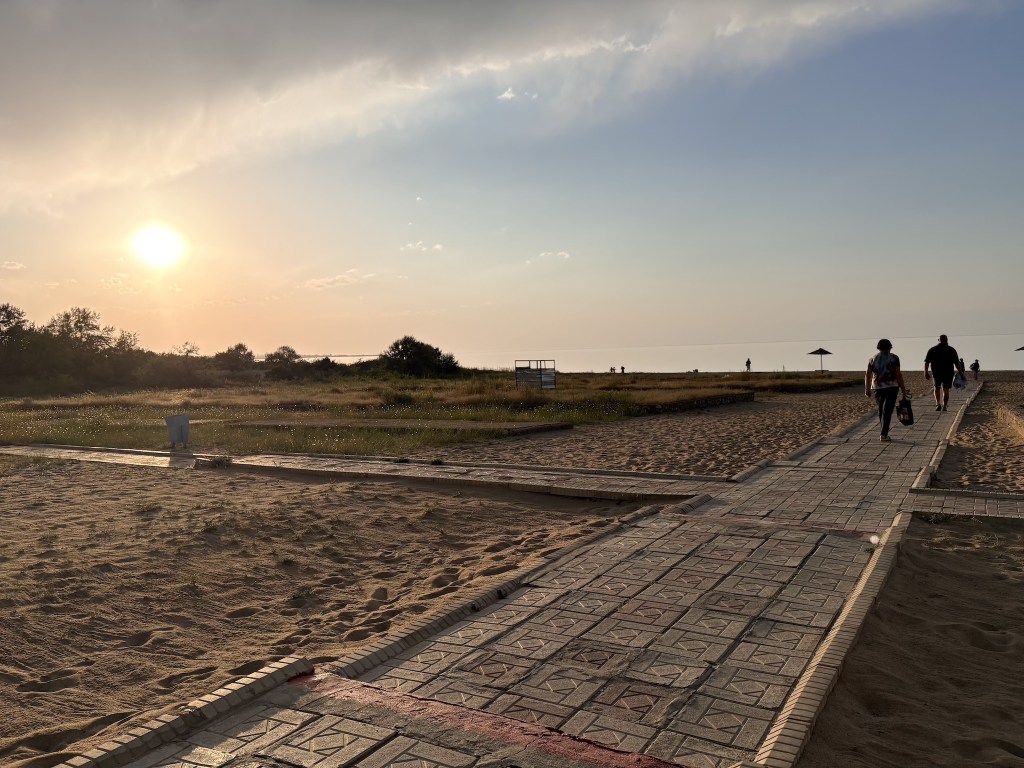
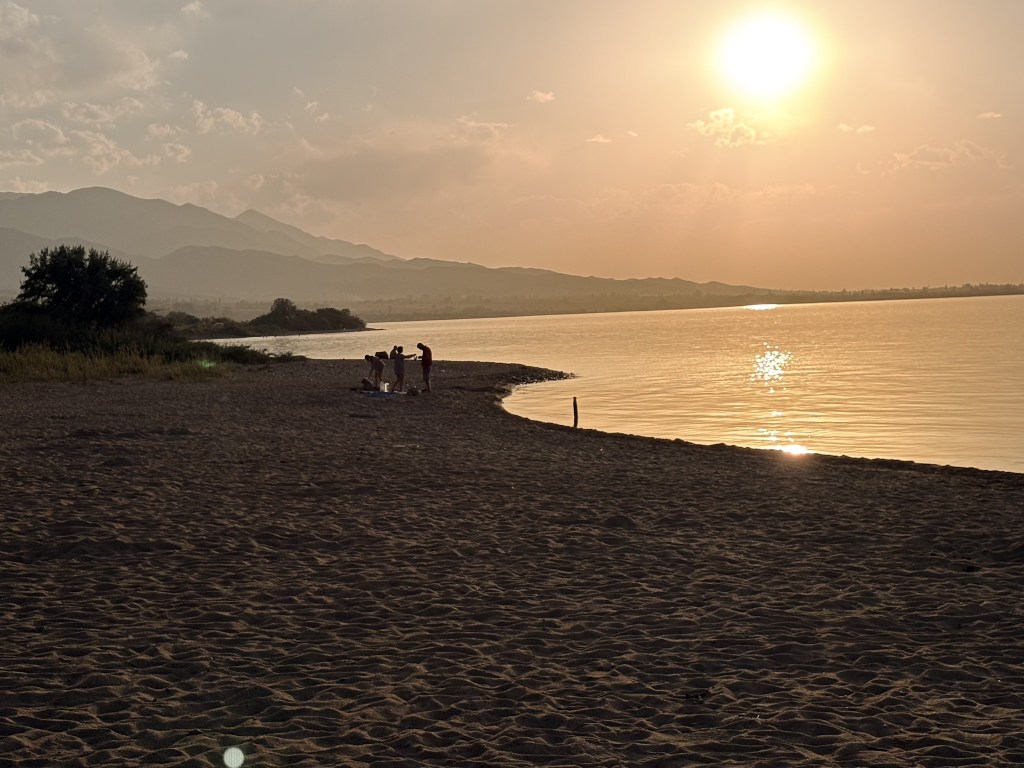
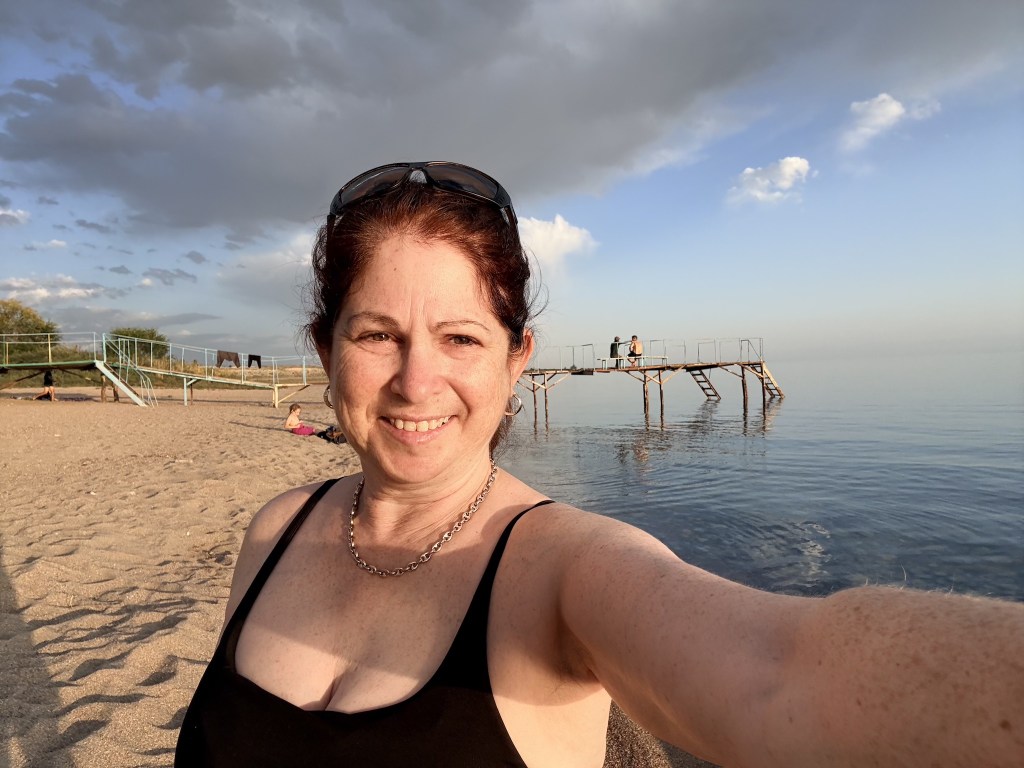
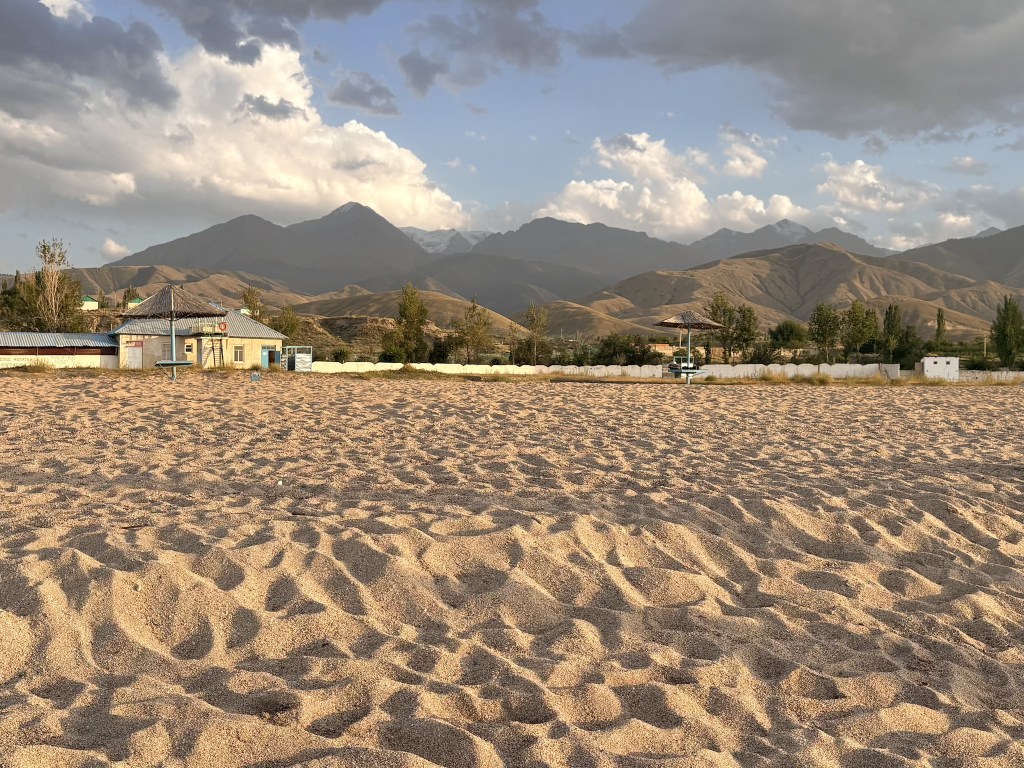
Explored the Tamga Military Sanatorium near Anna and Sergei’s guest house. Built in Soviet times, still in (lesser) use today. From there we walked down to Lake Issyk Kul for a sunset dip before heading back to our accommodations. Mosaics are very popular. In this case it tells the story of the doctors caring for you.
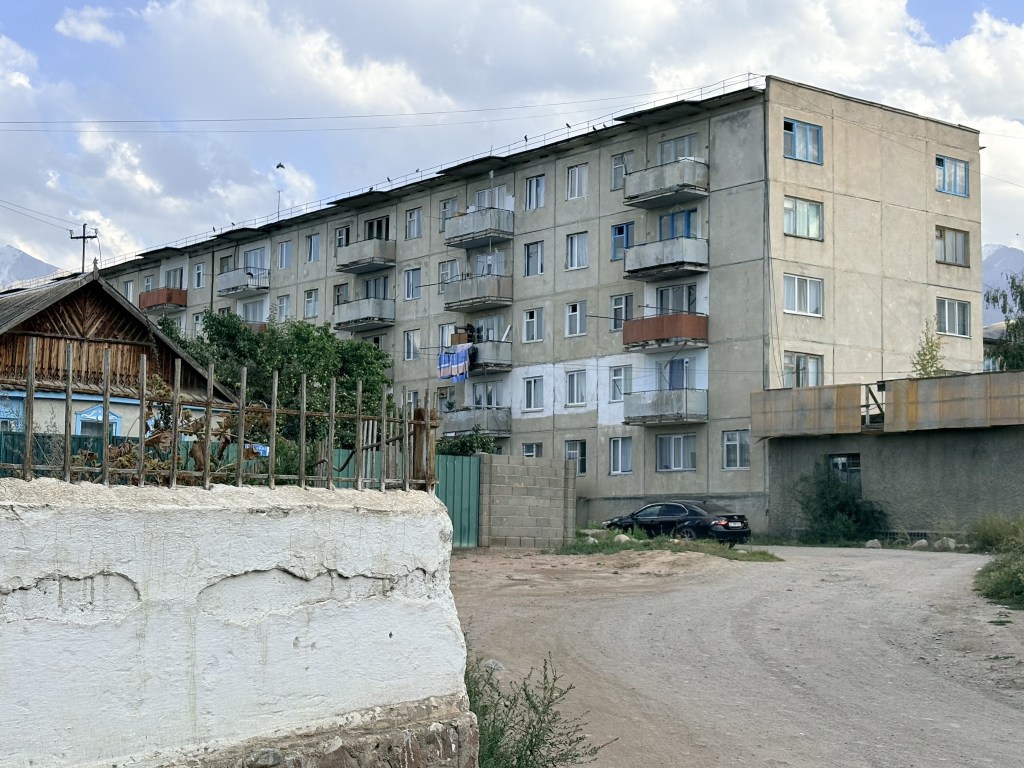
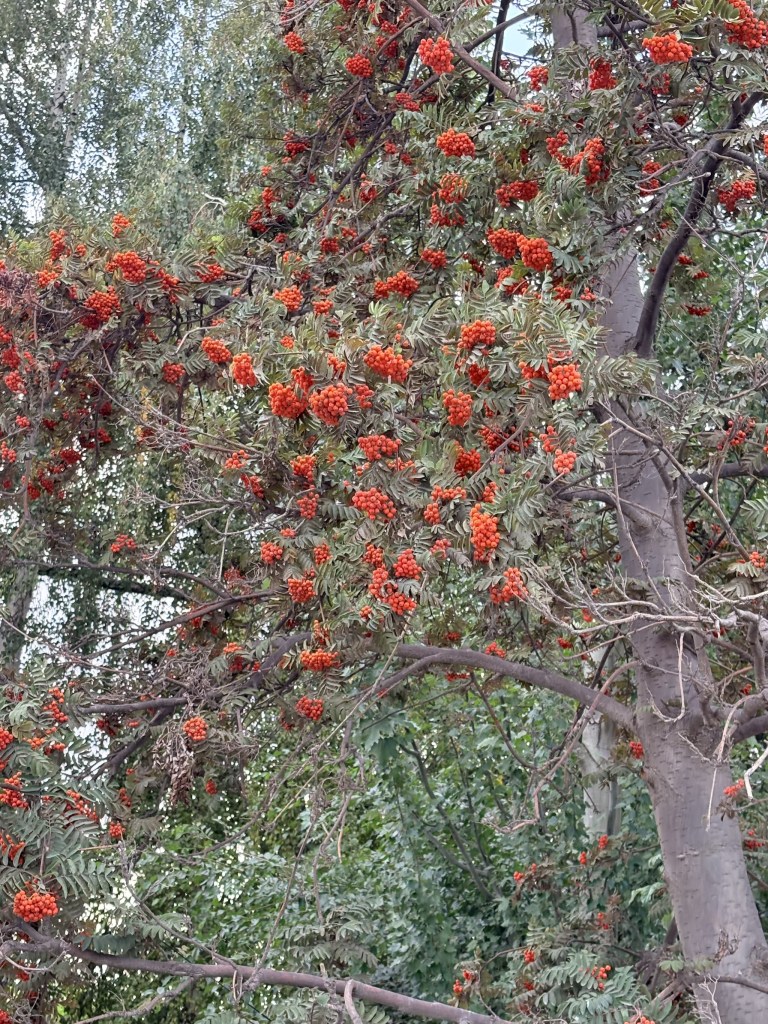
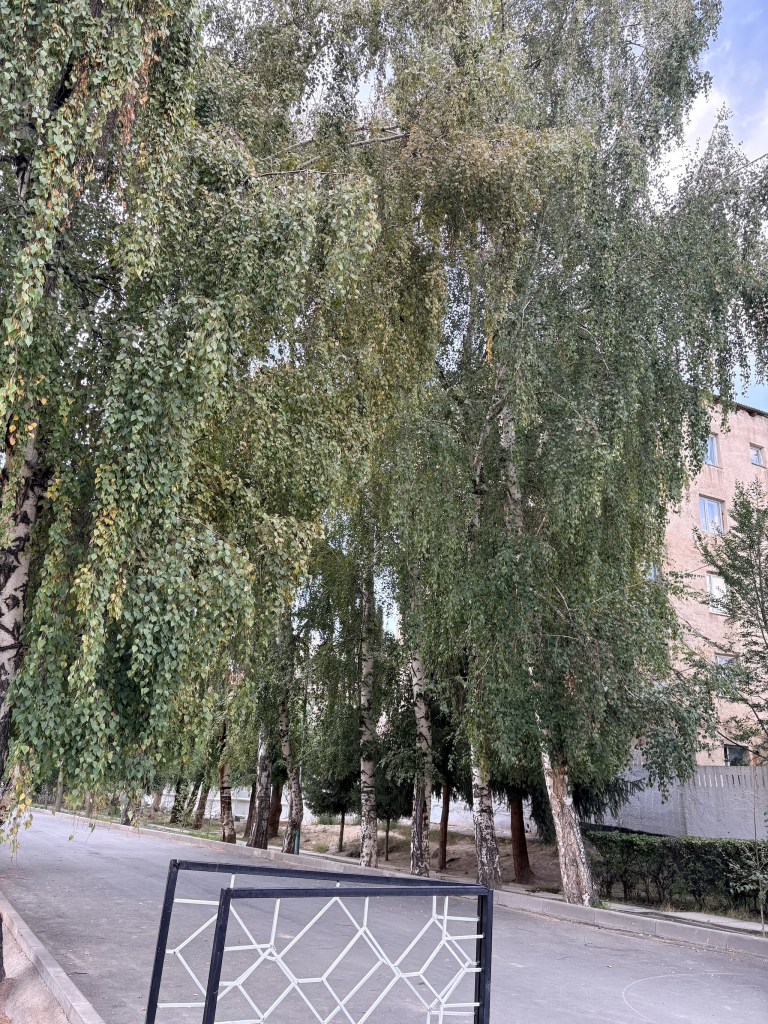
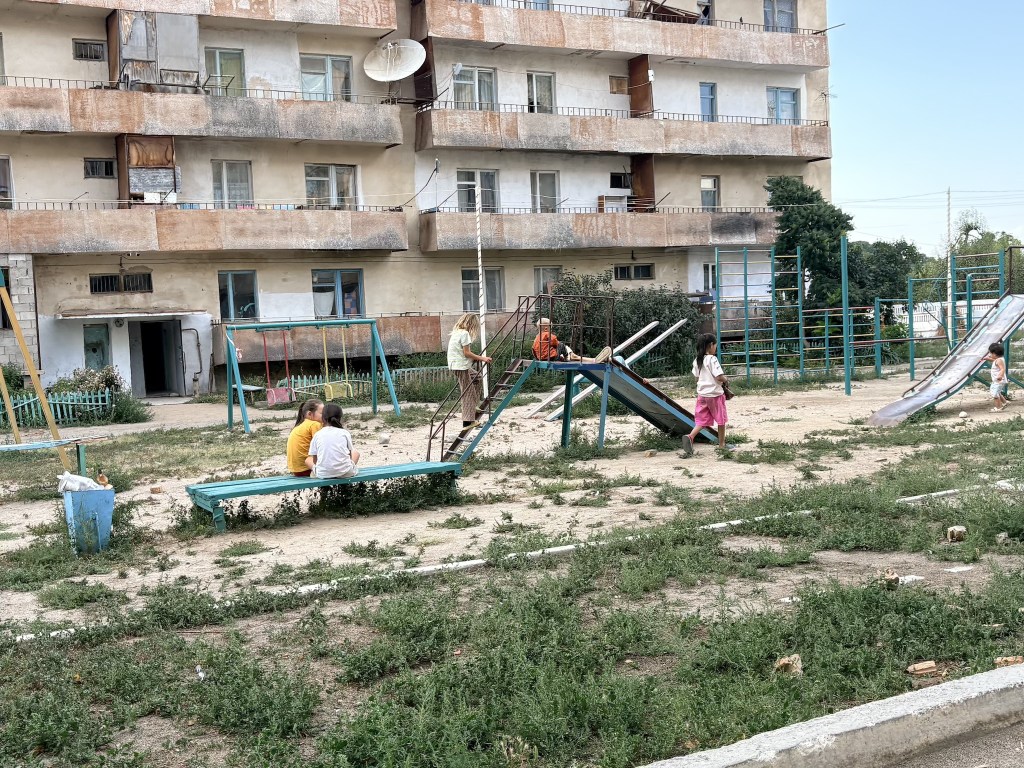
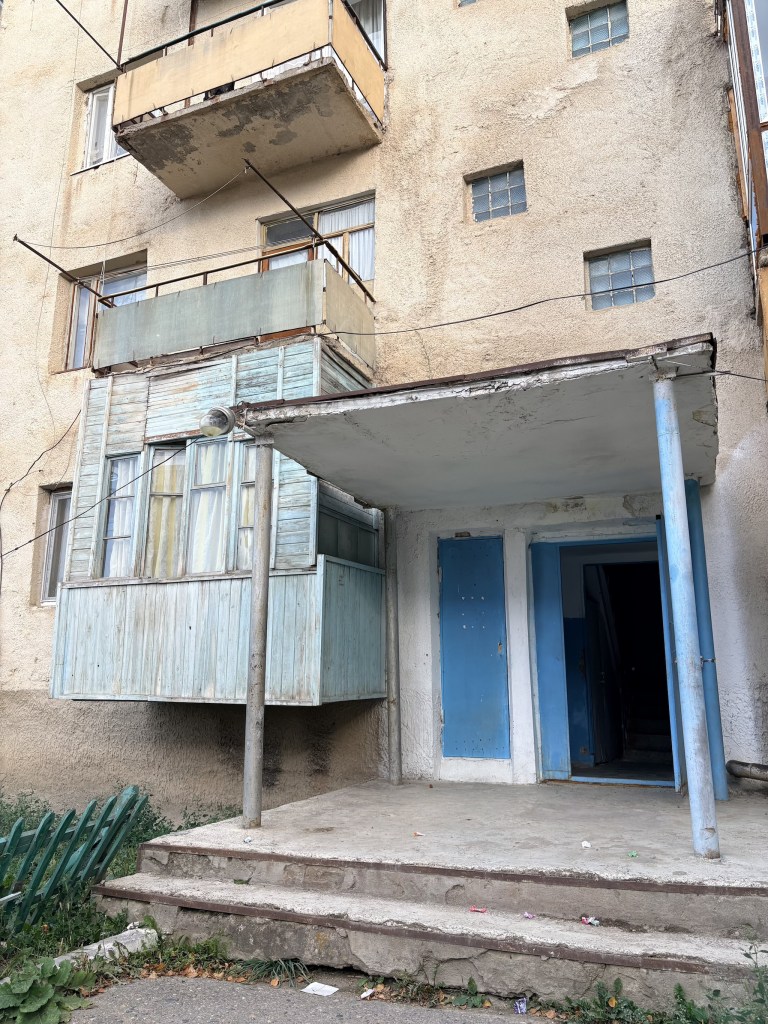
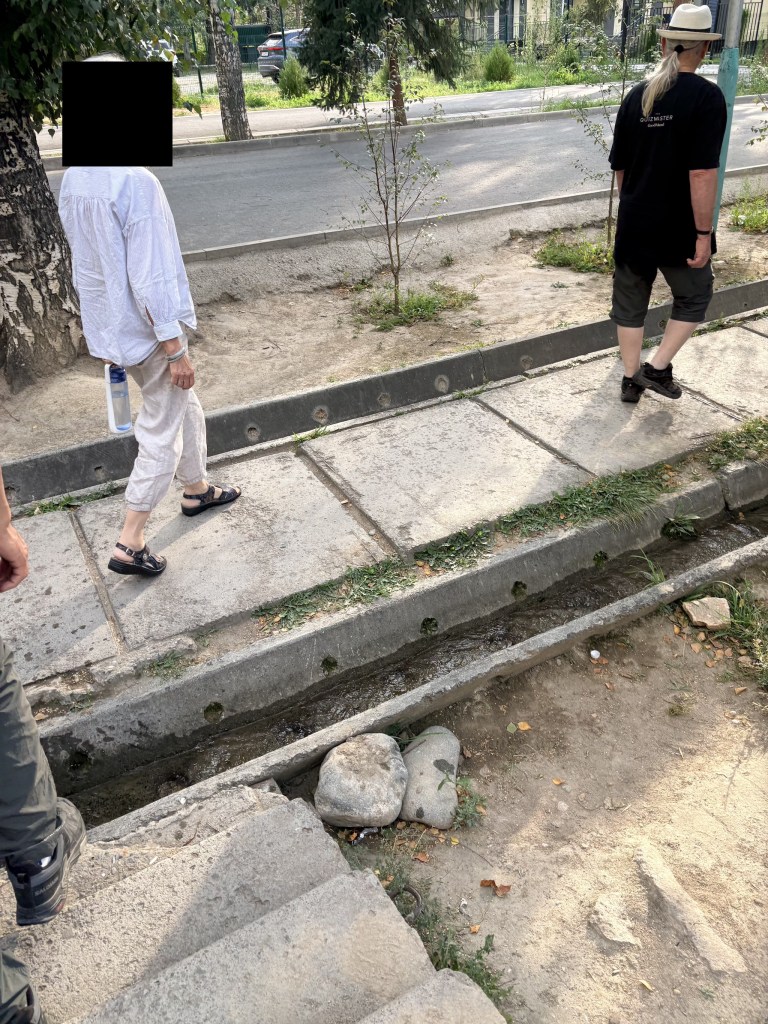
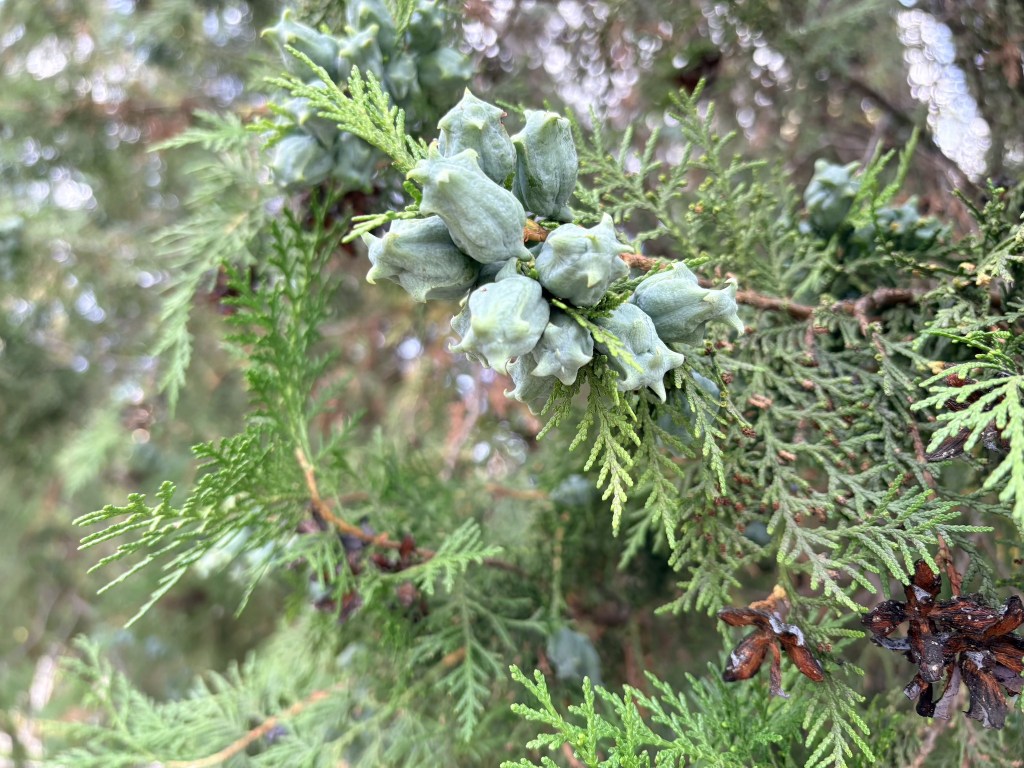
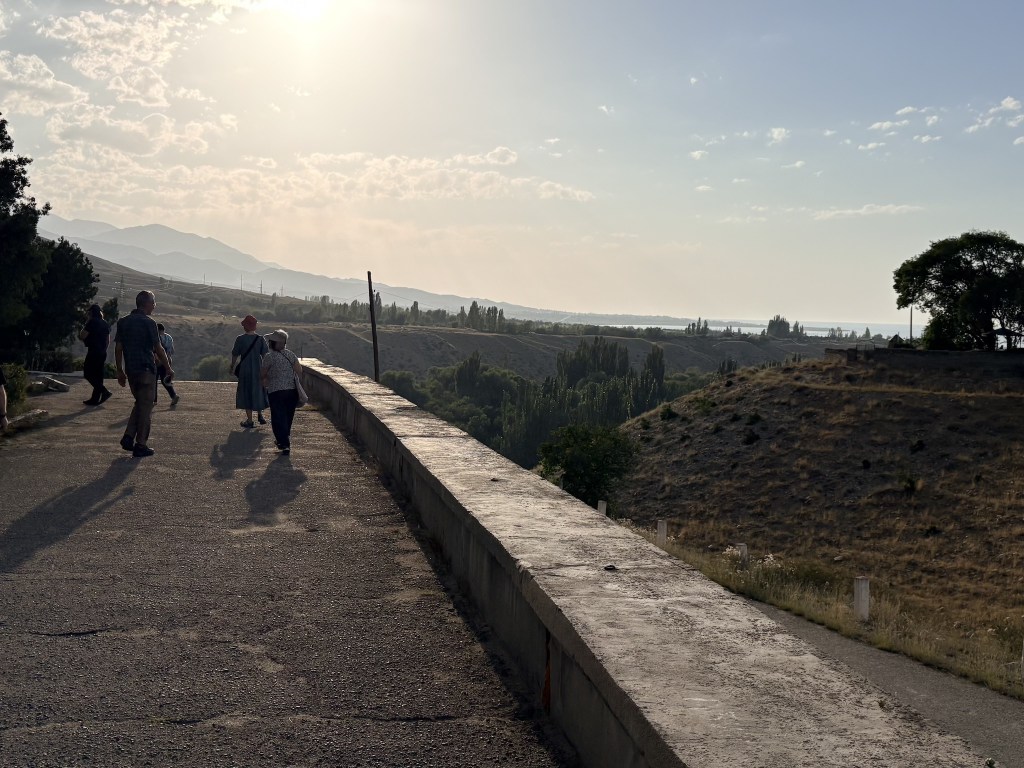
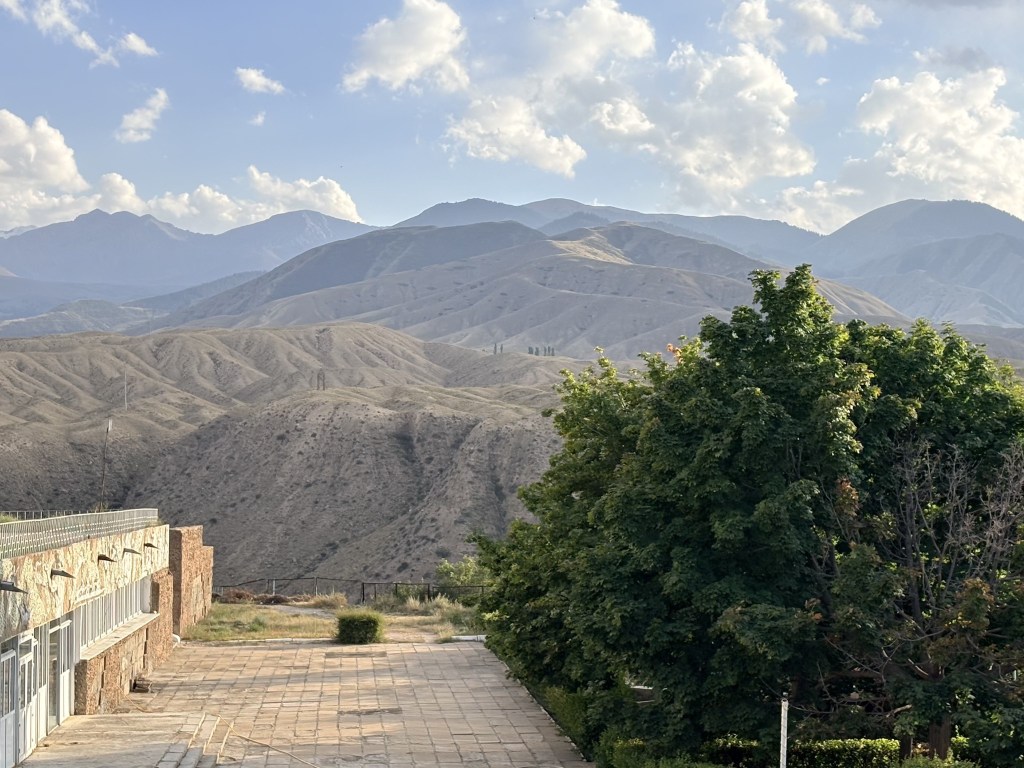
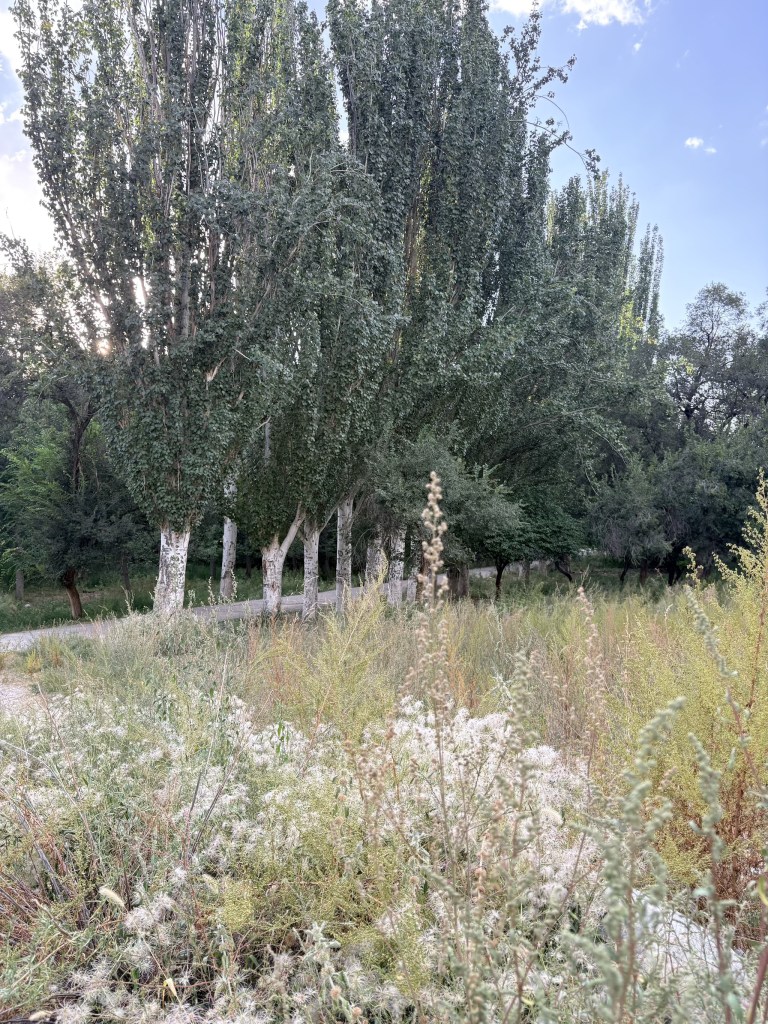
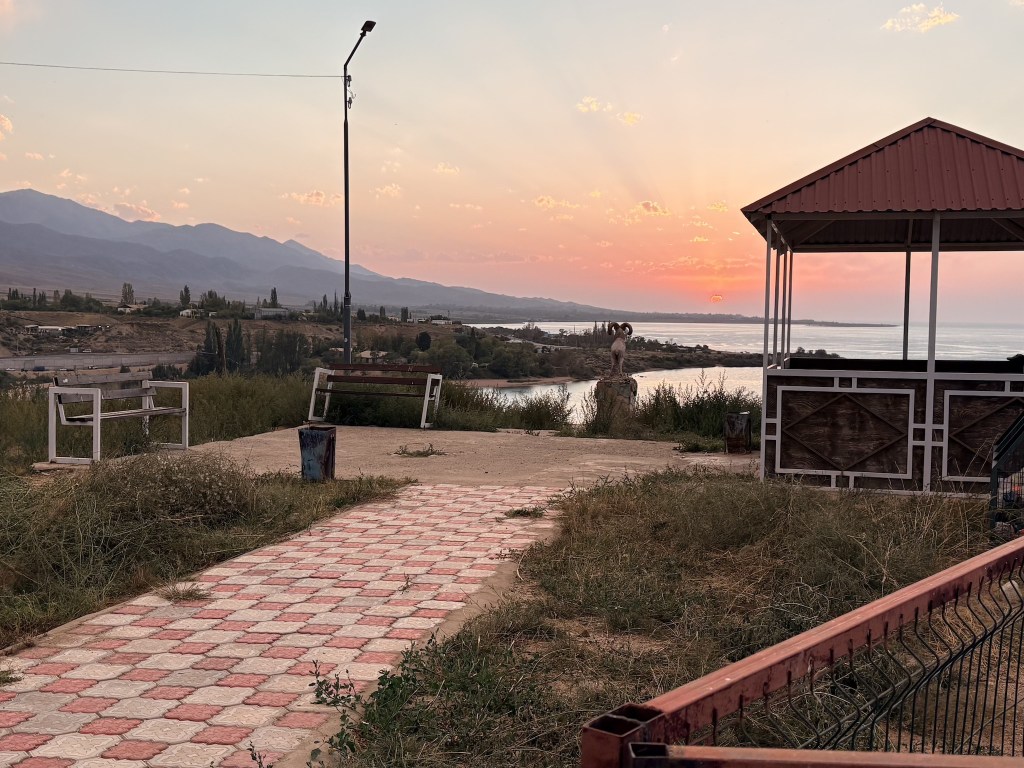
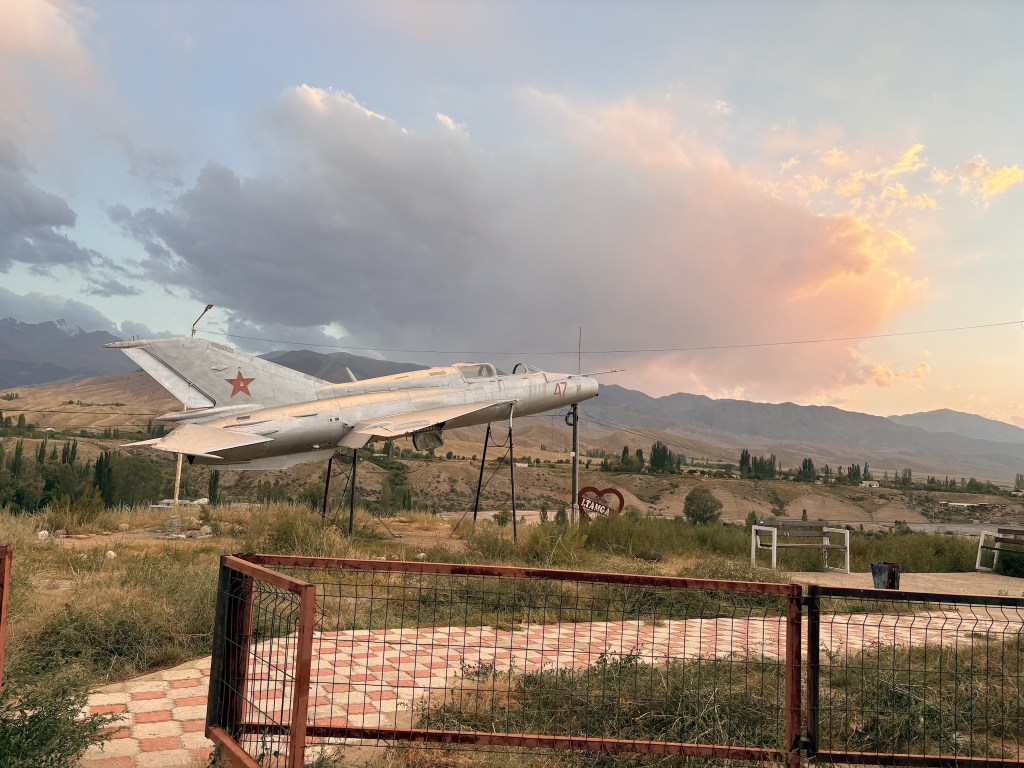
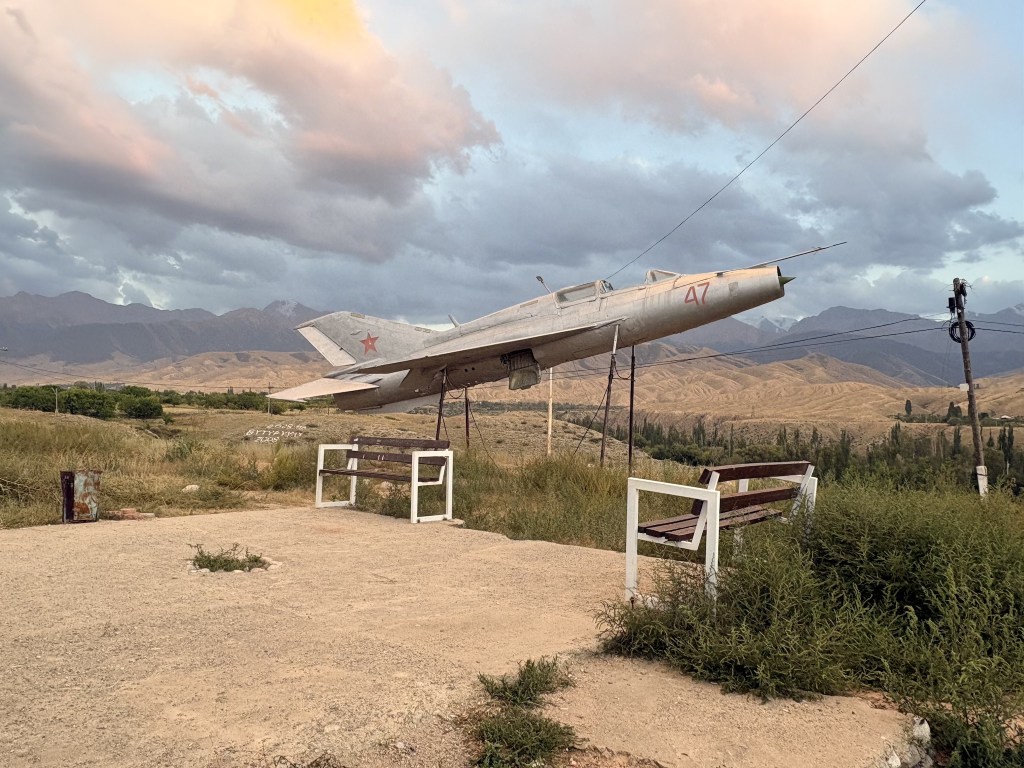
We are told this massive staircase was built by Japanese POWs. Also those fluffy white plants are invasive. We are told the aircraft is just a sign saying there is an airfield there.
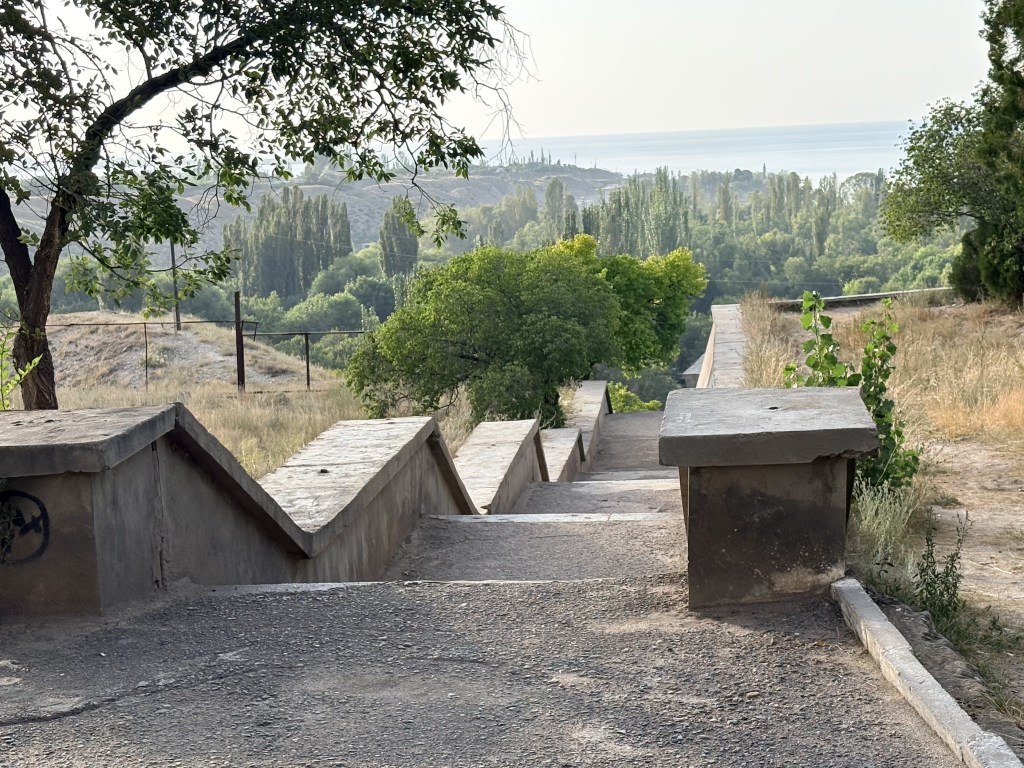
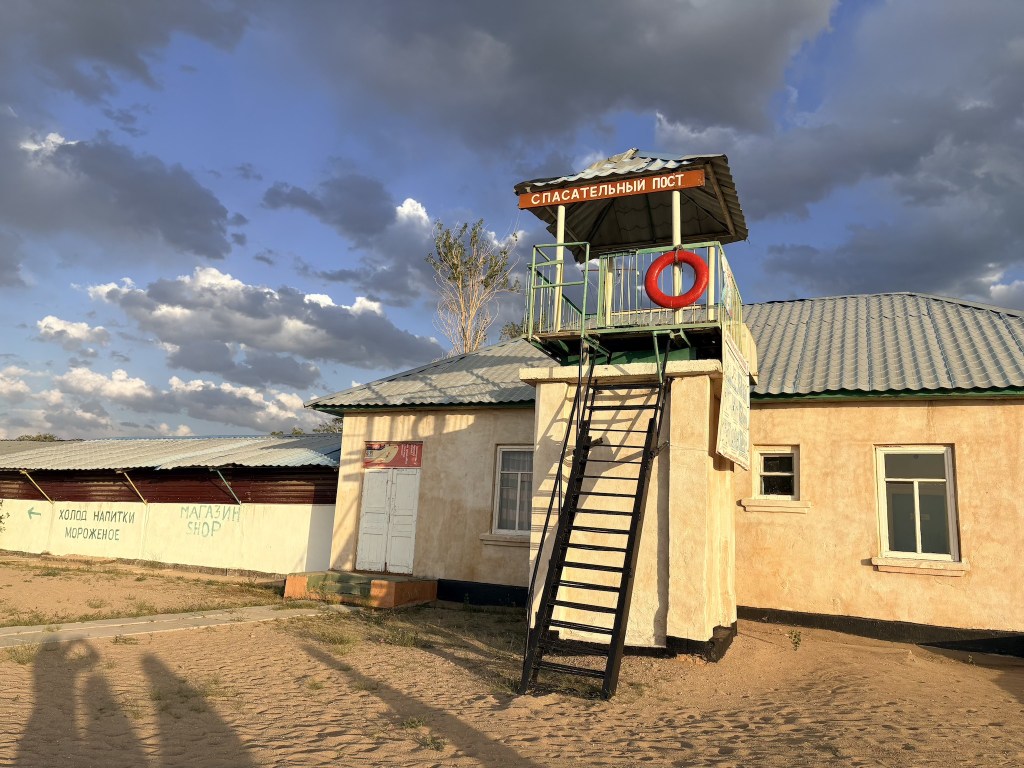
I did go in the lake. We are told it is okay now. My notes from the local guide: Before Tsarist times no one went in because it is sacred. No one ate fish from the lake. Rivers flowing into Issyk Kul bring salinity. It is 0.6% whereas sea water is 6%. Because of the salinity and staying at 25 degrees (?) it does not freeze. Issyk Kul translates to Hot Lake. It is of tectonic origin and there is a second lake underneath. It is the second-largest alpine lake to Lake Titicaca in the Andes Mountains. It is used for irrigation. It is transparent to 20 meters, no industry. Now there are resorts on the north shore – where it is sandy. The south shore is rocky. Trout were introduced from Armenia. There are catfish, a local fish called chebak, and a few carp.
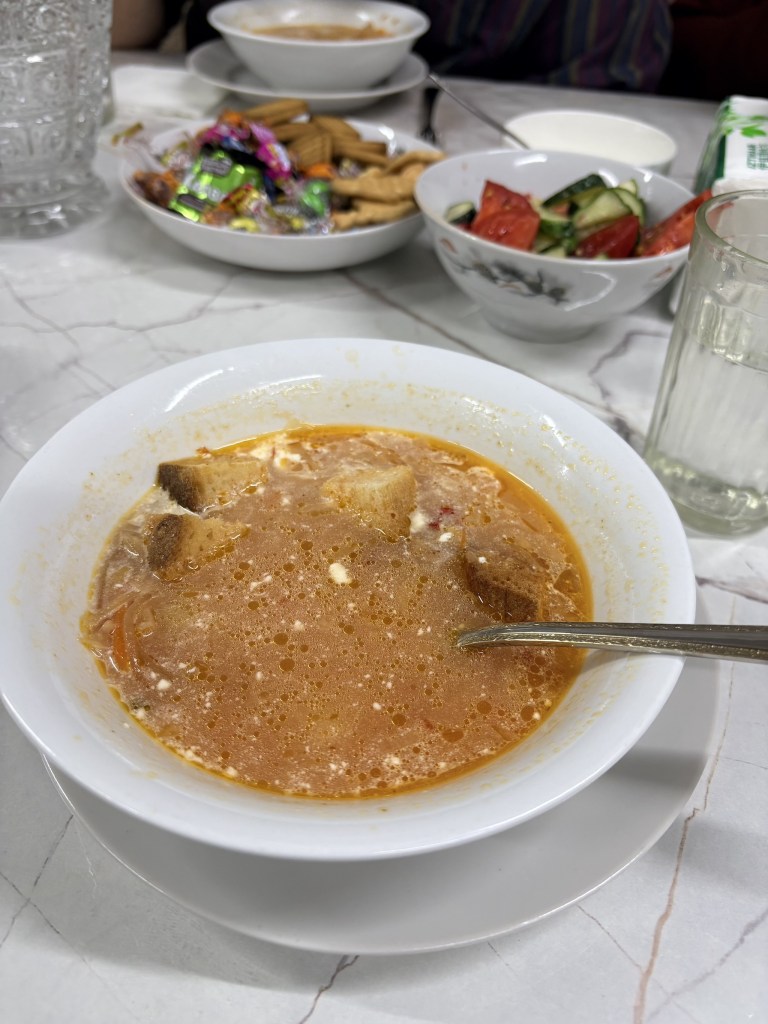
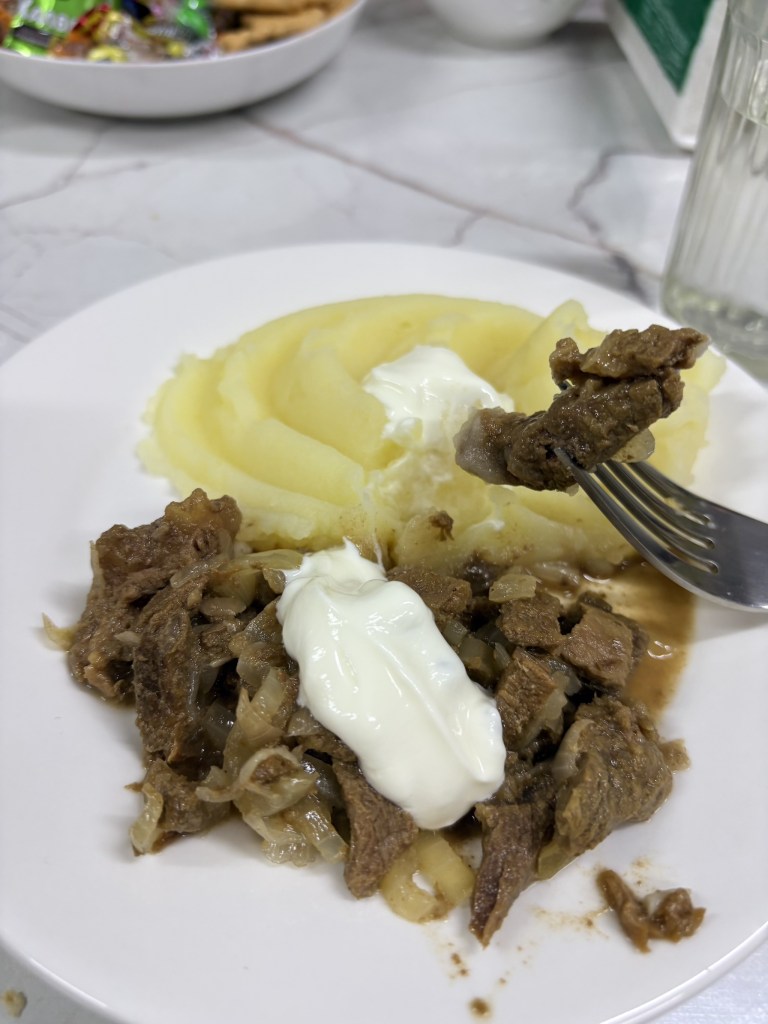
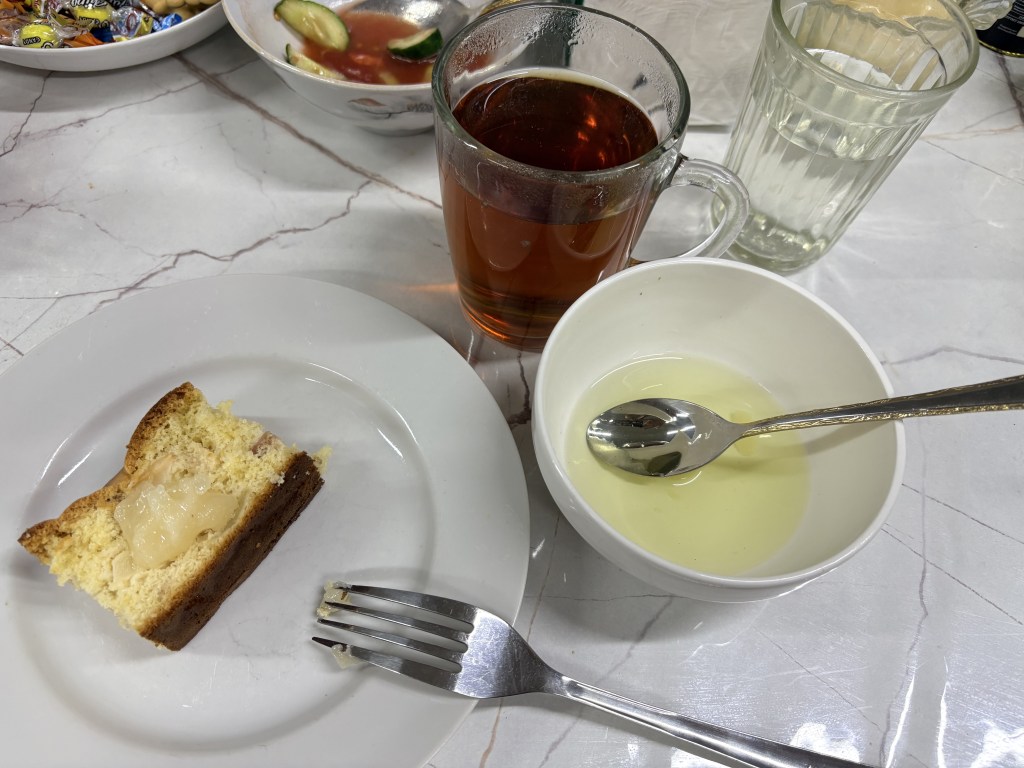
Dinner at the guest house
Our hosts provided a lovely dinner with Russian flair.