Samarkand, Uzbekistan
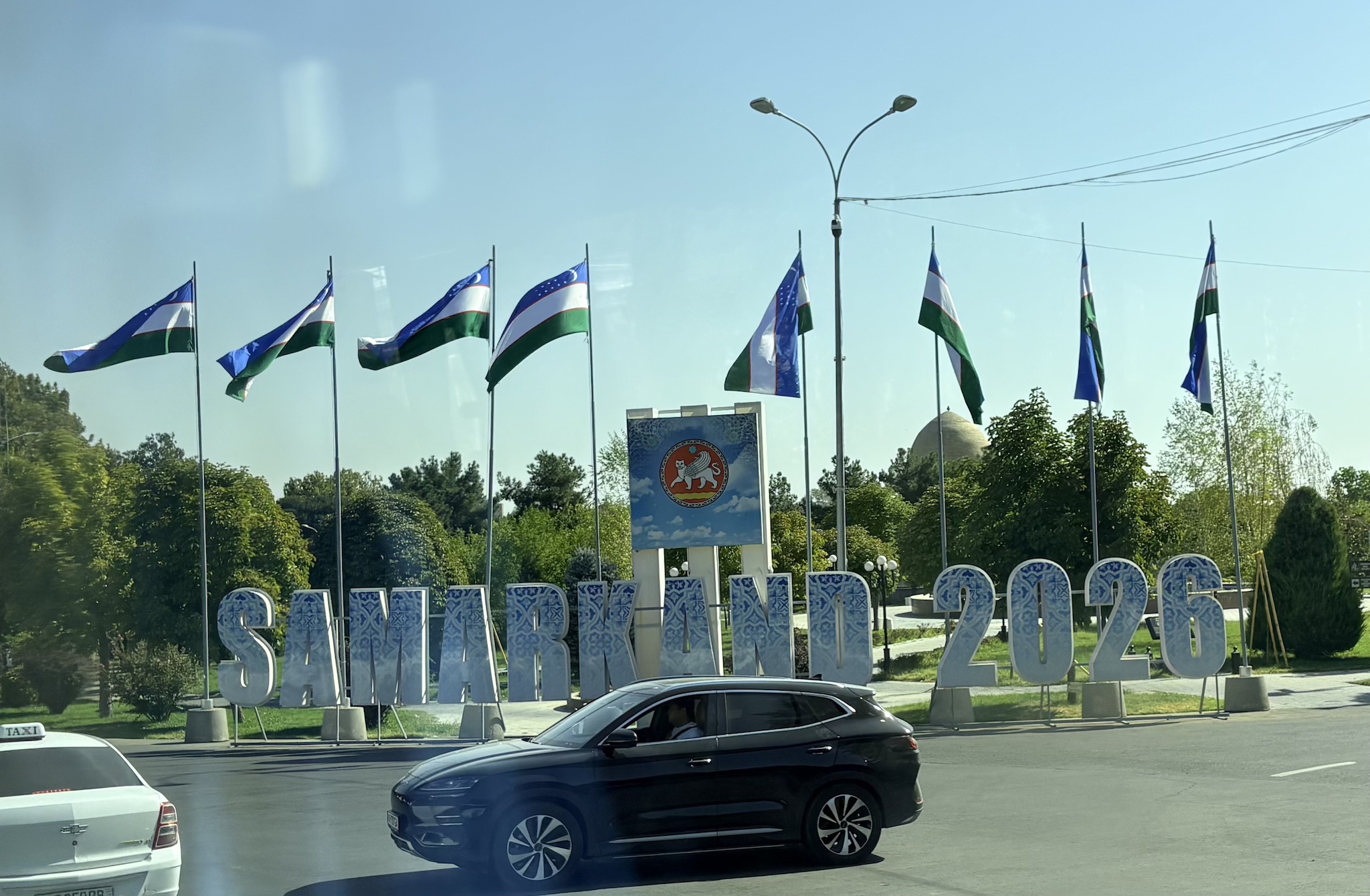
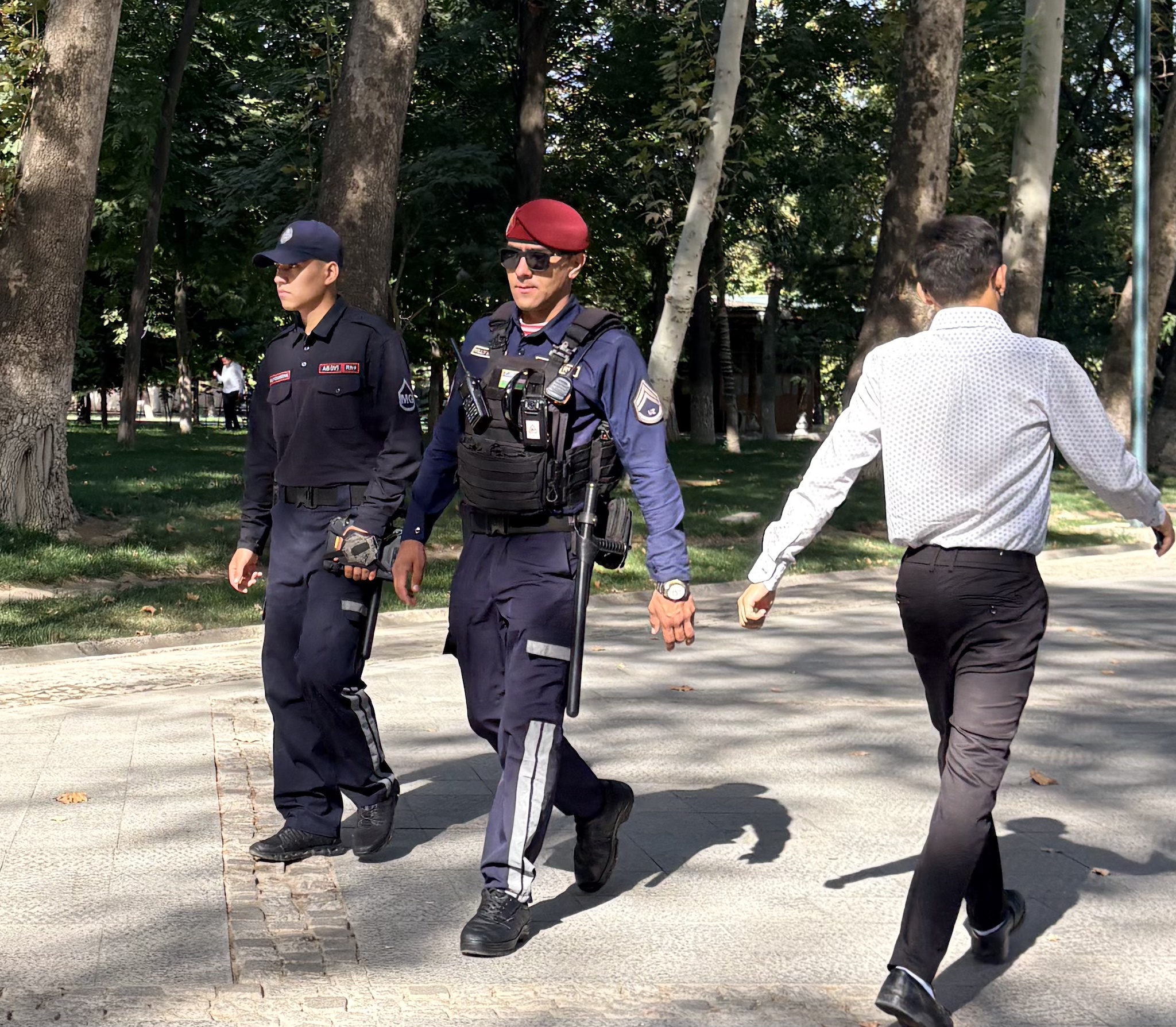
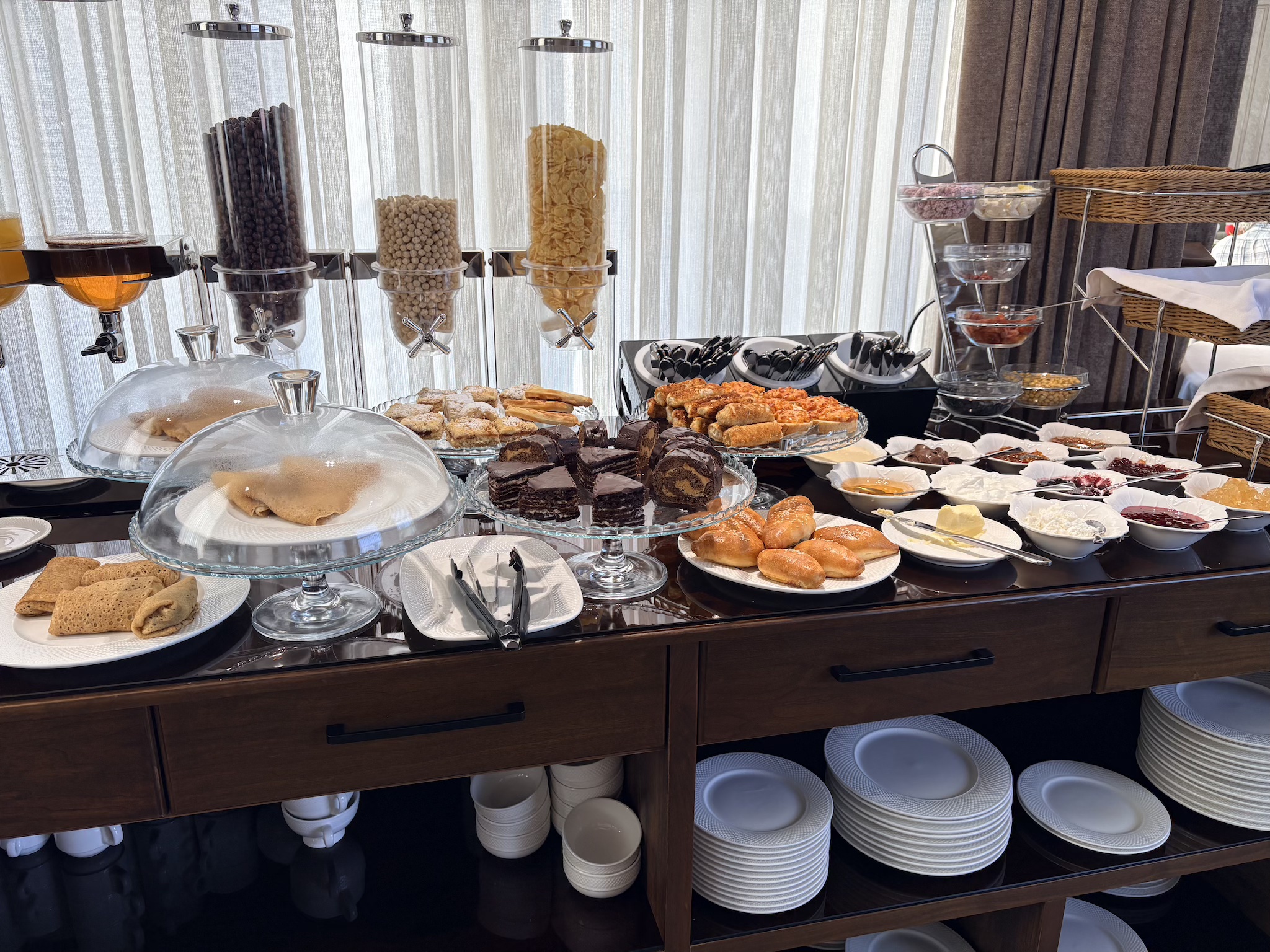
Our hotel was in a gorgeous park. Here are some lovely pastries for breakfast, a snazzy man in uniform, and another decorated round-about.
About Samarkand — You can find evidence that Alexander the Great was here (4th century BCE) by the Greek writing in carved stone. The walled city (219 hectacres) was burnt to the ground by Ghengis Khan in the 11th century. The big earthquake was in 1666. 1925 was the last time people prayed at Registan Square. Of the three statues of Amir Timur, Samarkand holds the sitting statue (standing = young, riding horse = middle, sitting = old).
Today the city has ethnic sections, like the Russian section, Iranian section, and Indian section. Everyone refers to the Indian section as “Mumbai.” It is filled with students. There is a good bus system for public transportation. Kids attend middle school from 8-1 and high school from 1-4:30.
Did you know in China the government no longer allows burial, only cremation?
Shohi Zinda (AKA Shakhi Zinda or Shah-i-Zinda) – remember using latin letters is not exact
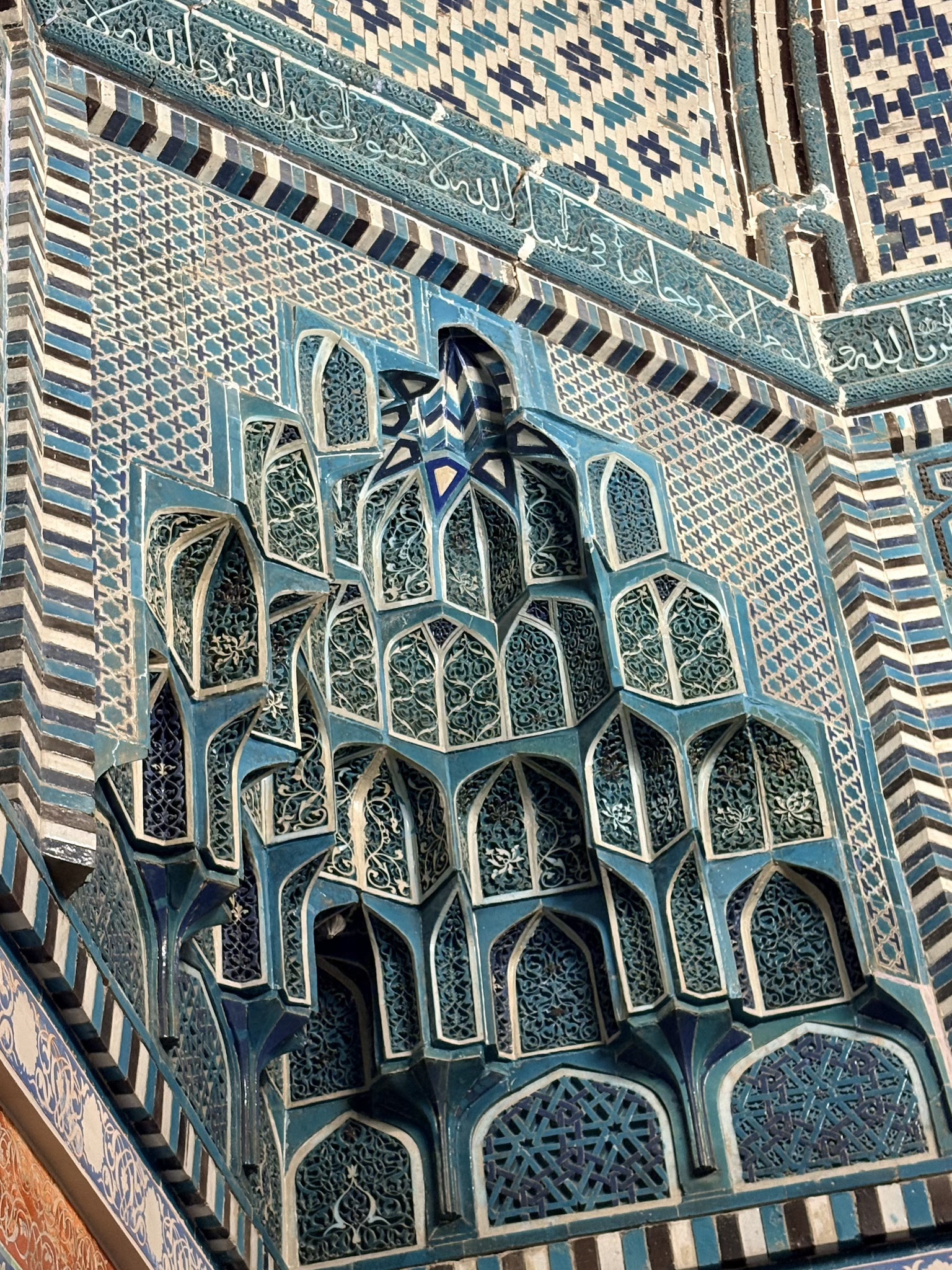
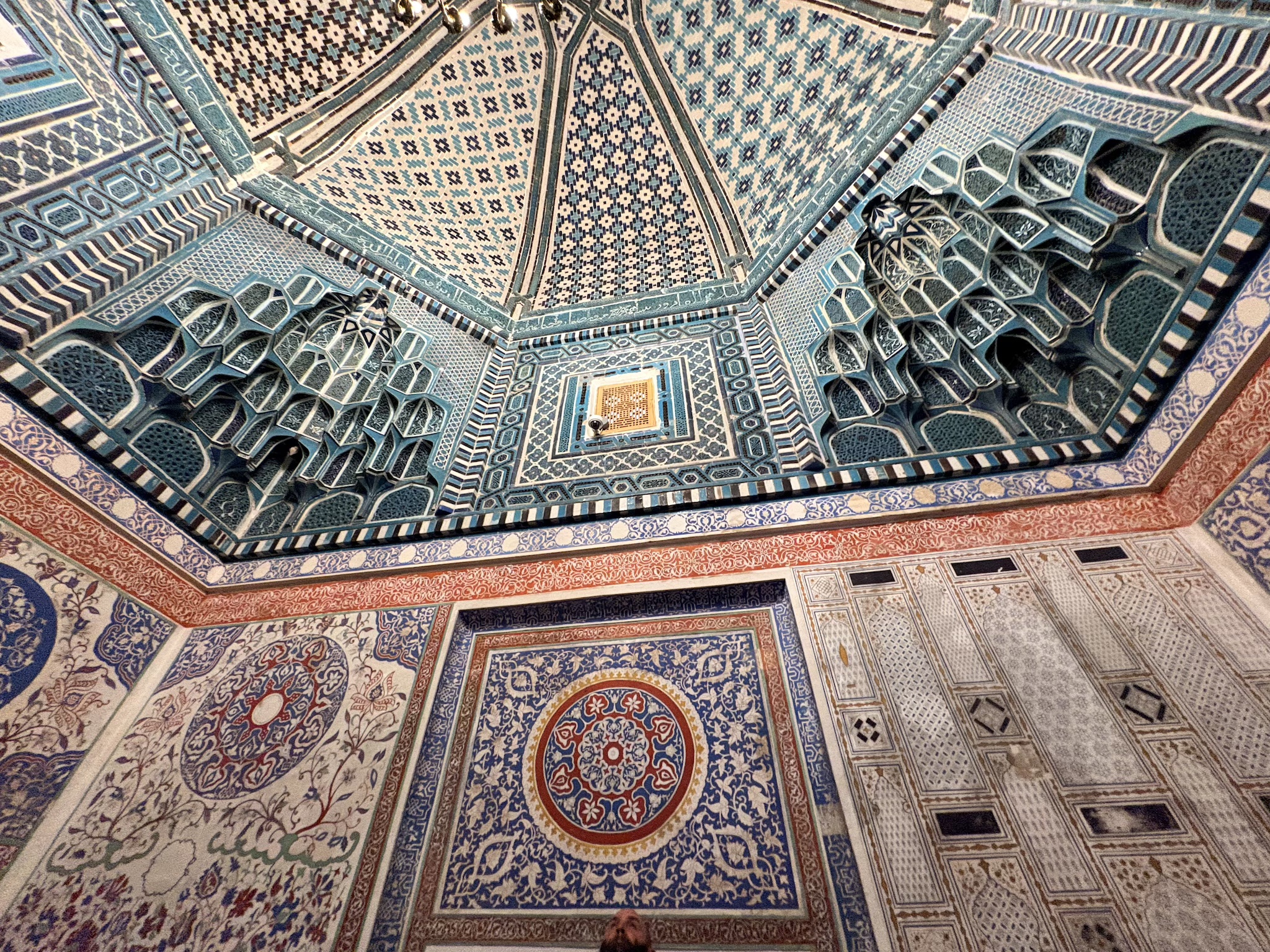
This is the big, famous necropolis (multiple important mausoleums) of Samarkand! *Oooo Ahhhh* Bear in mind I was there soaking up craftsmanship of the majolica. Please forgive me looking less at the tombs themselves and more at the walls. Of course much is reconstruction – from 1960 to 2006.
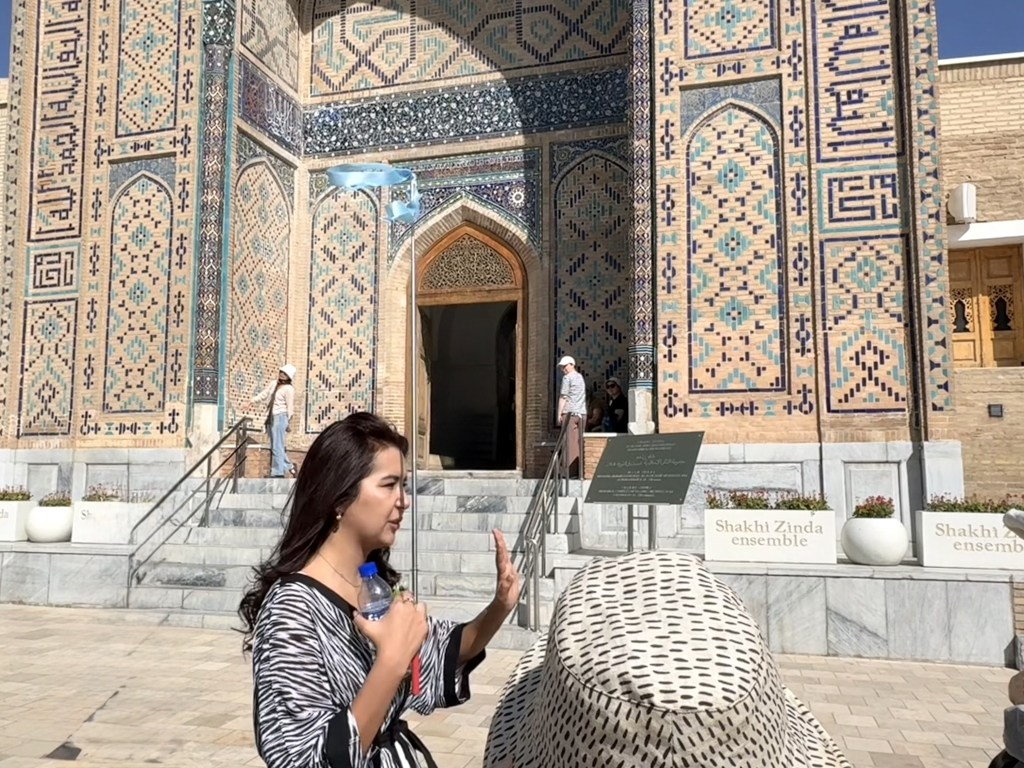
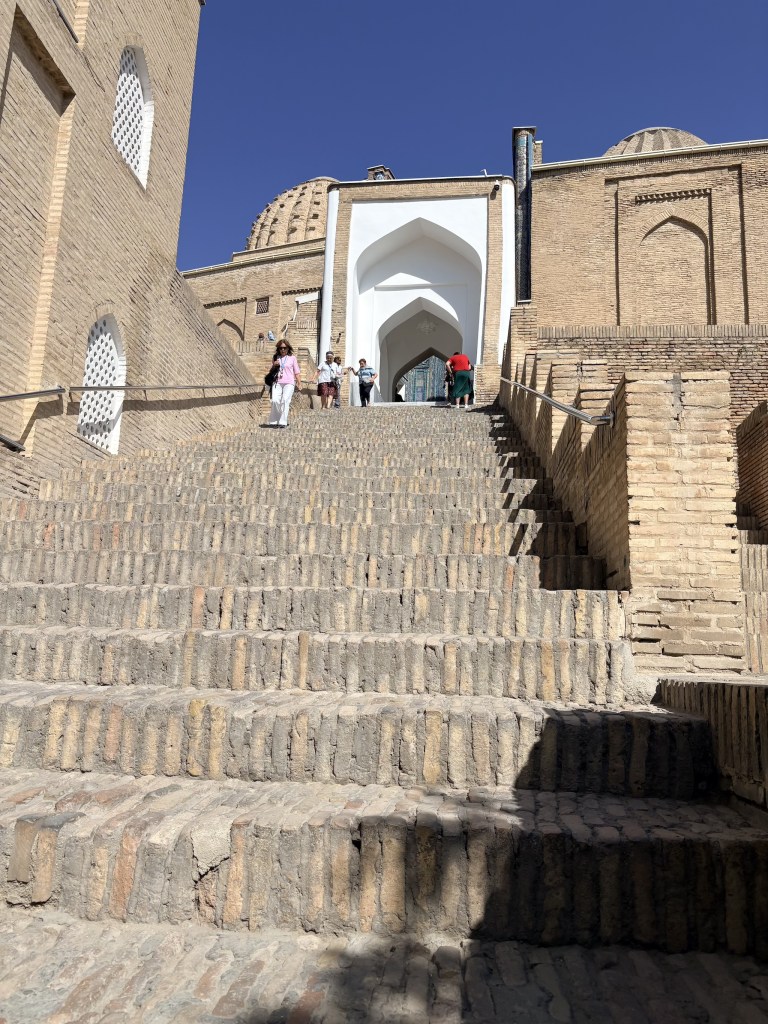
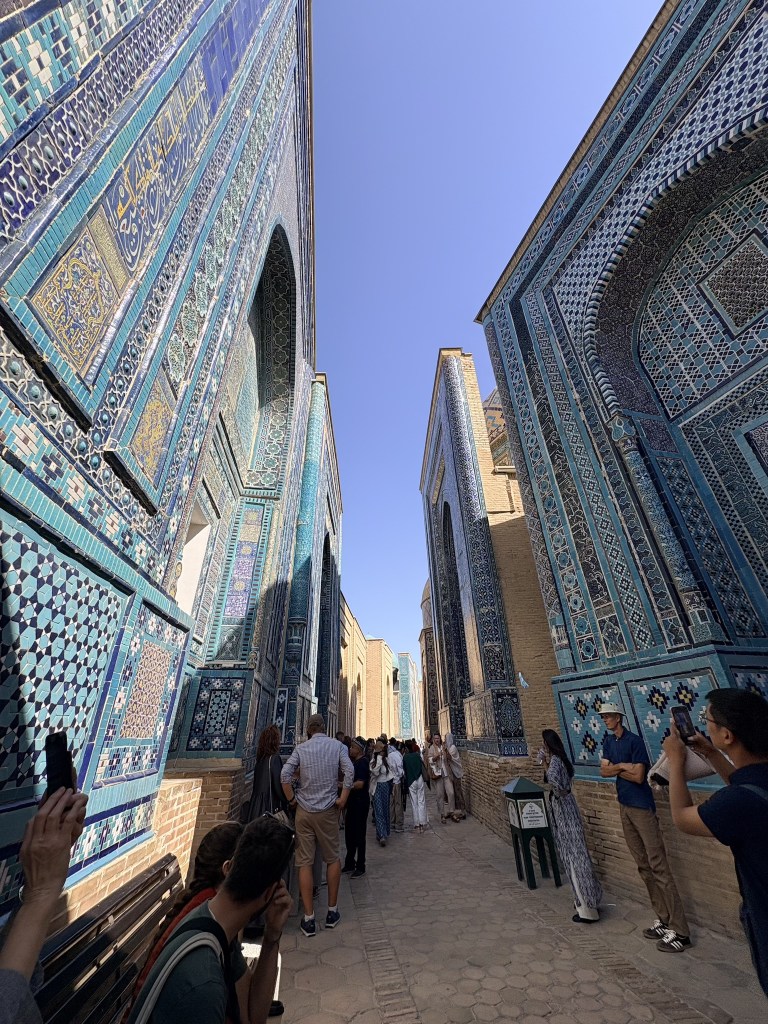
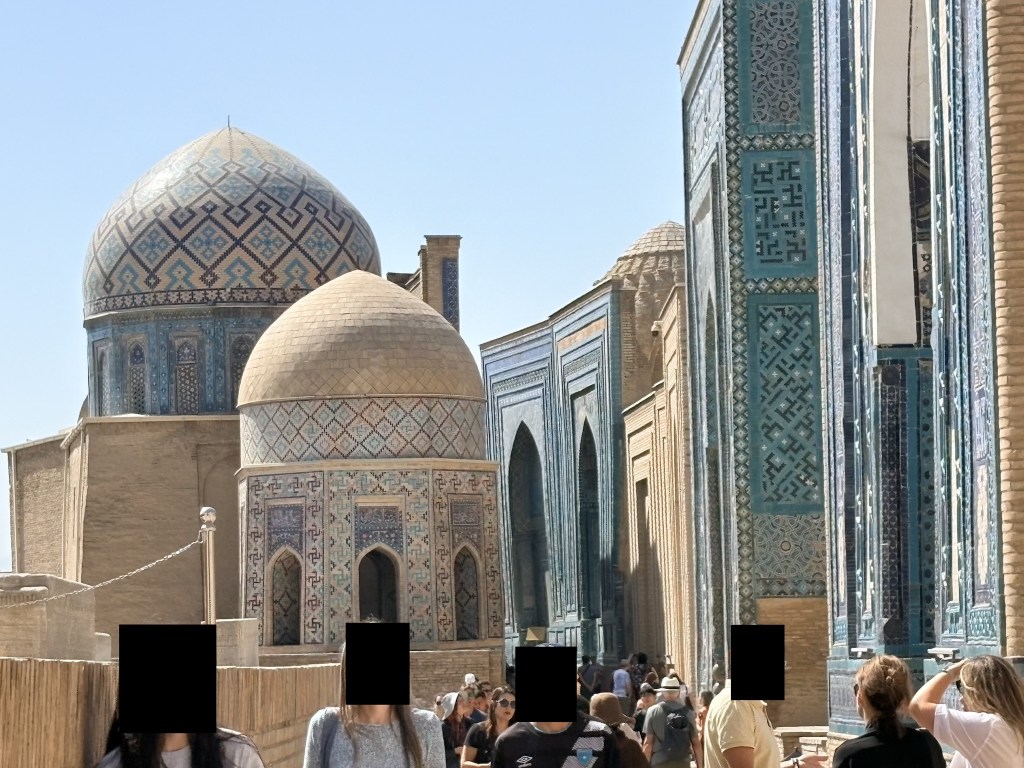
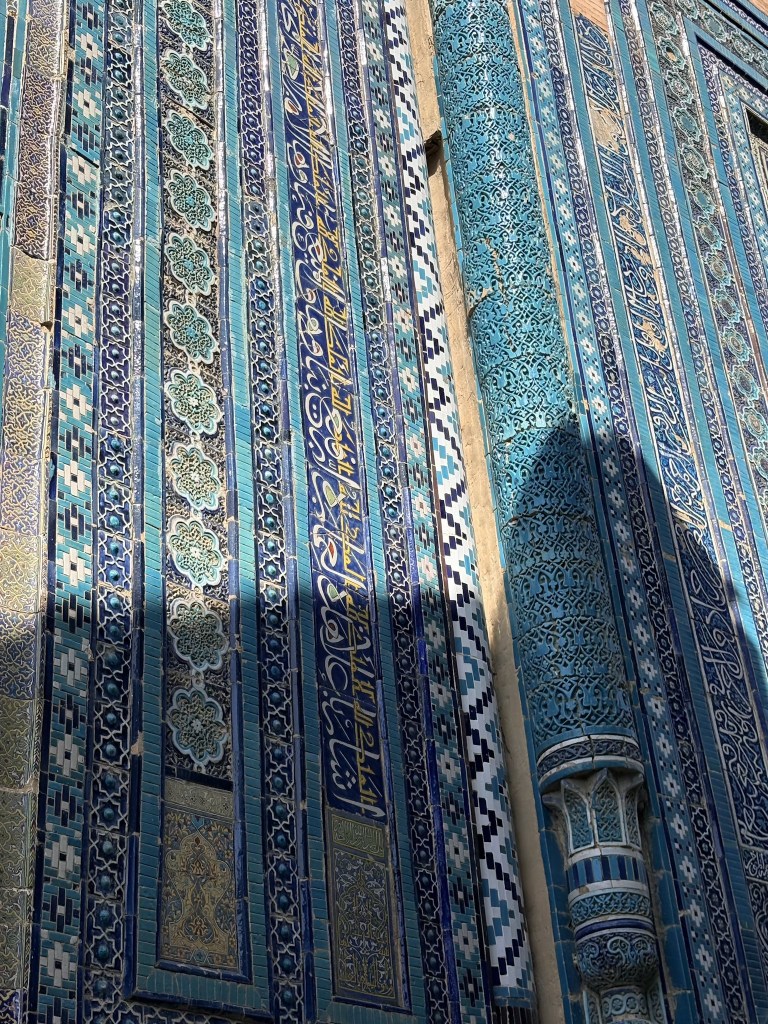
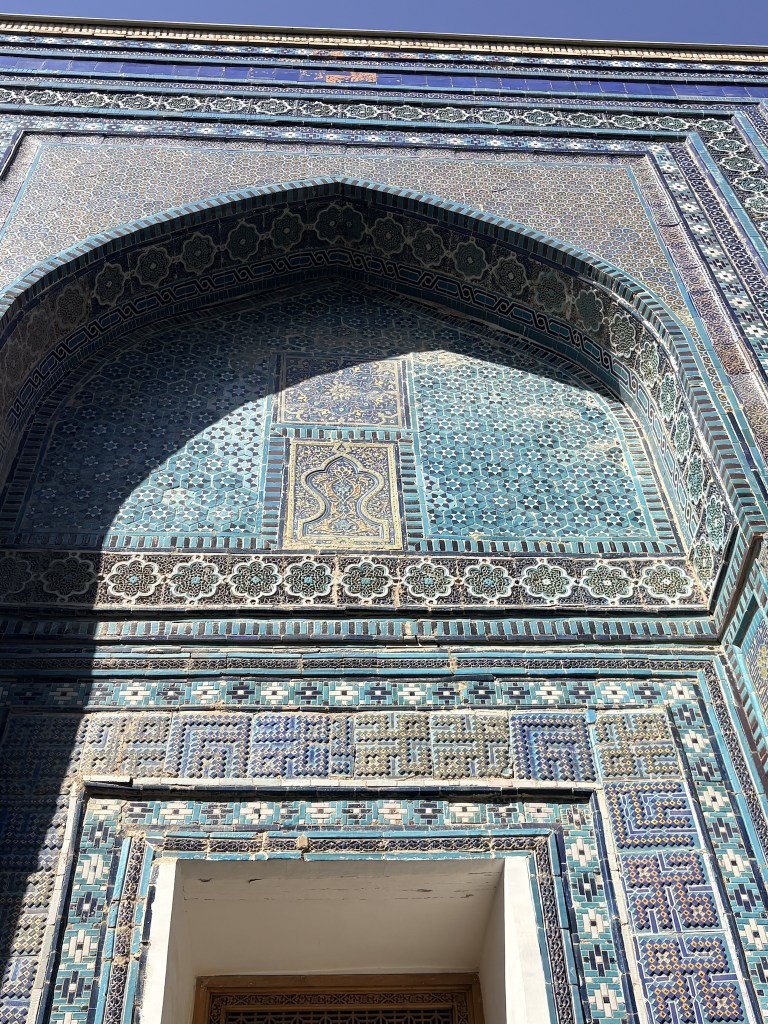
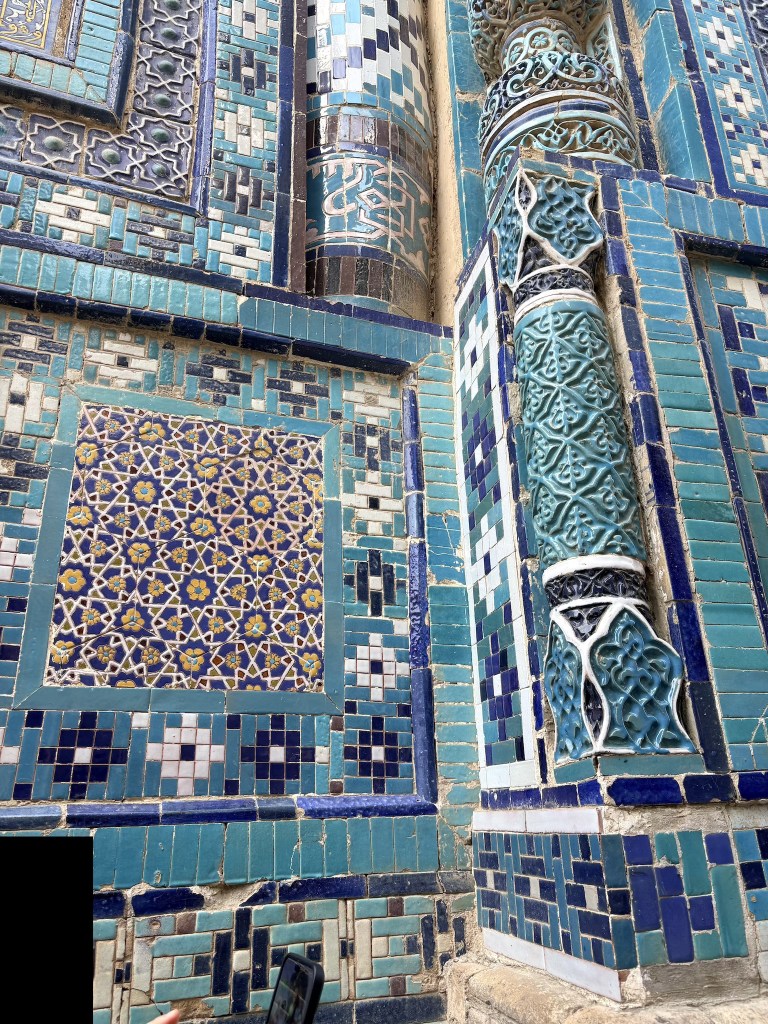
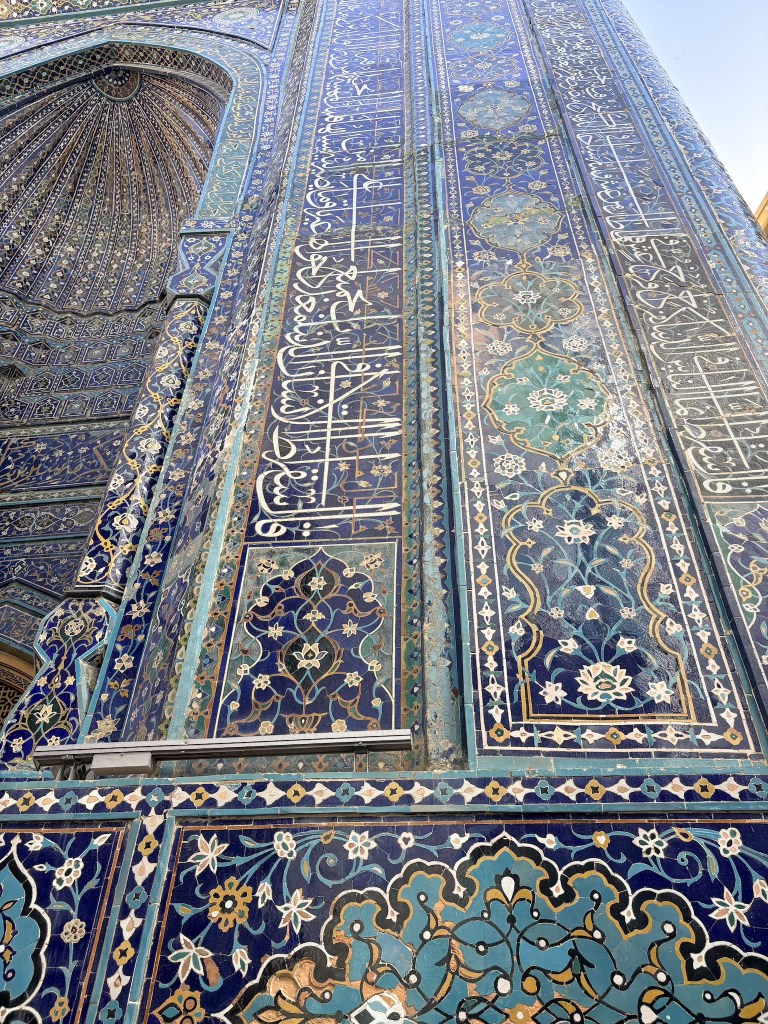
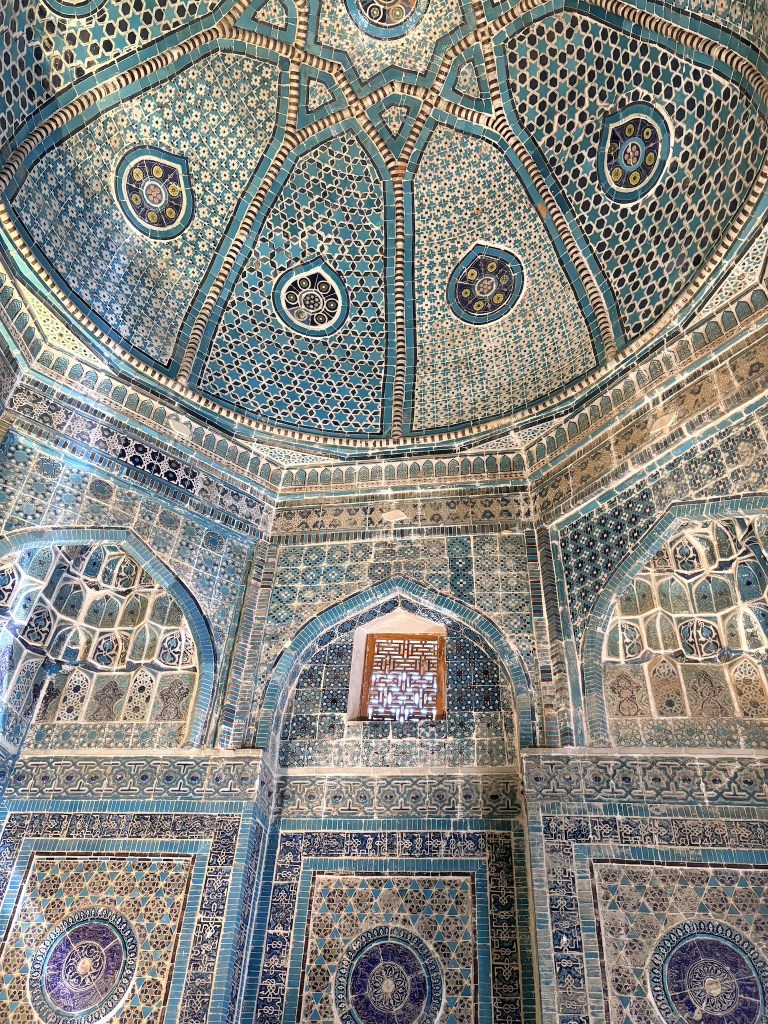
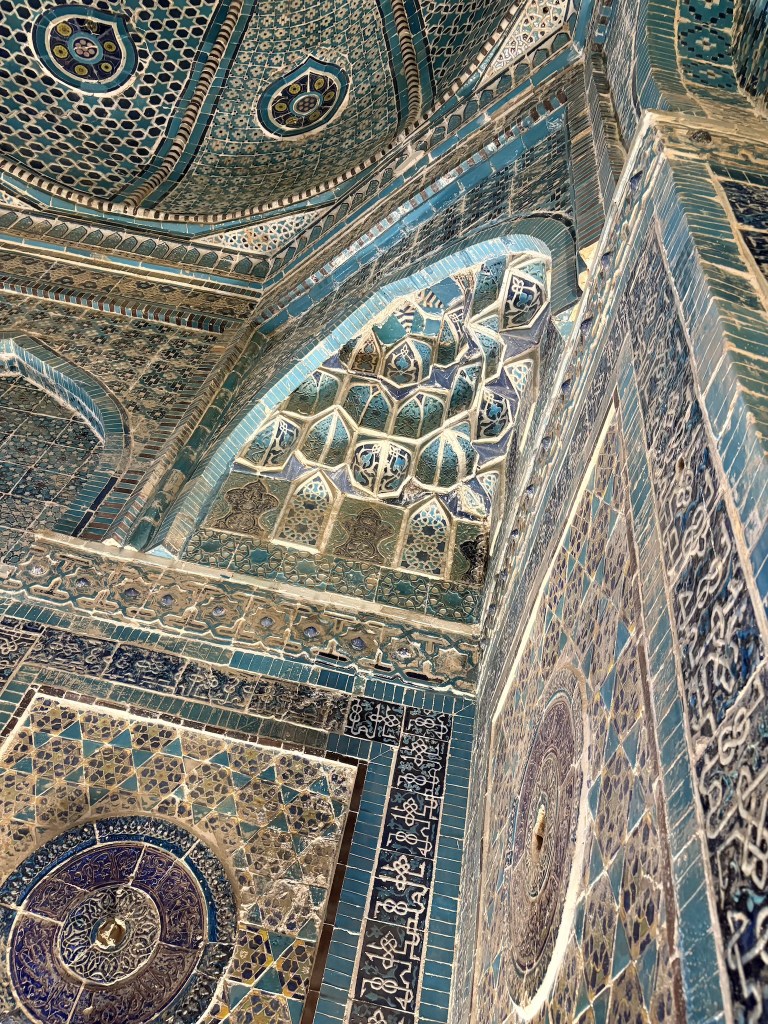
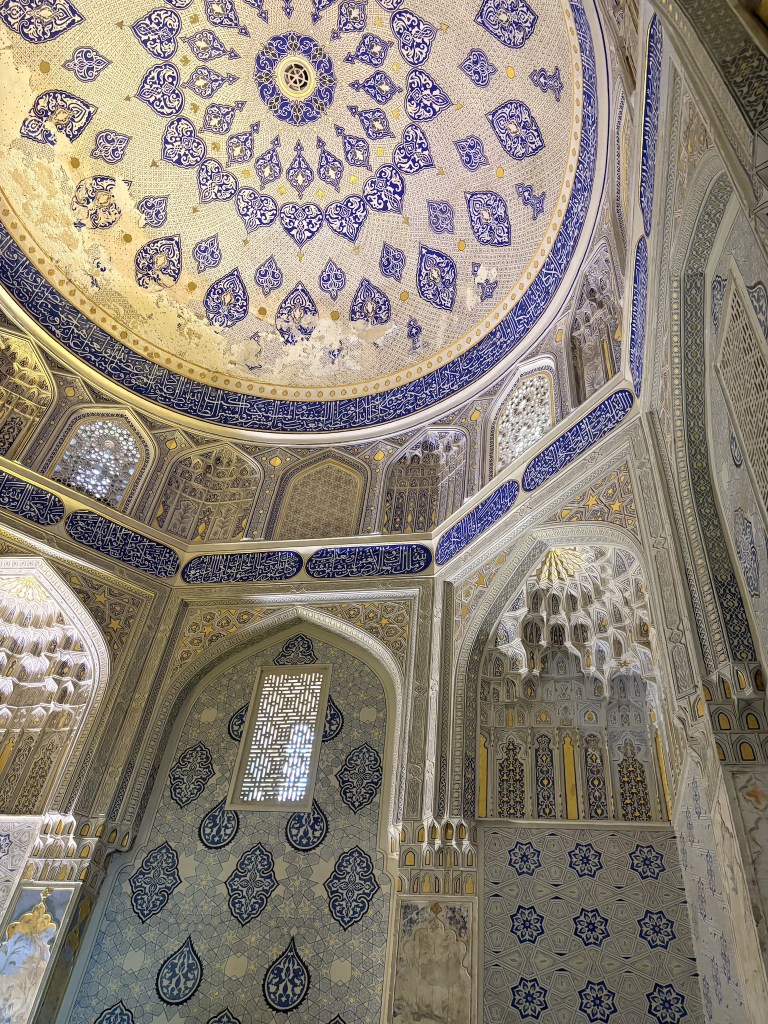
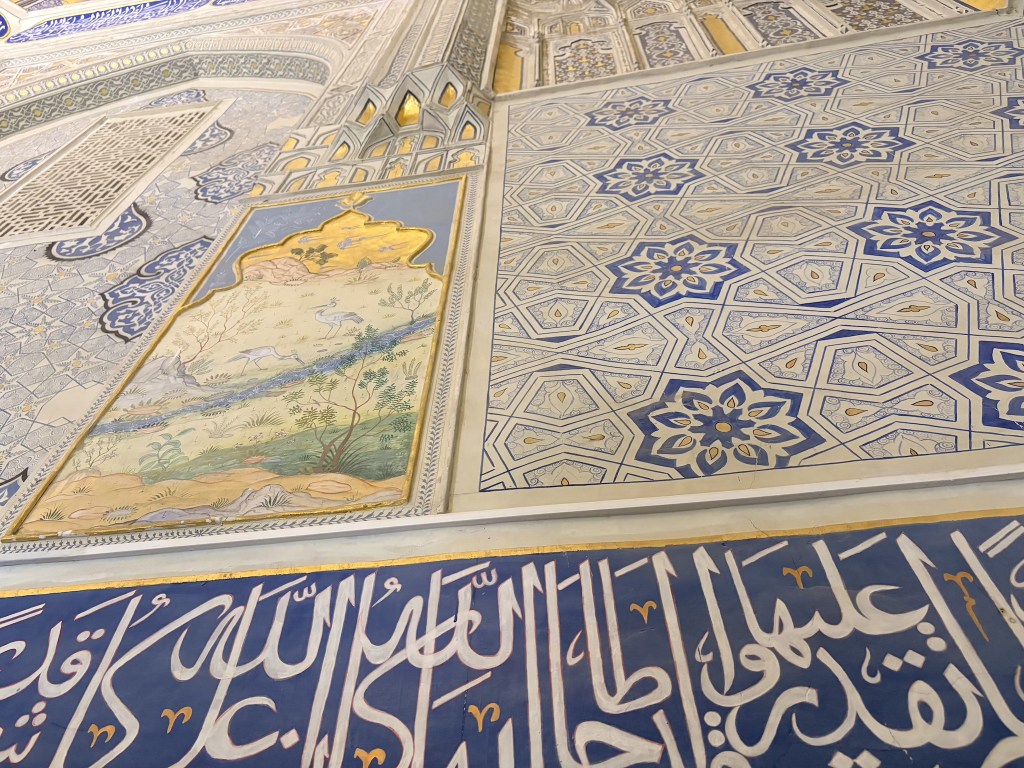
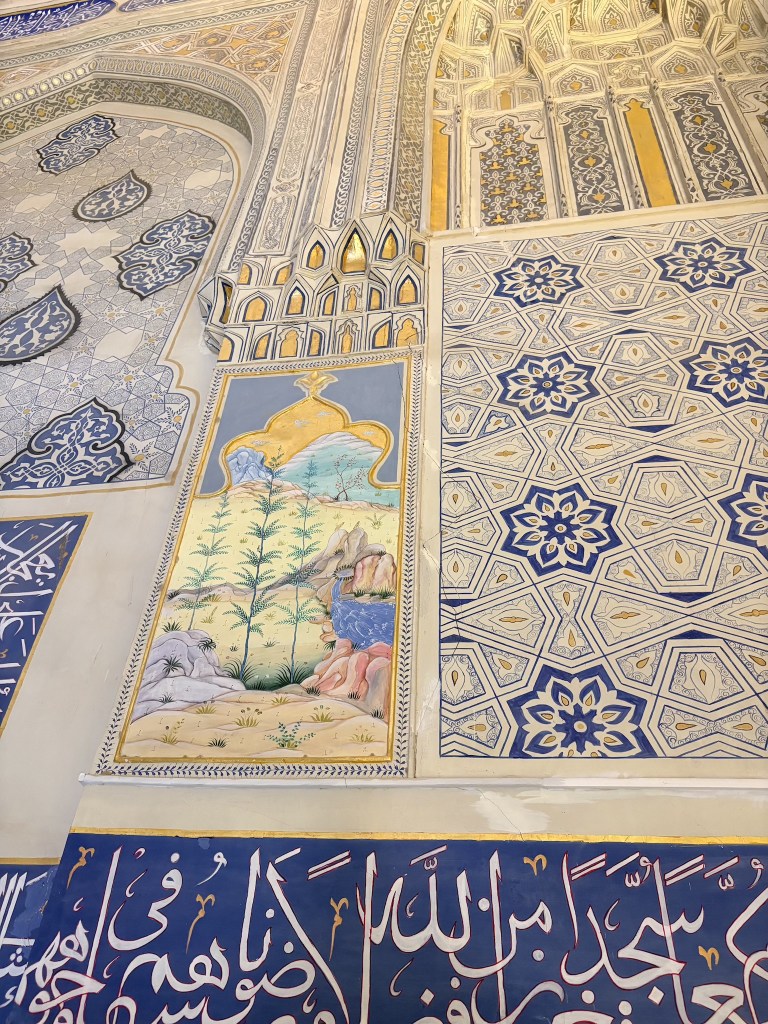
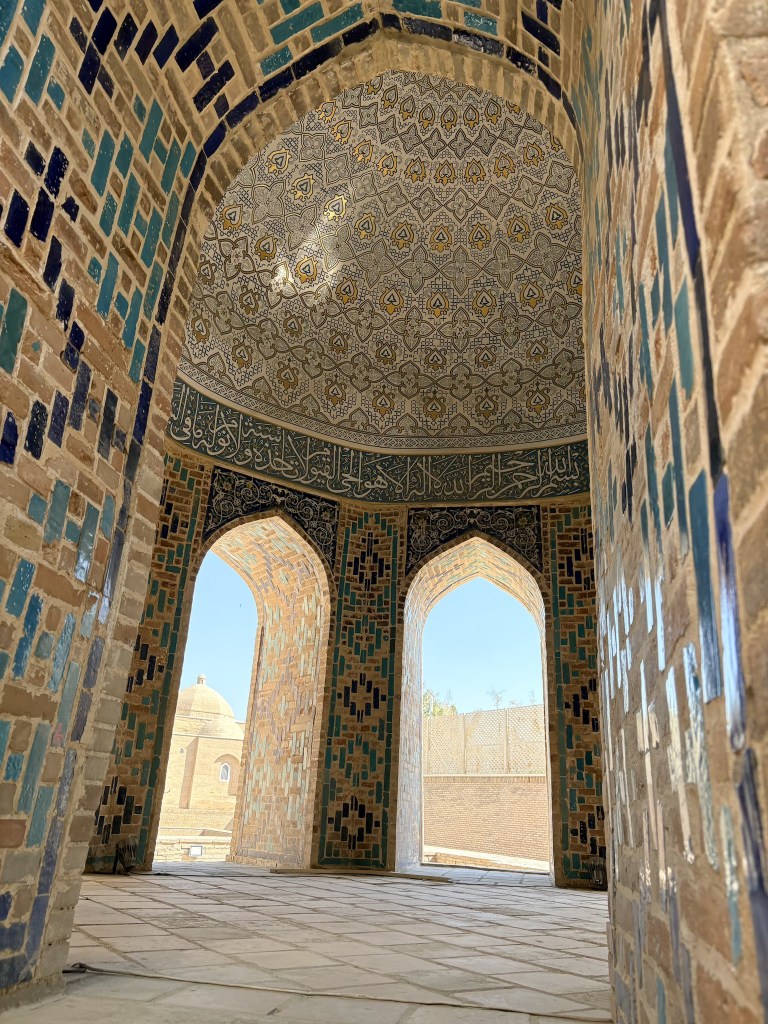
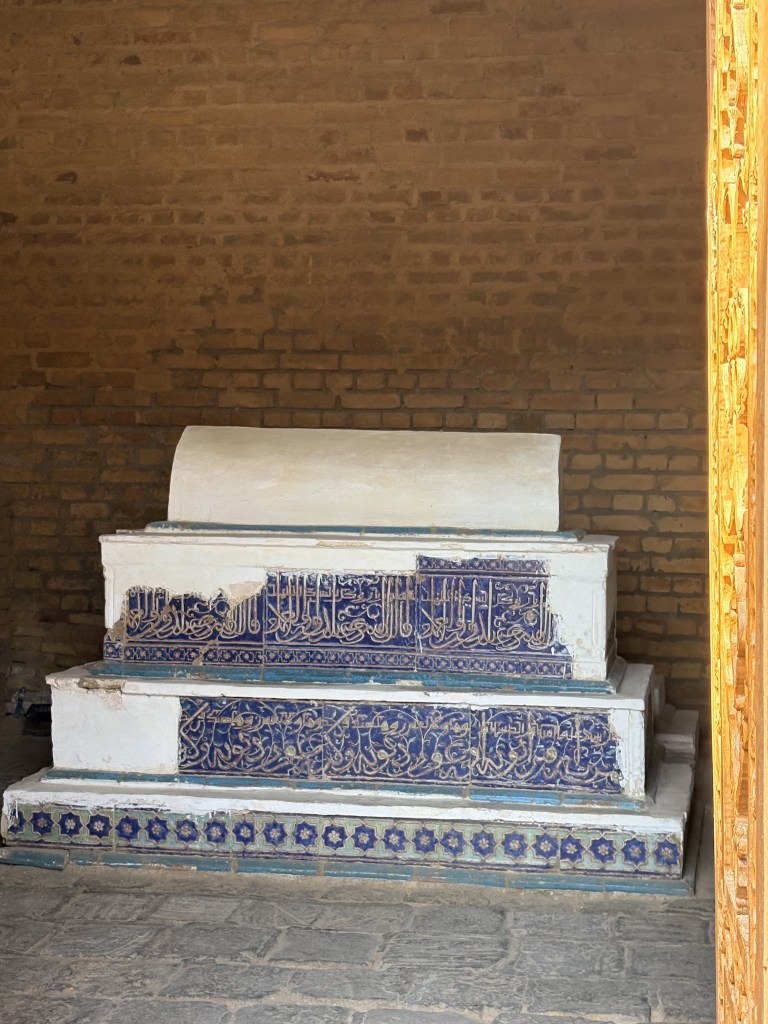
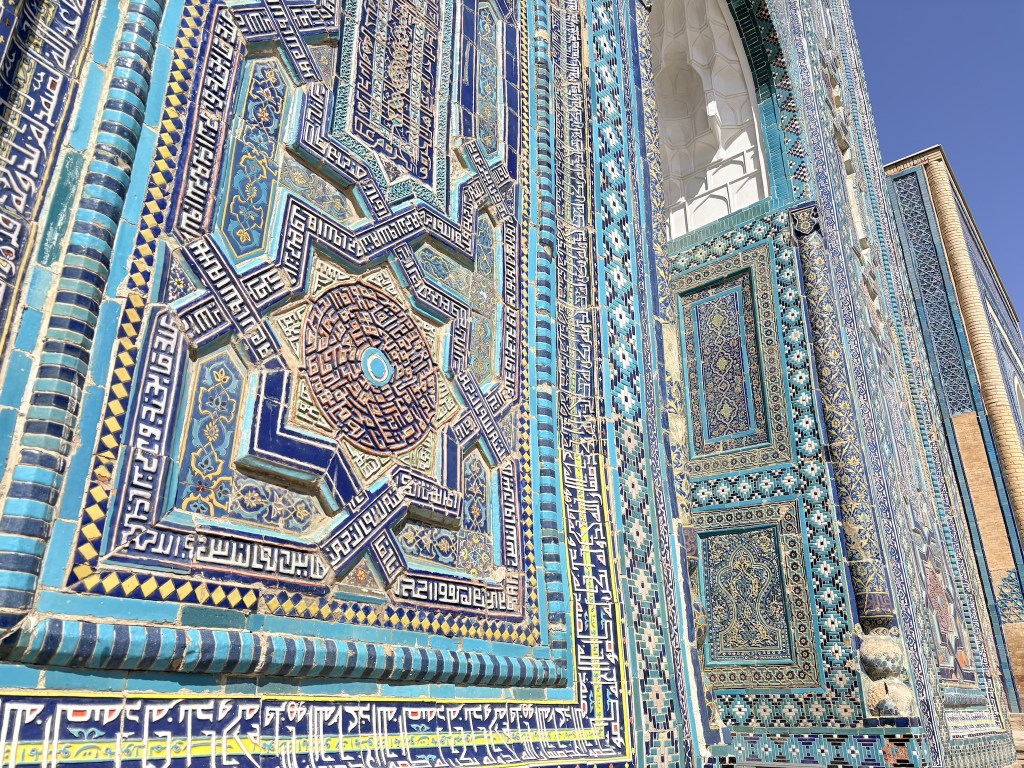
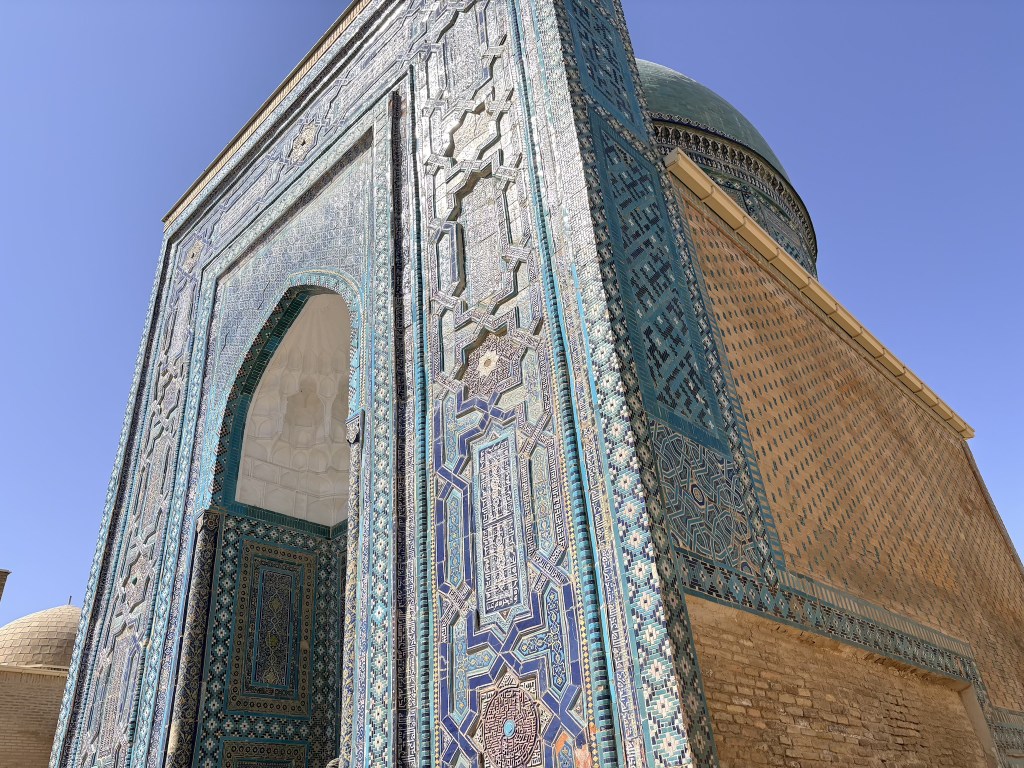
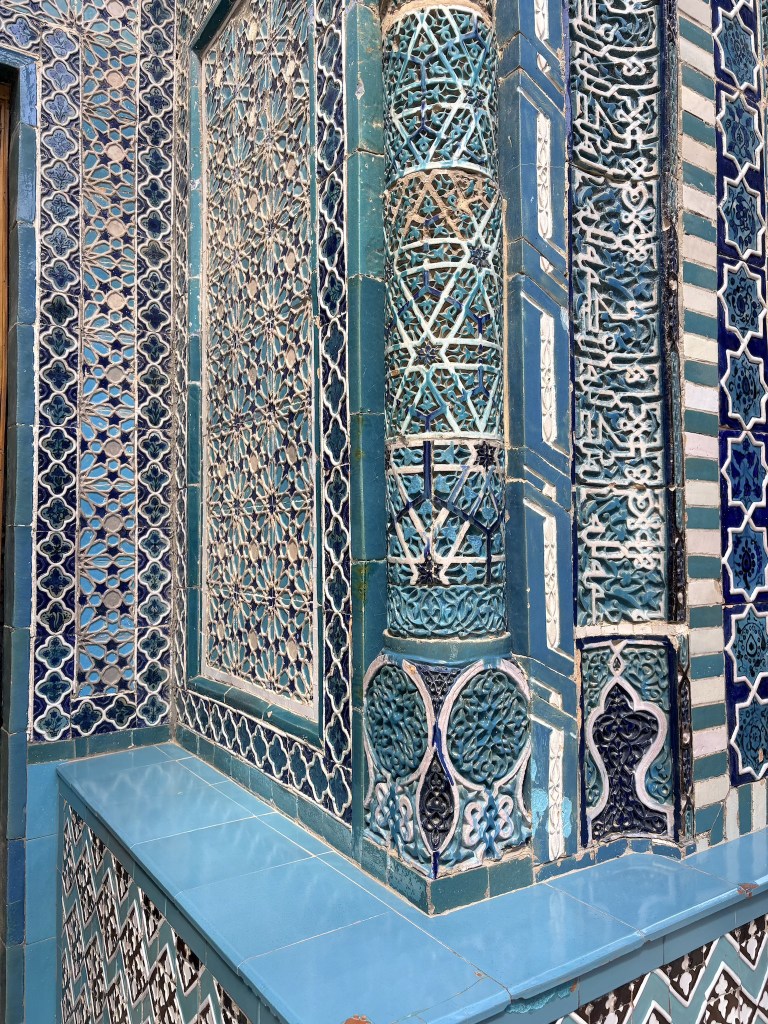
Why so fantastic? There was a belief that if you prepare for death you will live longer. The complex says it dates to the 11th through 19th centuries. Notice two styles of decoration – Uzbek and Persian (think of 1380 AD as the dividing line). The older style is geometric with hidden meanings, the newer style is less subtle symbolism.
I had thought it was the 18 wives of Amir Timur who were buried here. While there are a couple wives here, it is more diverse. There is his teacher (and the teacher’s family), a general, his niece, his sister, a prince, and the architect who built the necropolis. Did you know the Indian king who built the Taj Mahal was a descendant to Timur?
There are original 15th century doors over which the inscription reads “all doors to heaven are open to you.”
With regard to spiritual significance, the cousin of Mohammad (Khosan ibn Abbas) is buried here. He is particularly important because he was the last to see Mohammad alive. We are told he brought Islam to the region in the 7th century. He was killed while praying, thus he is a martyr.
Silk Carpets
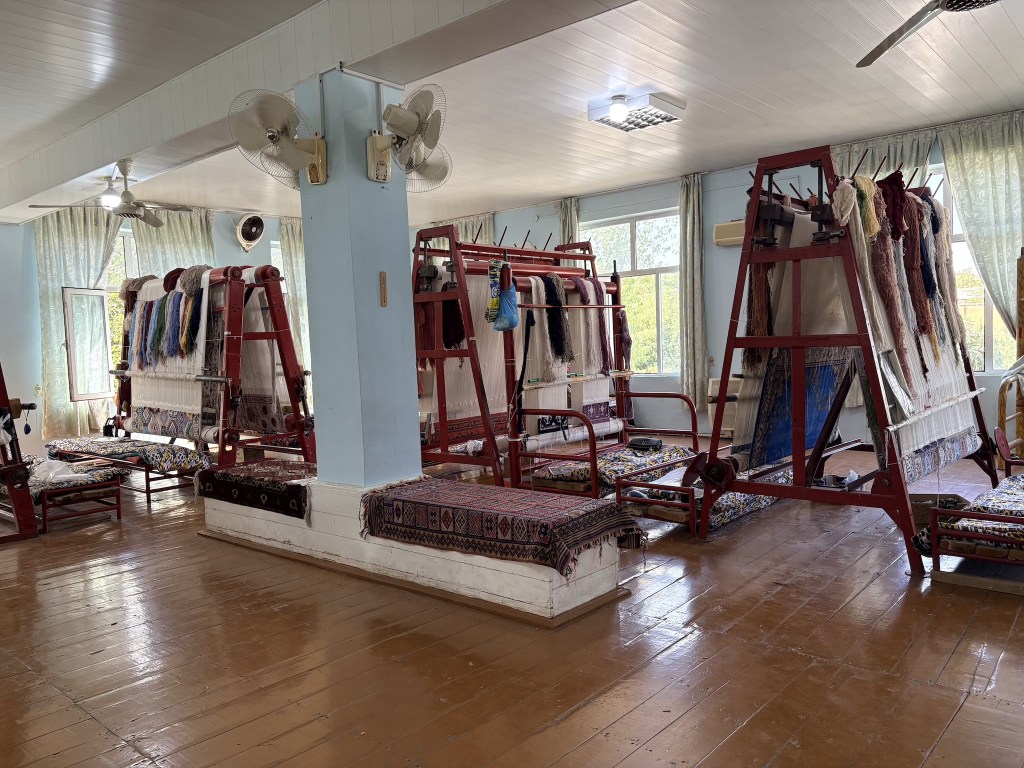
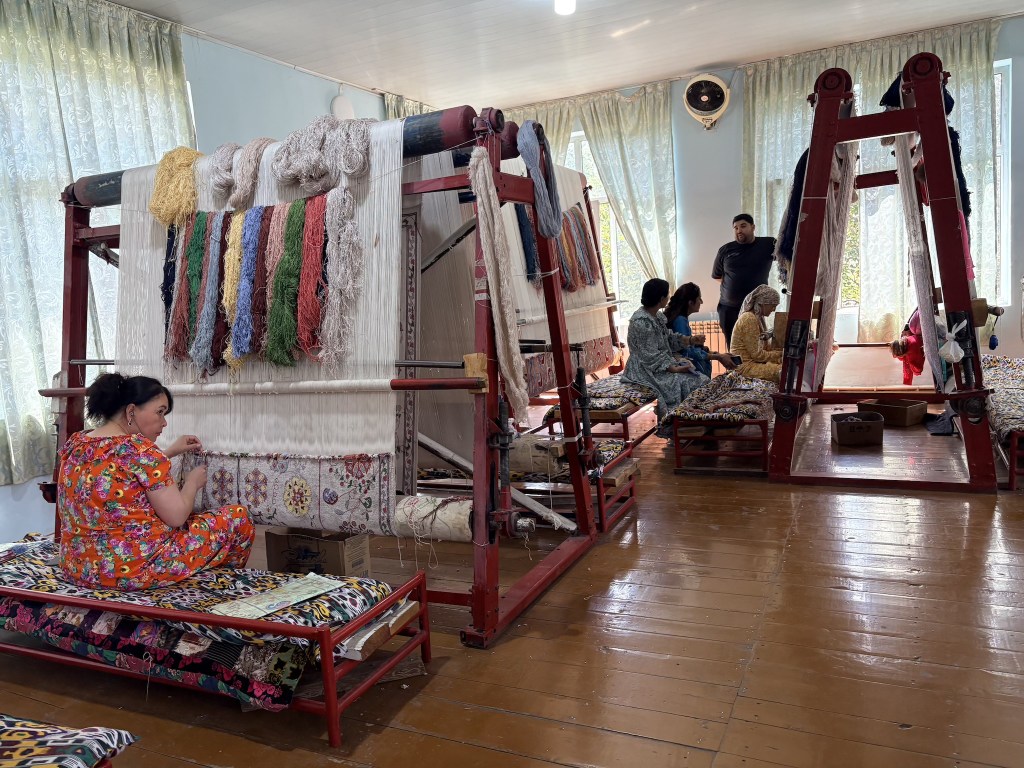
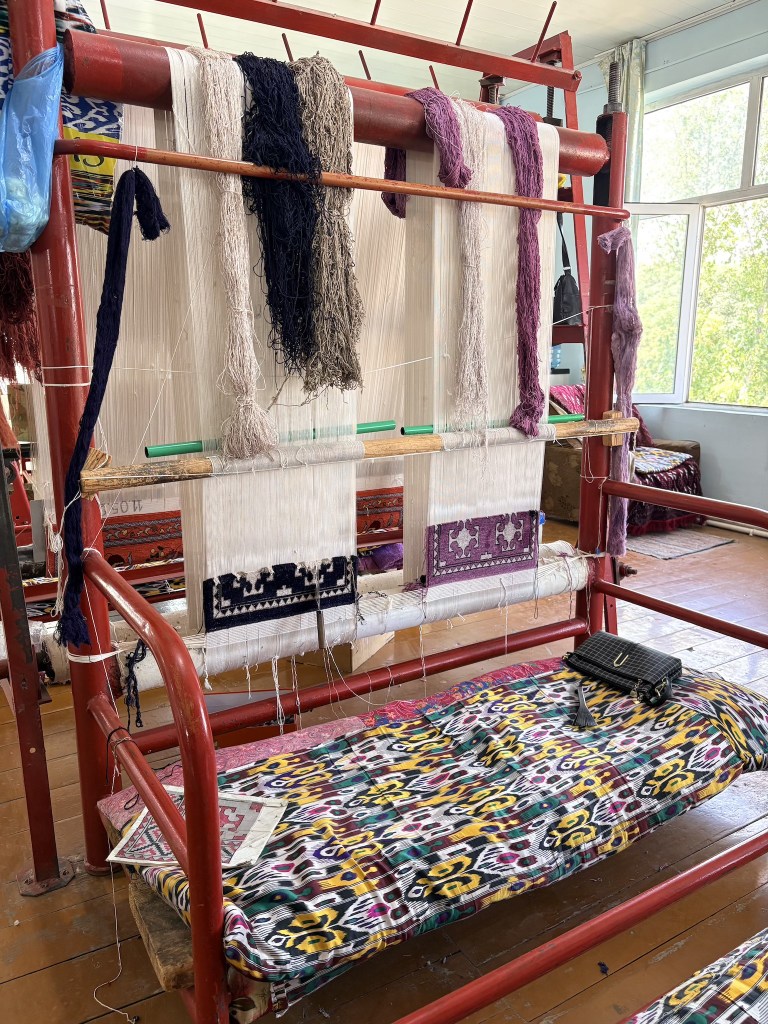
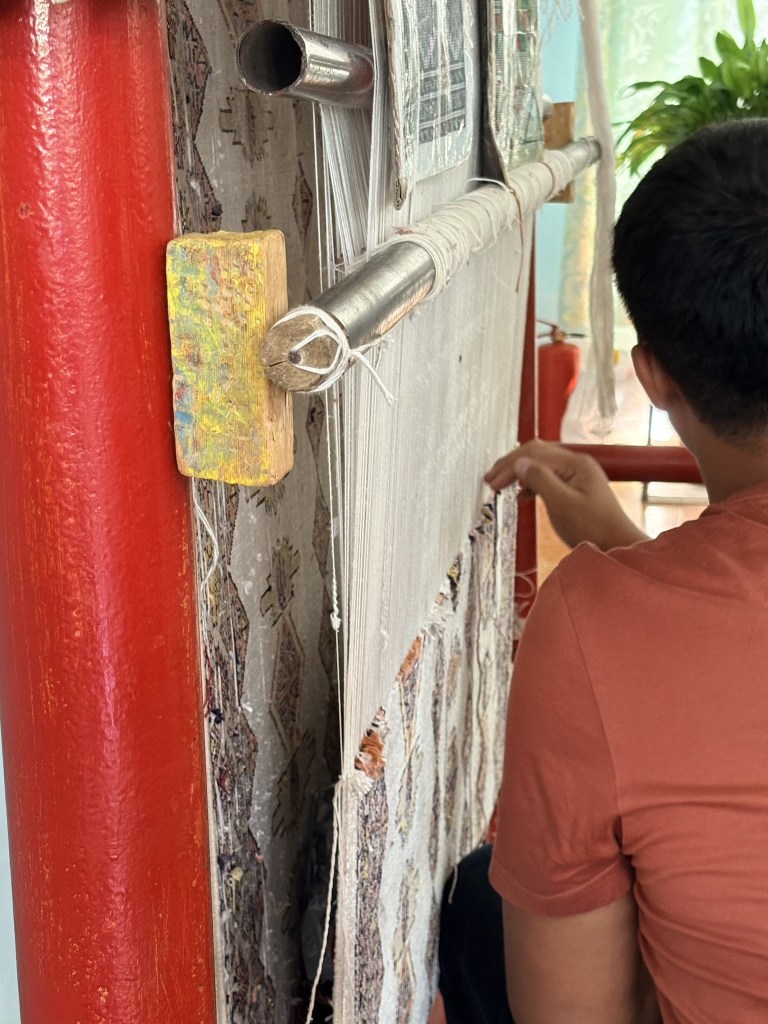
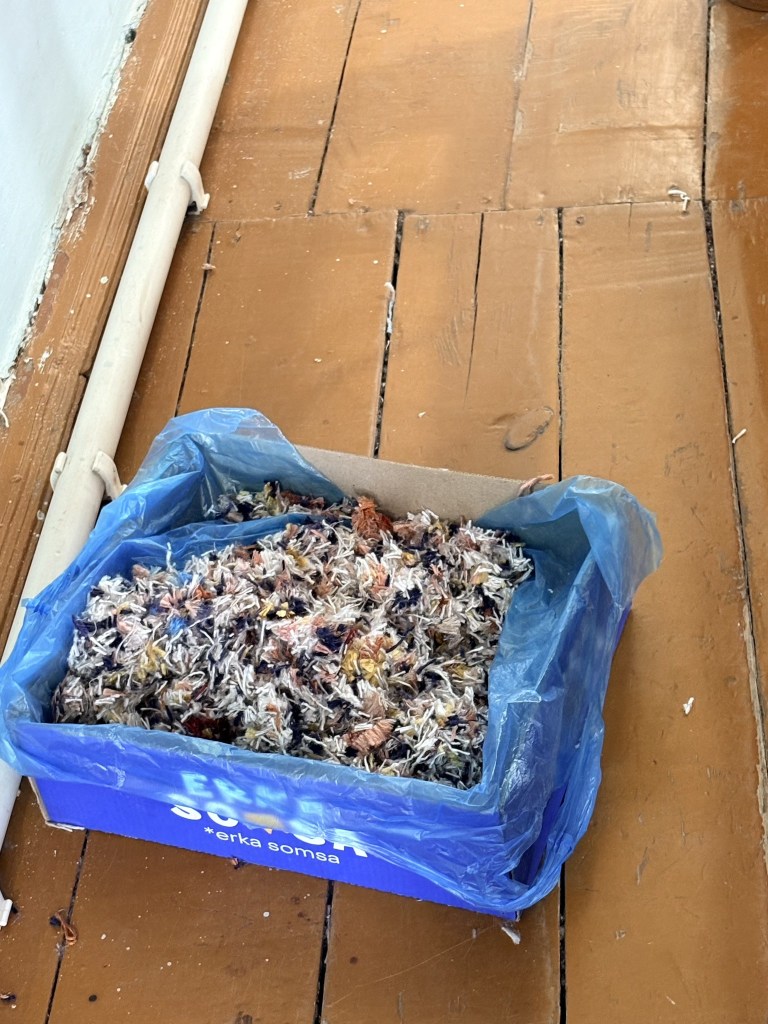
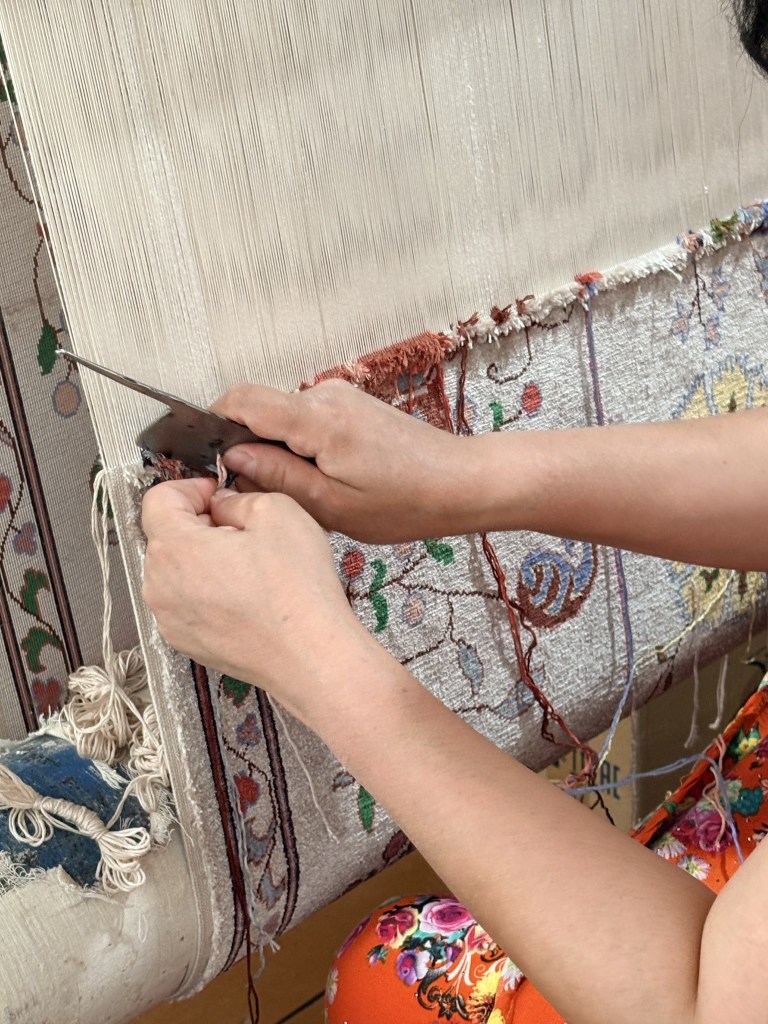
From there we went to a silk carpet craft center that opened in 1992. It was founded by a master who lived to the age of 105! They have 25 silk workers and 450 wool workers. They are able to tie 40 knots per minute. The silk threads that are discarded are saved to fill pillows. 60% of what they produce are custom orders. Of course rugs of any substantial size take years to complete.
Reviewed the traditional vegetable dyes, such as madder root, onion skin, and walnut shells. But this was the first I heard of asparagus used for yellow color. The trees around the city are chestnut and mulberry. People here have never heard of eating chestnuts! We are told they tried growing indigo here but the climate was too hot.
The wool they use is not only Uzbek, but also Afghan and from New Zealand. They have some examples of kilim (made by knots rather than weaving). Sumac is the name of an embroidered carpet.
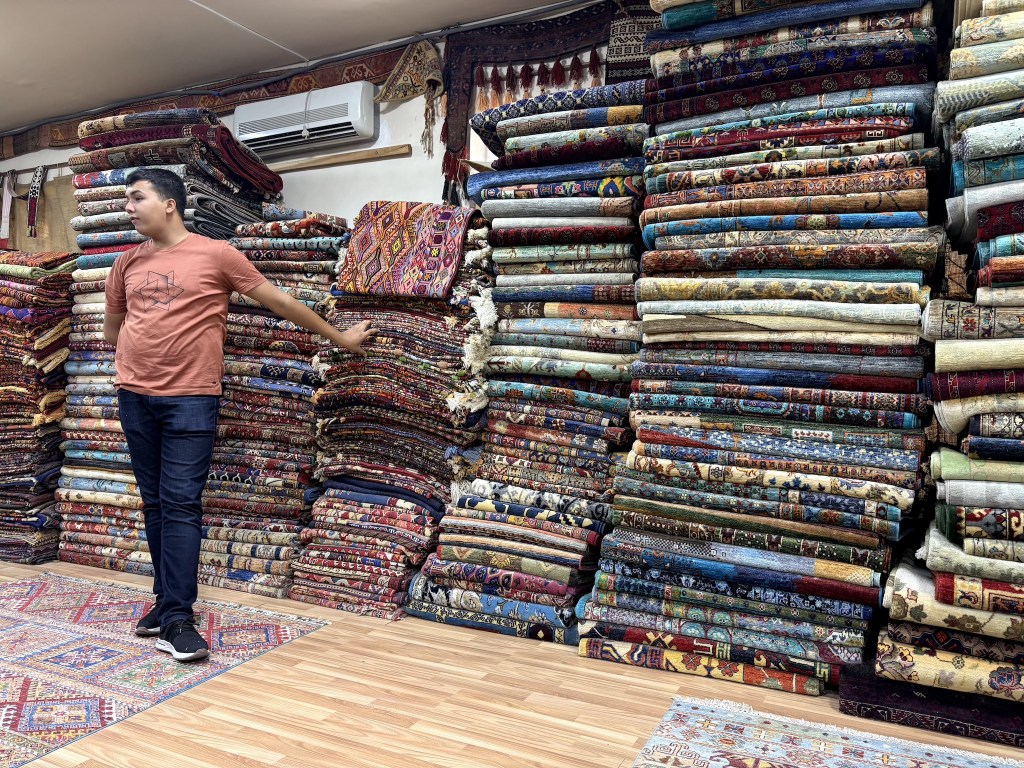
Can you catch the sheen of the silk in the first photo? Check out the sales room in the last photo. Kinda overwhelming.
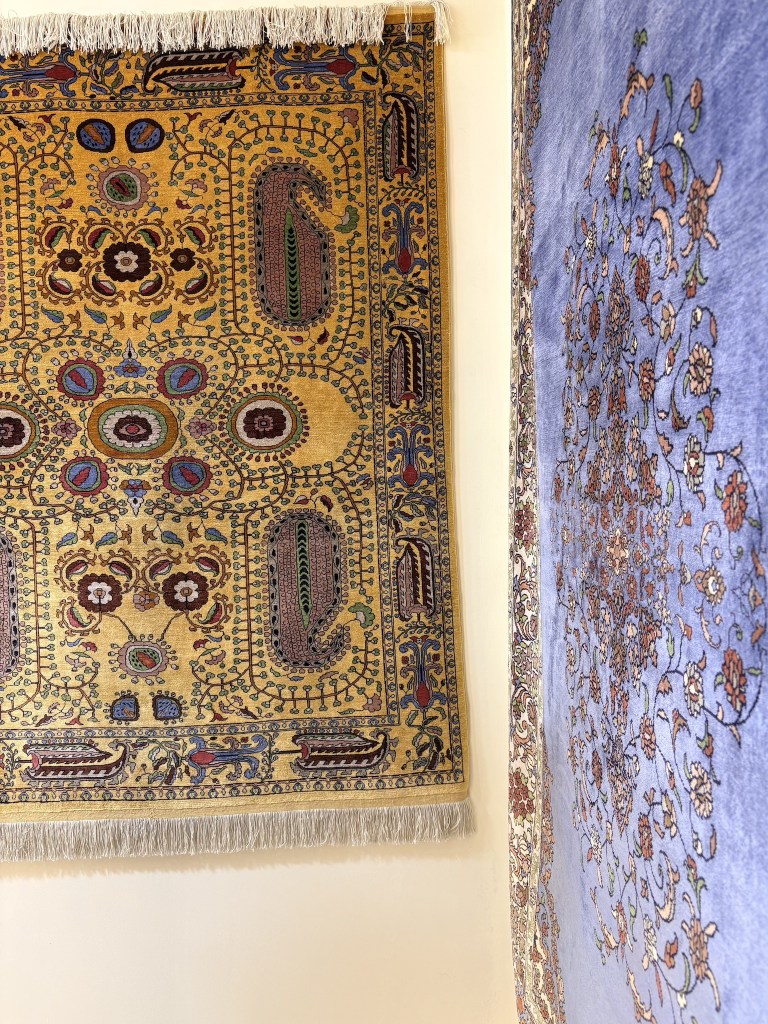
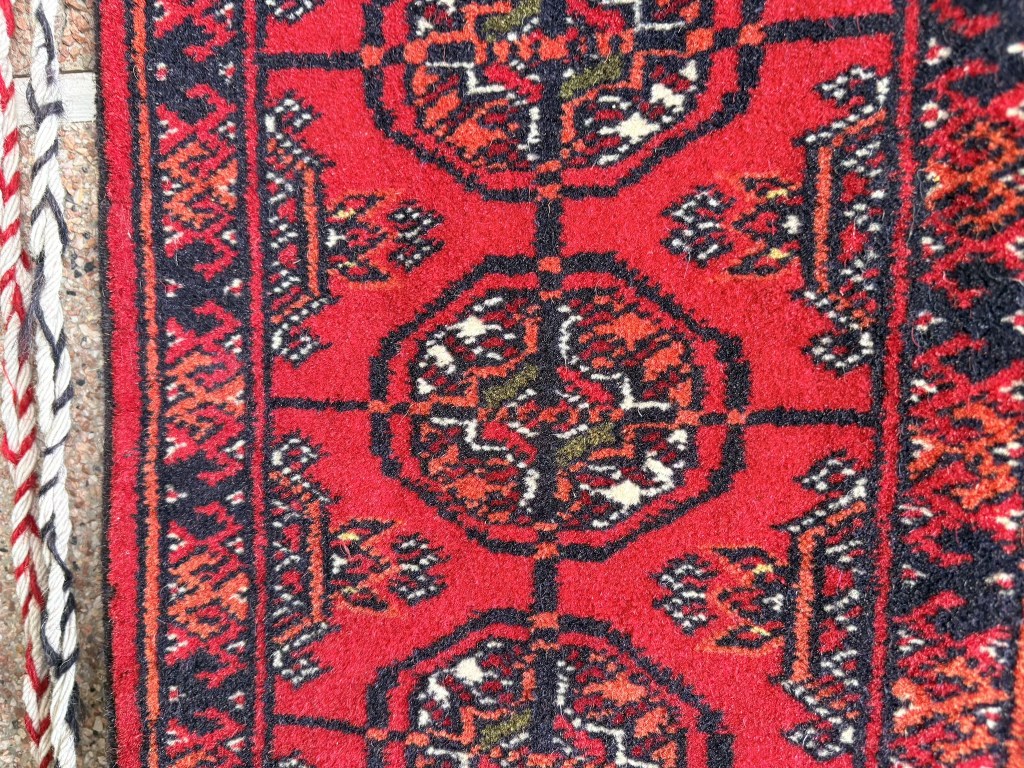
Call me rude, but I’ve seen this design before and not given it much thought. Well it turns out to be quite thoughtful! It is a calendar with four seasons and the three parts within are the three months of each season.
Astronomy
After lunch we headed to the super-duper famous Ulug’bek Observatory! *Oooo Ahhh* From 1424. Had to get an “I was here” shot.
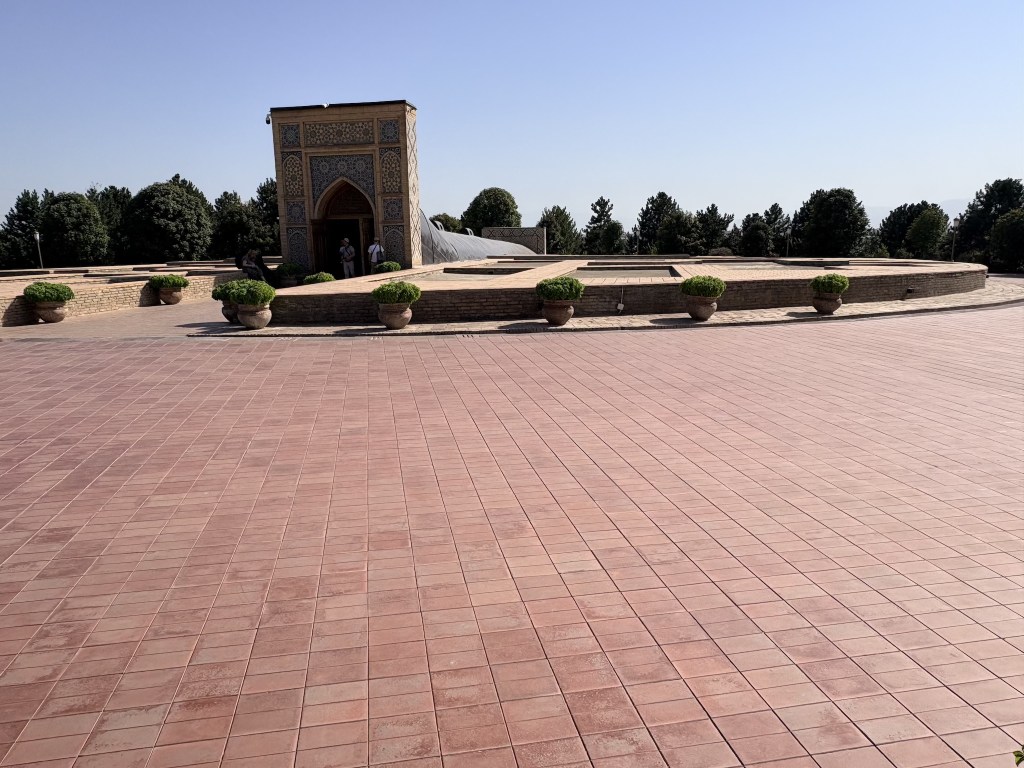
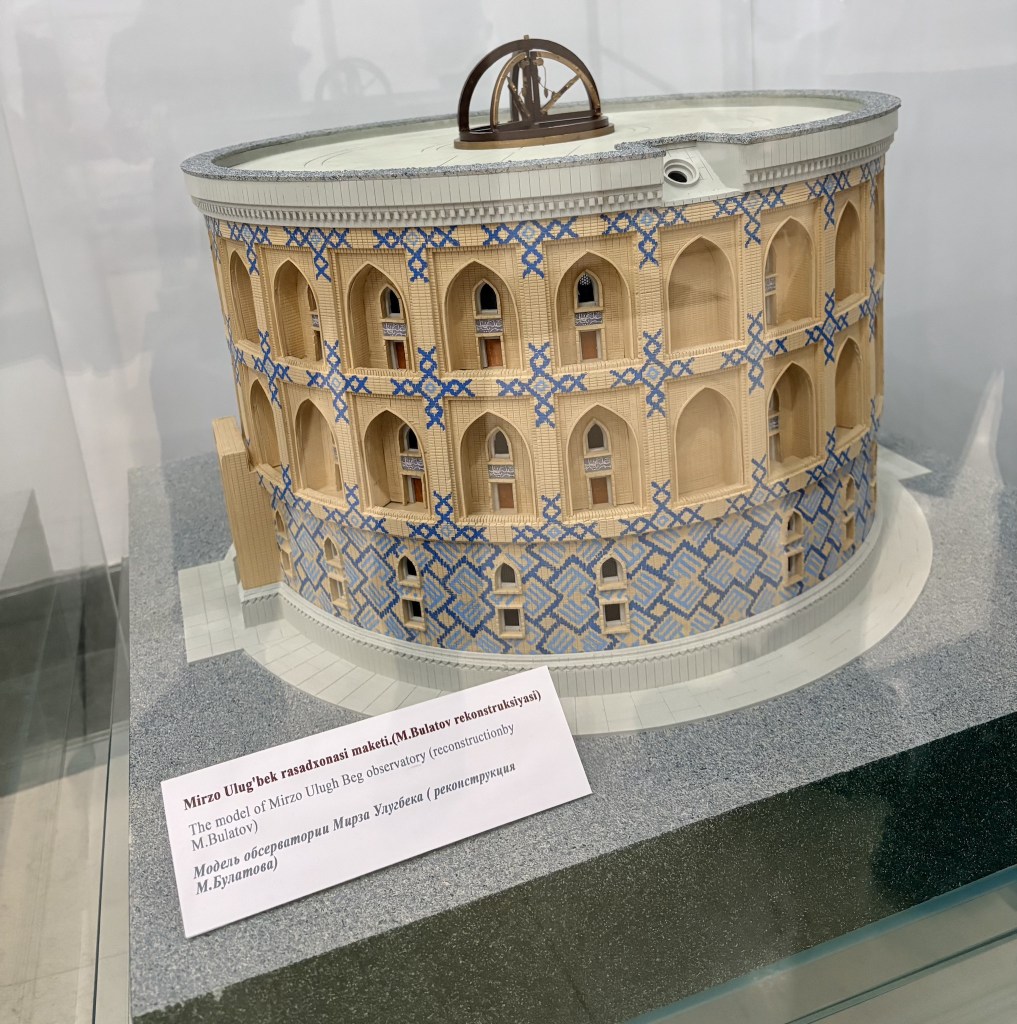
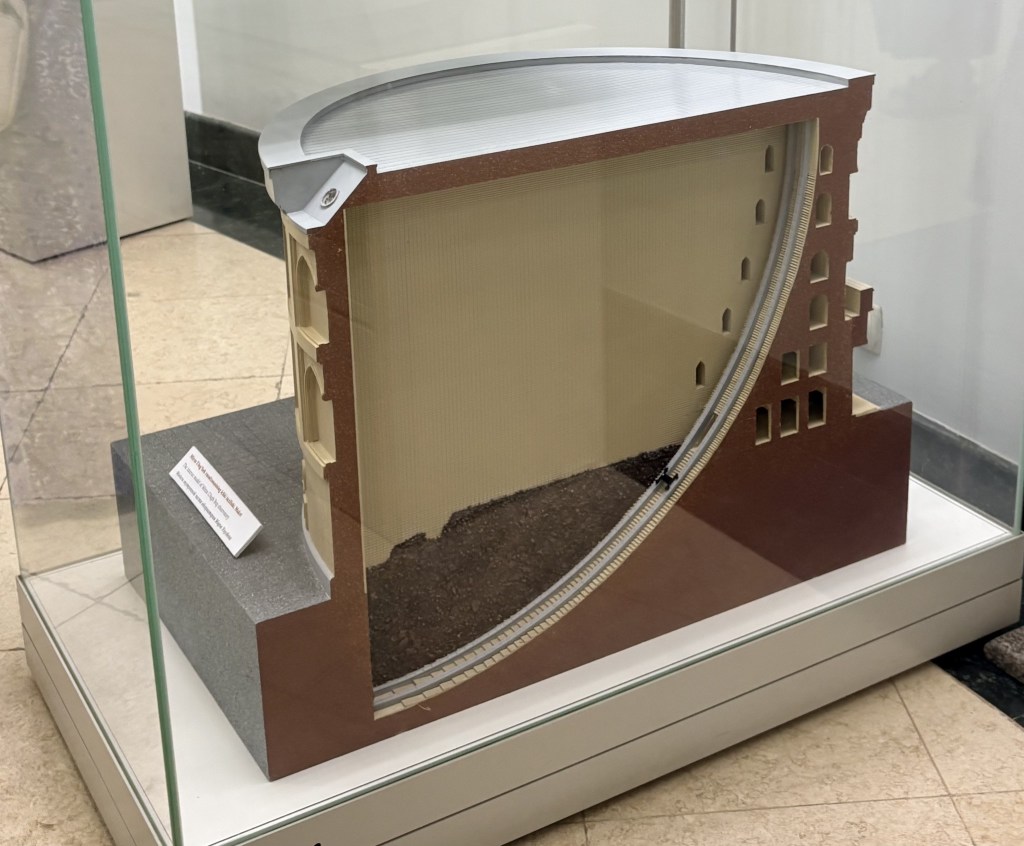
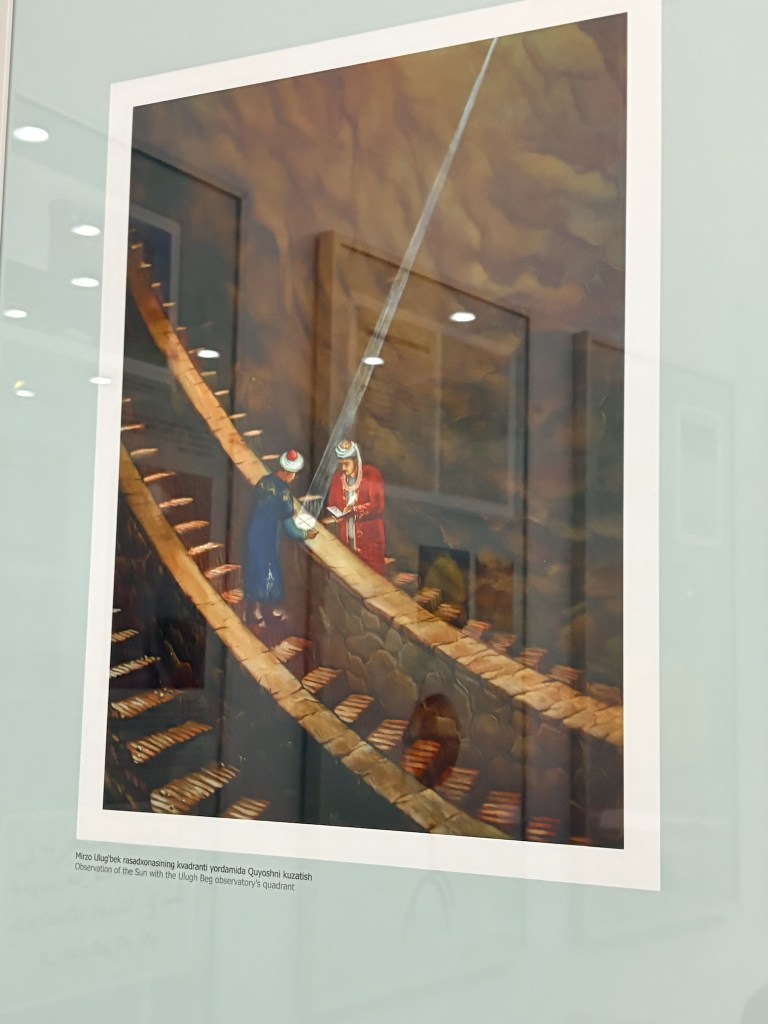
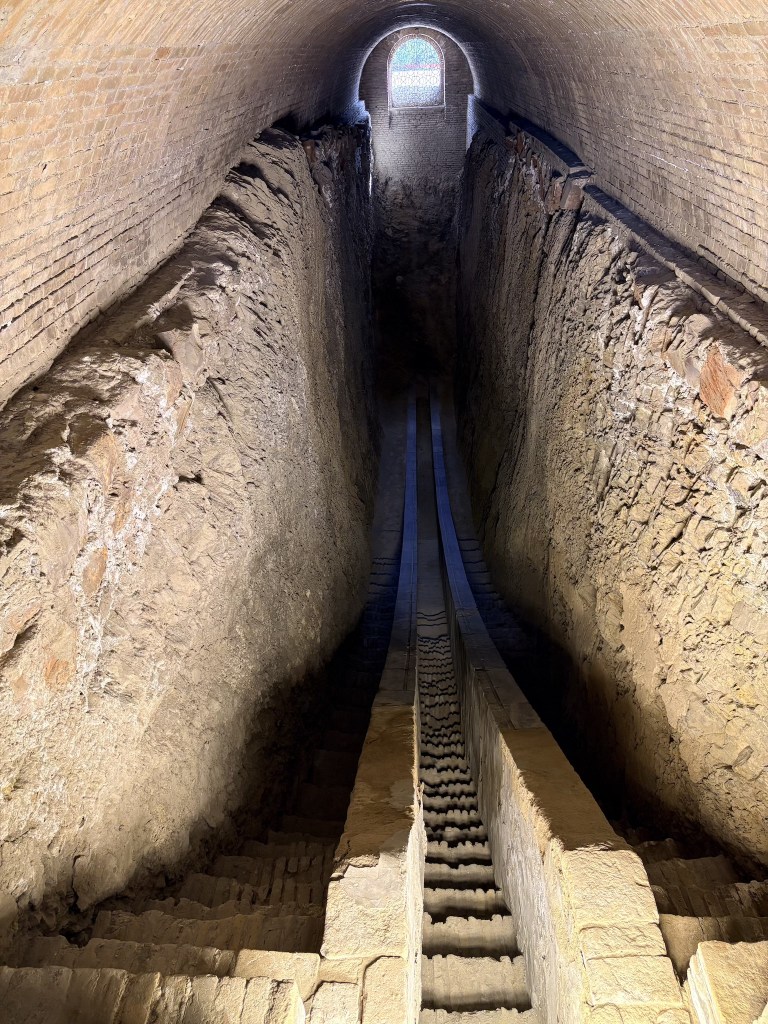
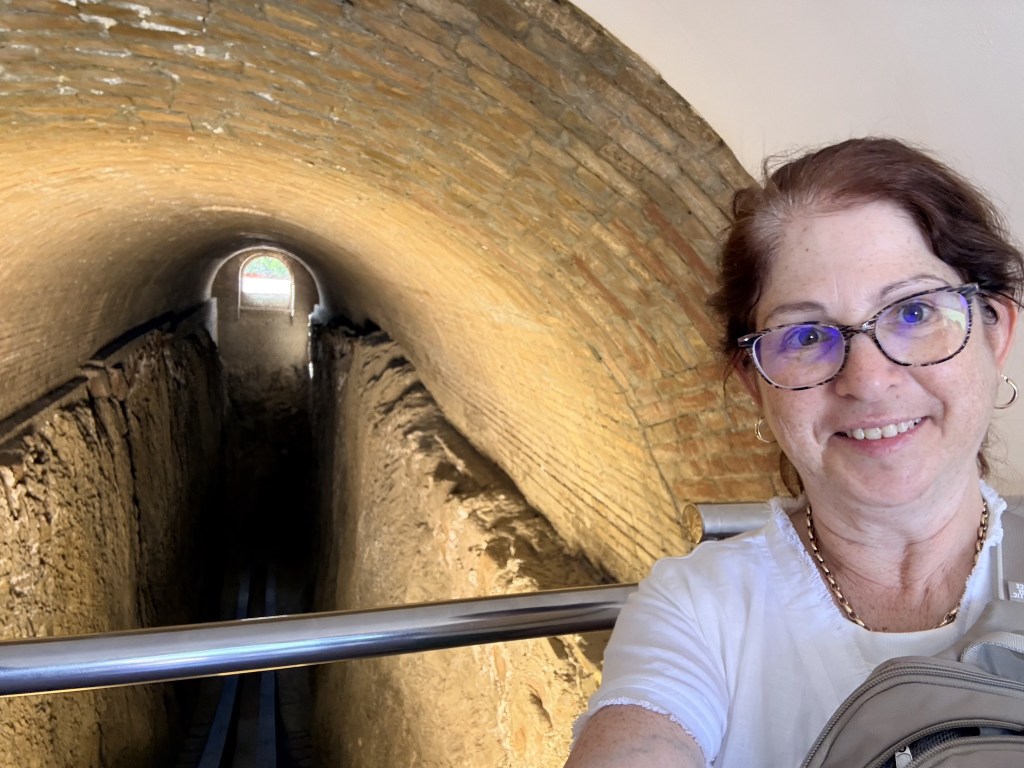
There was a little museum here. Aren’t you jealous of people who lived before light pollution? Check out the constellation stories they told (as illustrated here).
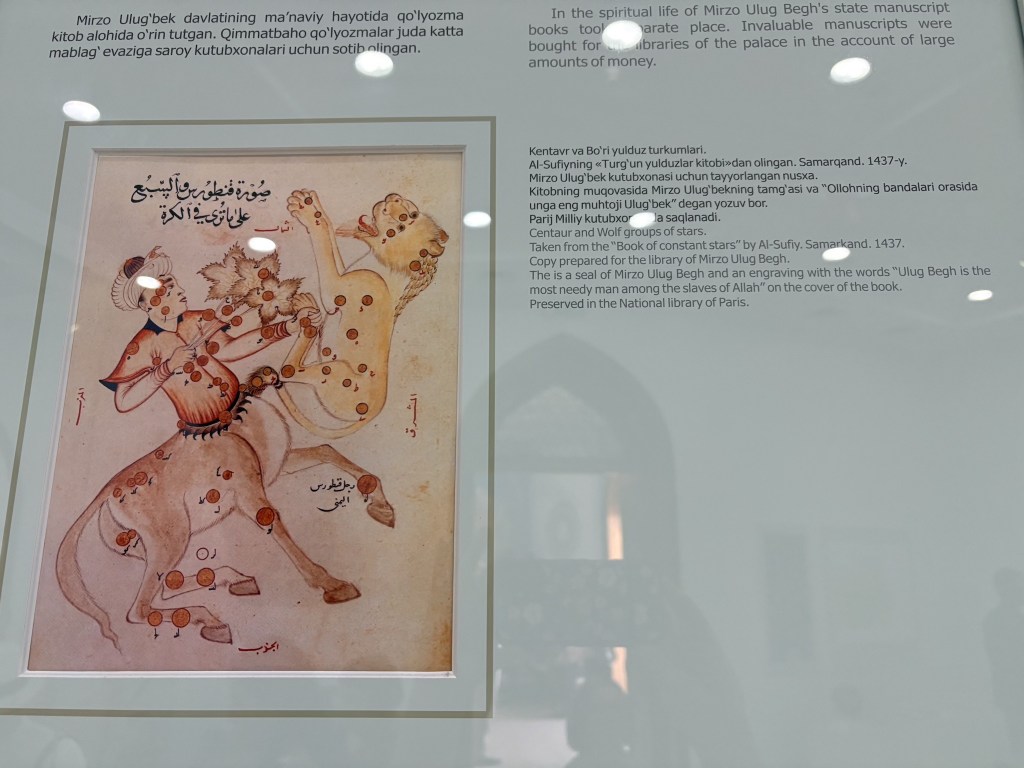
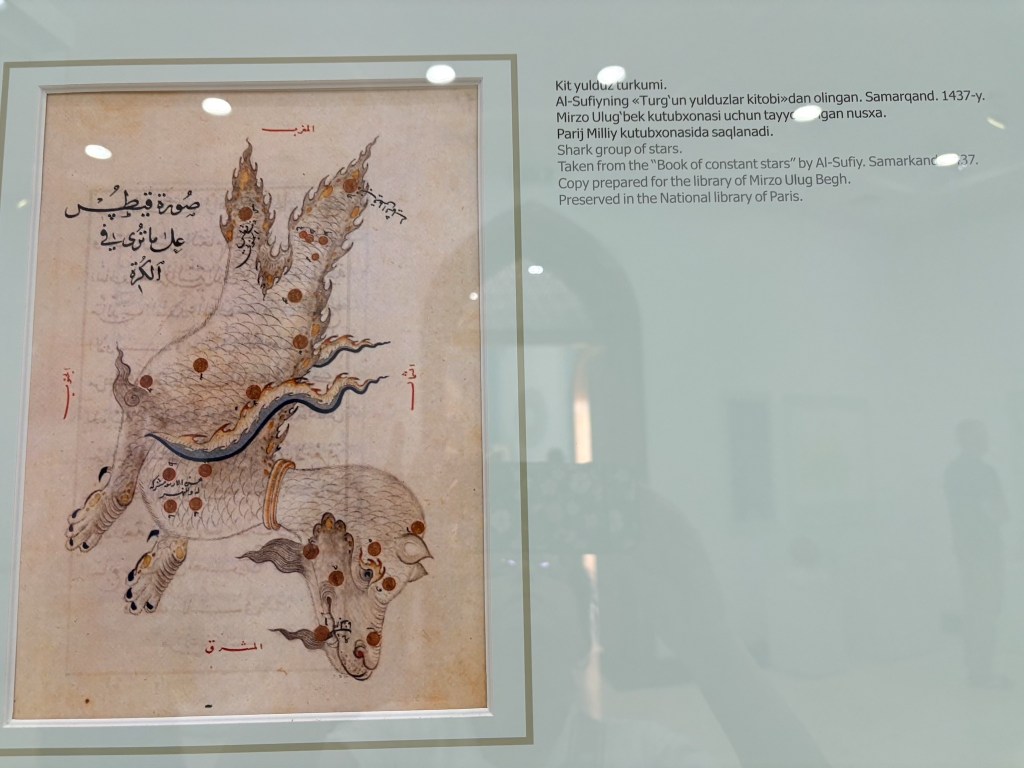
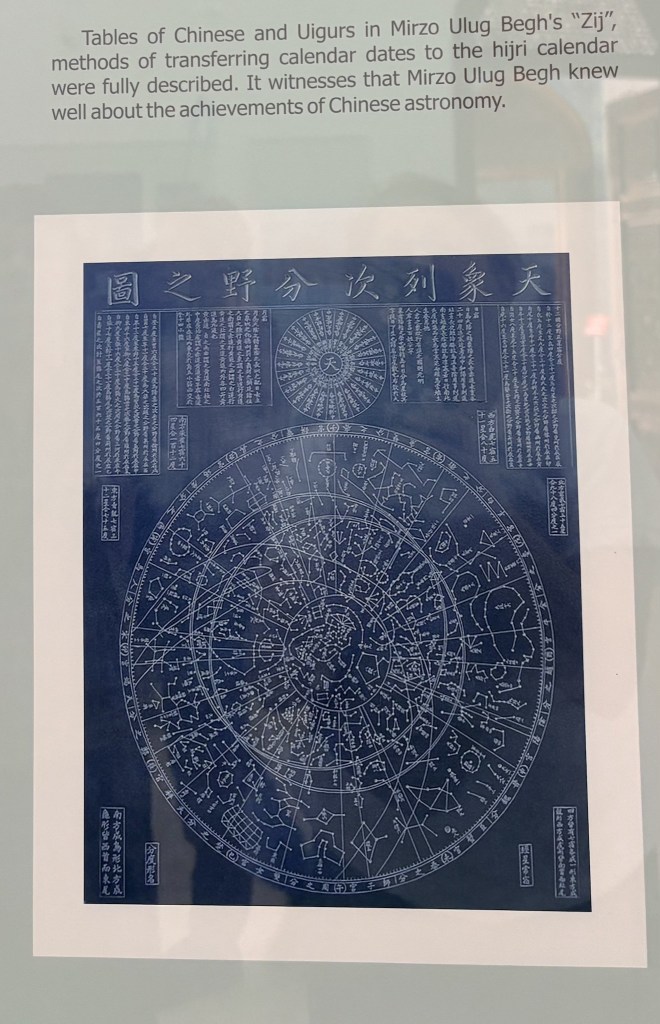
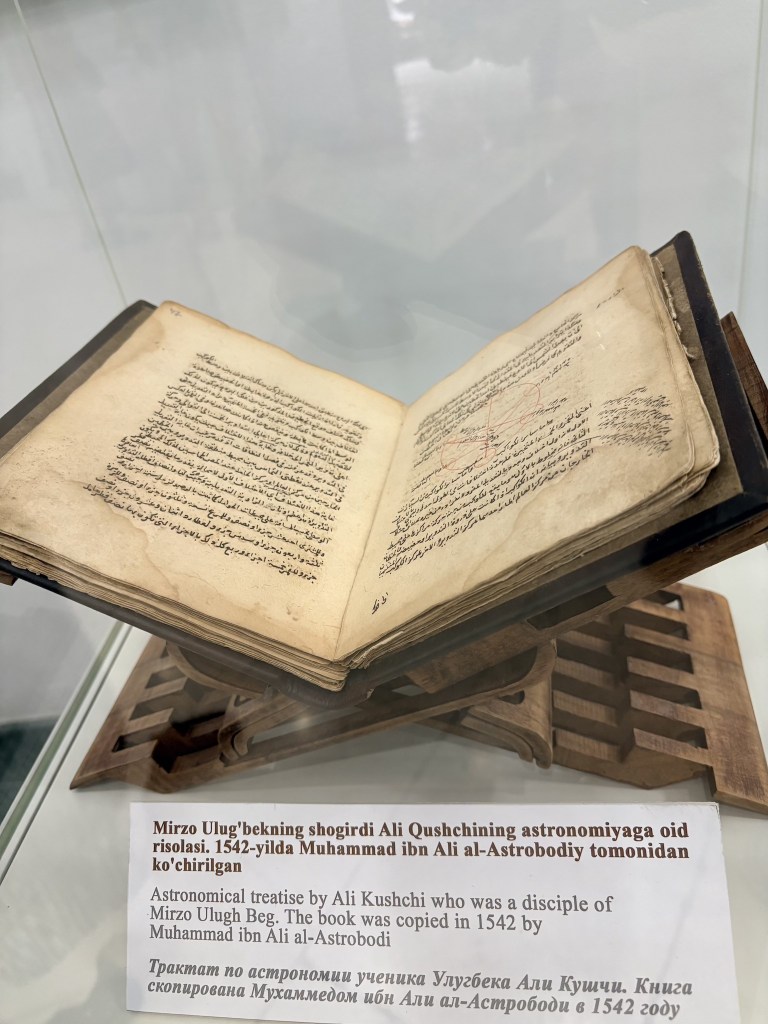
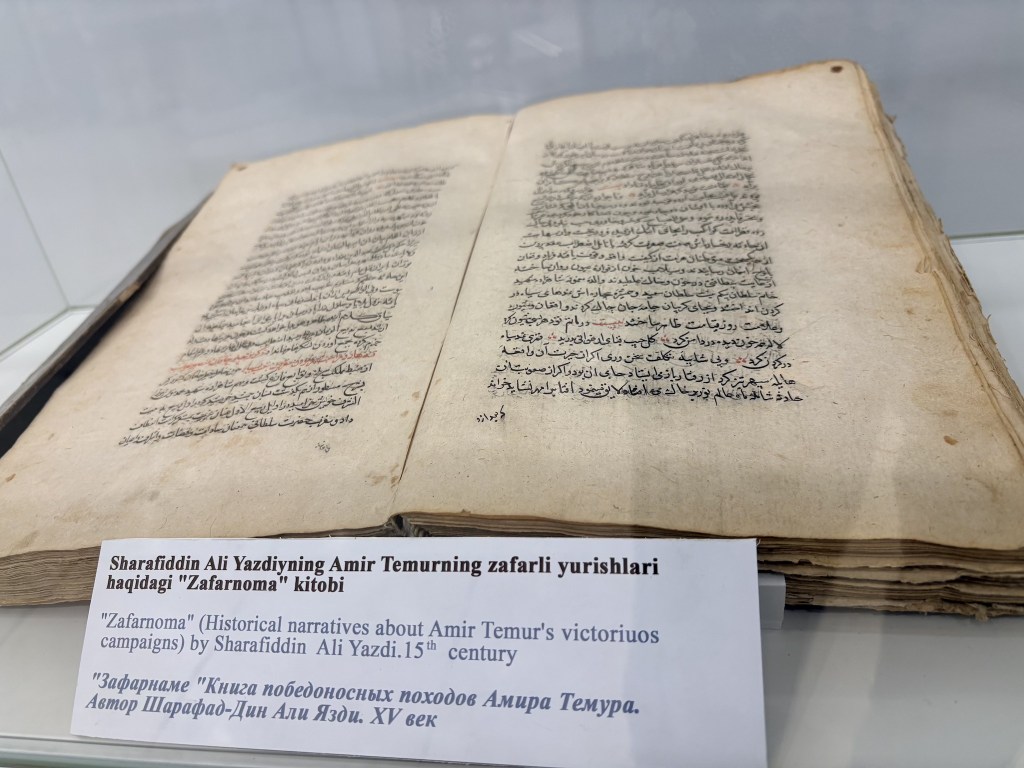
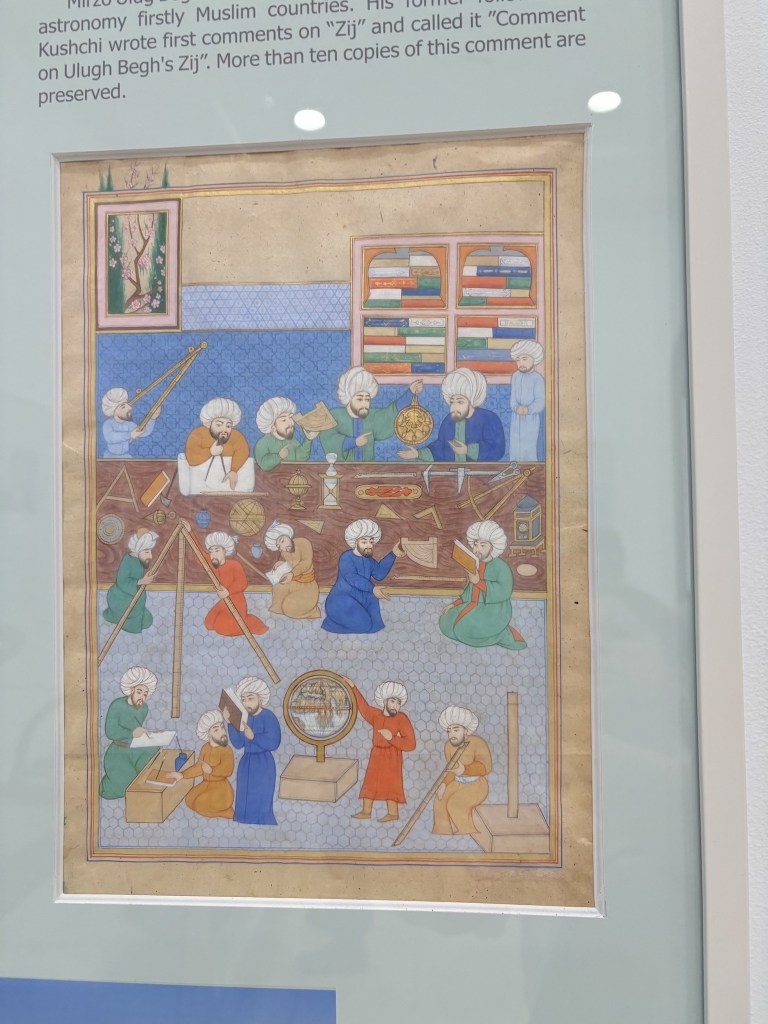
More to see!
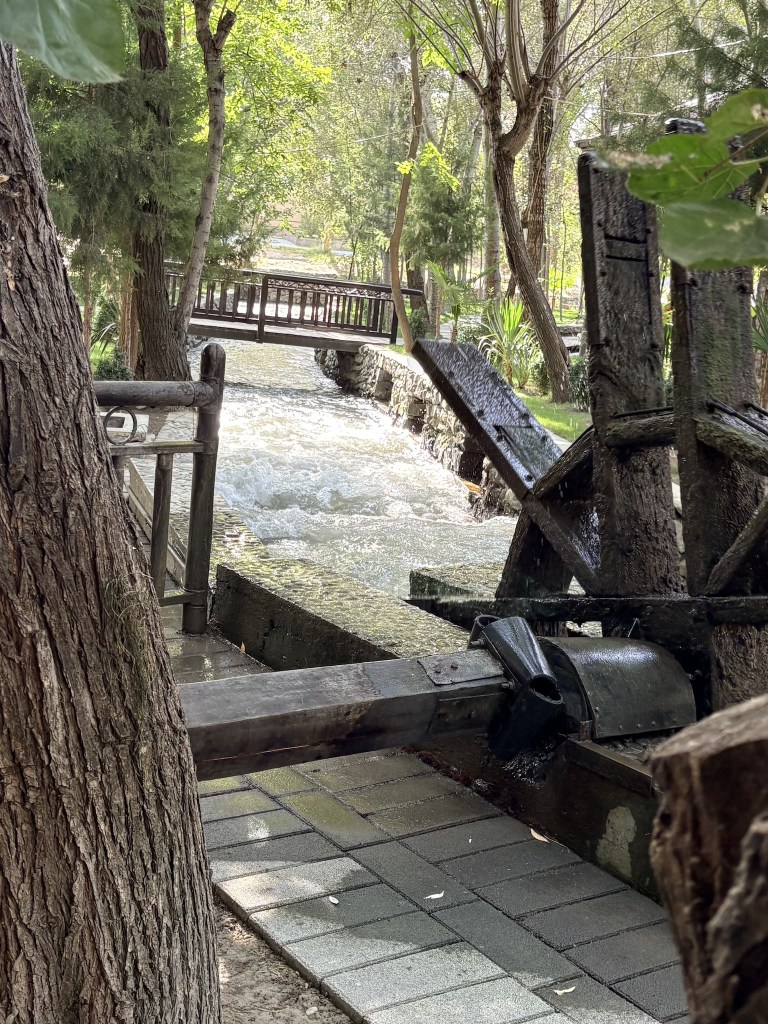
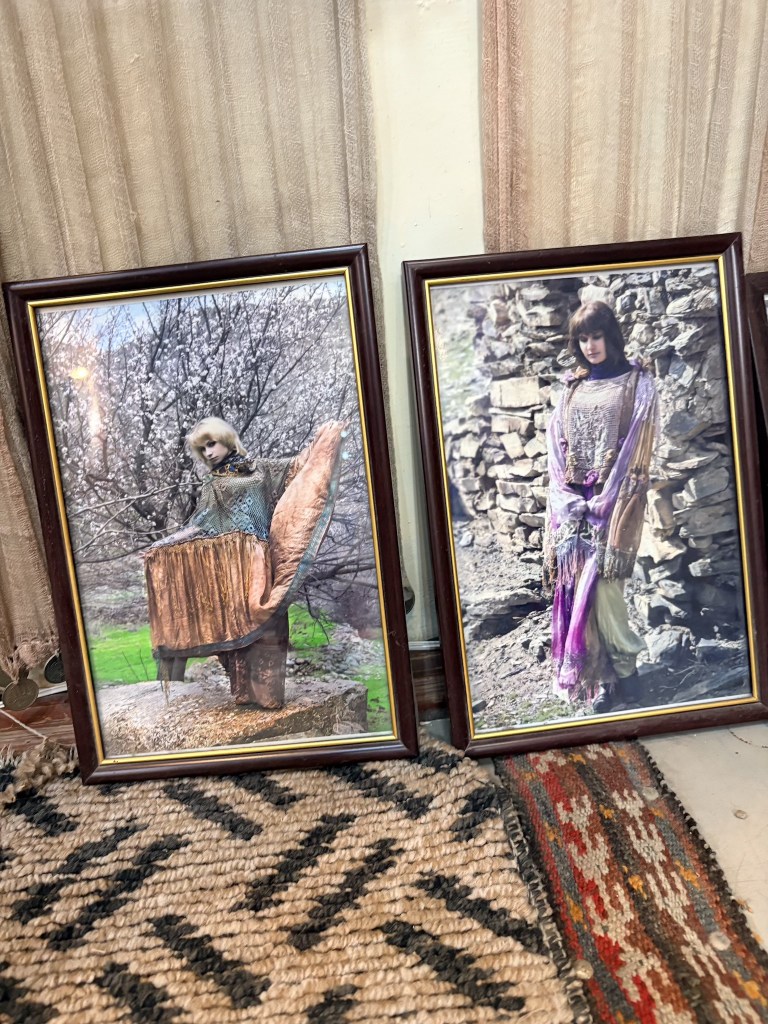
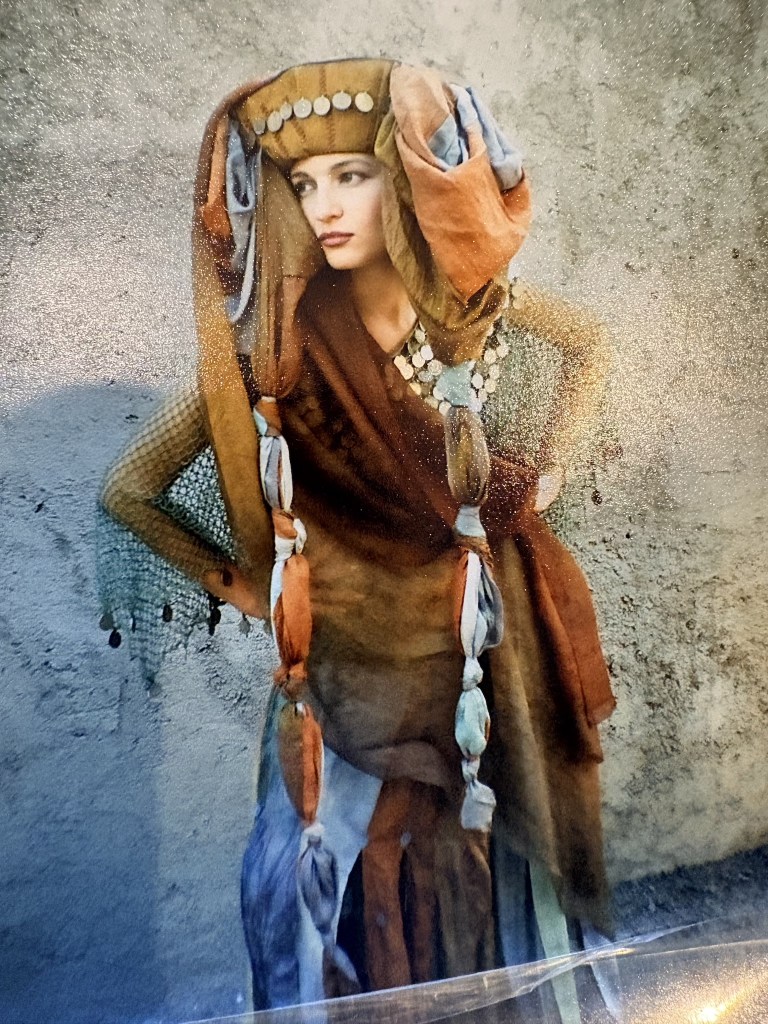
We were kept busy, visiting the Koni Ghil Tourism Village where there were many craft demonstrations, then the Romaneko family sewing and design school, and from there to the Afrosiab Museum of History.
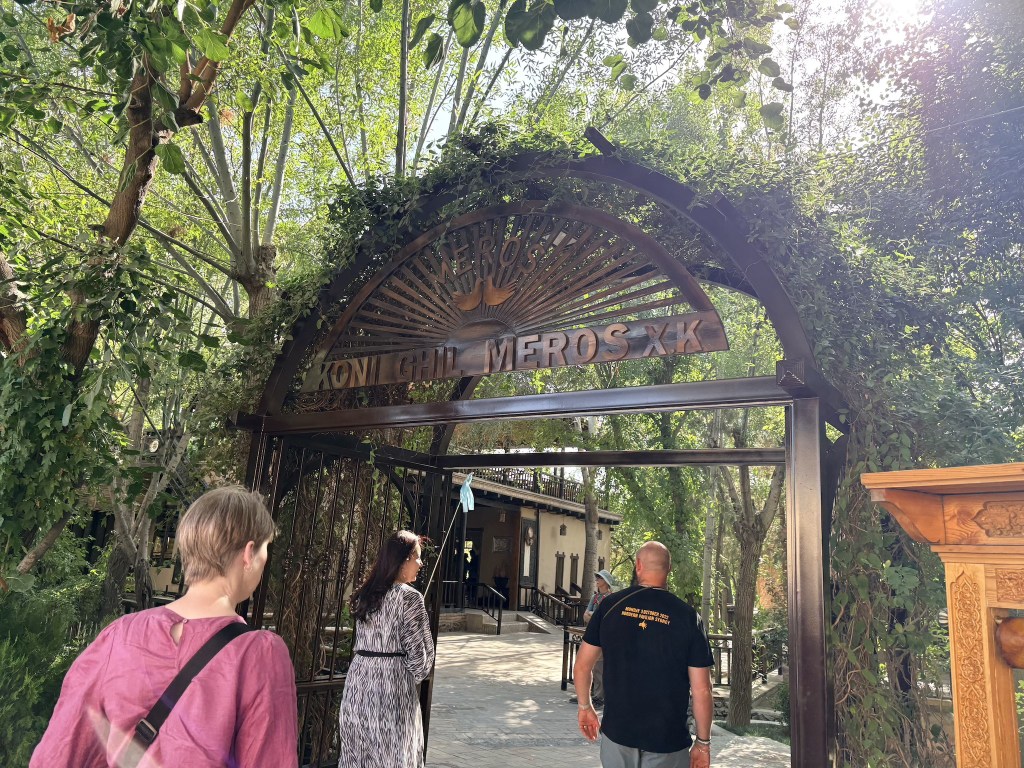
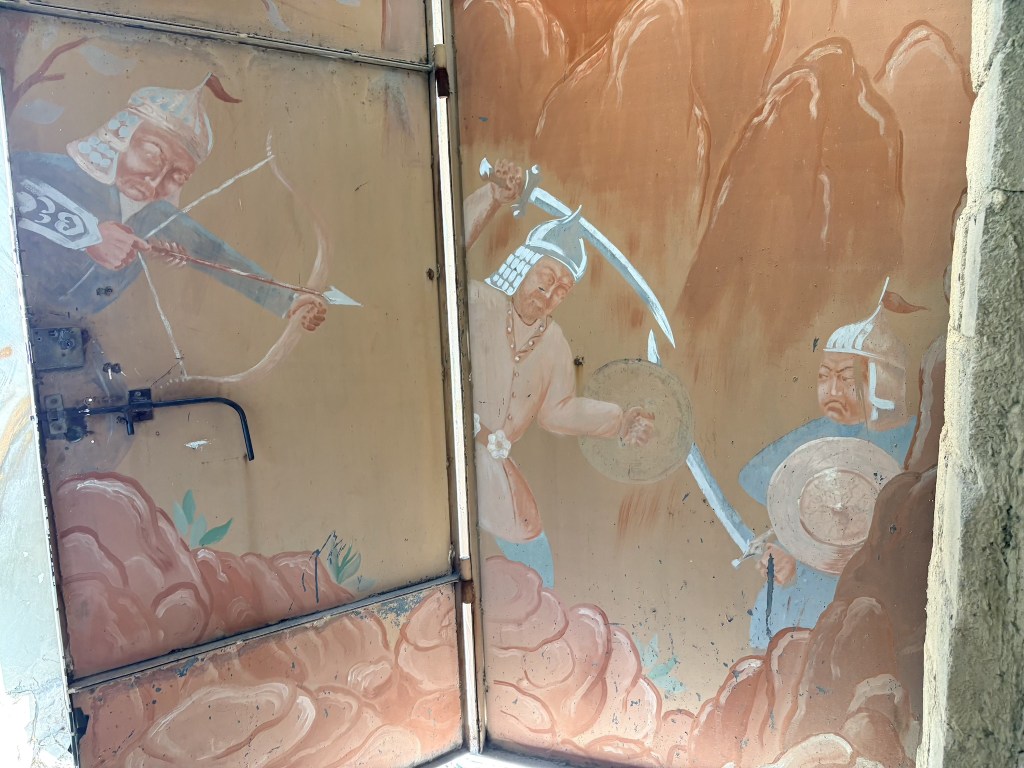
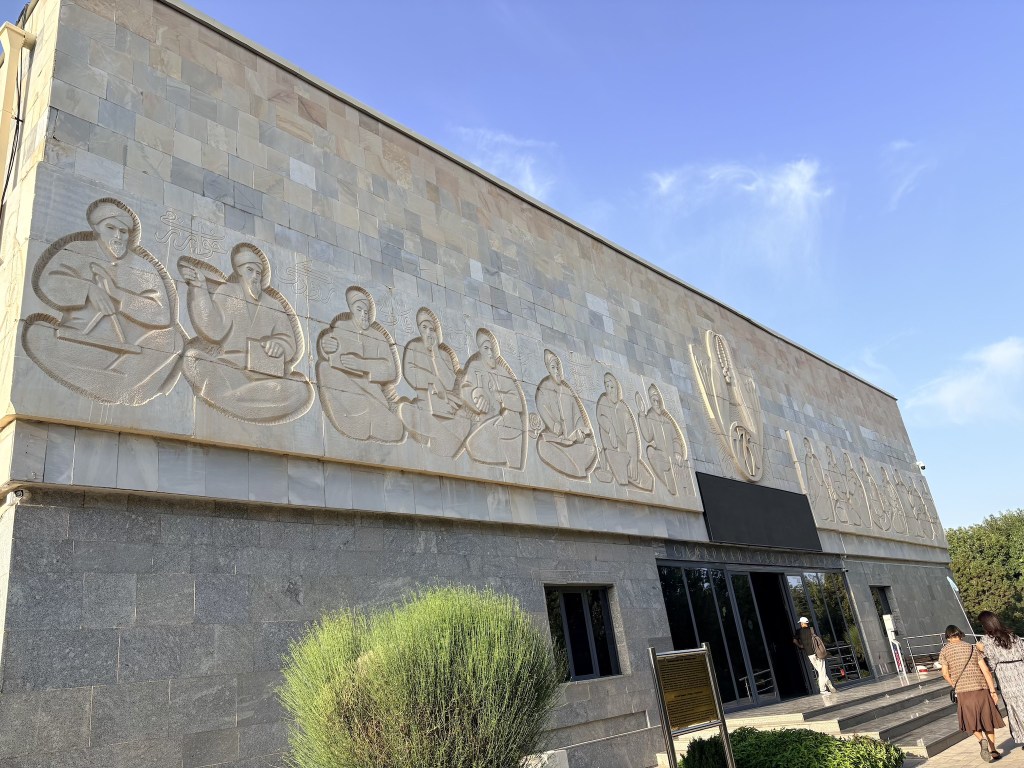
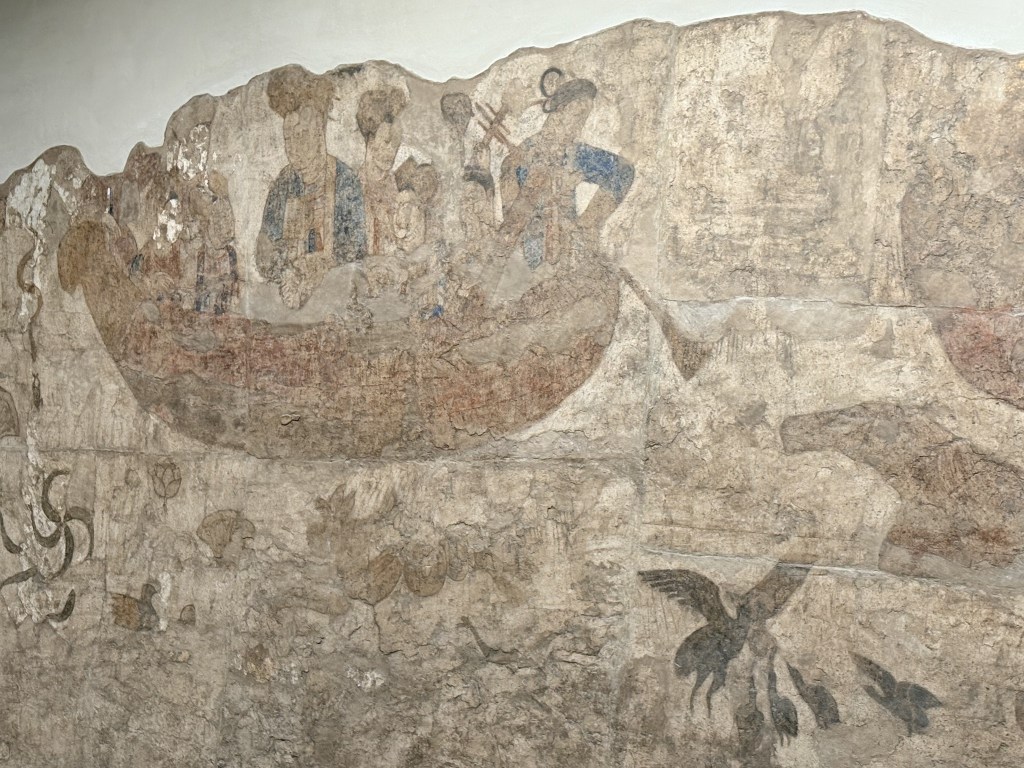
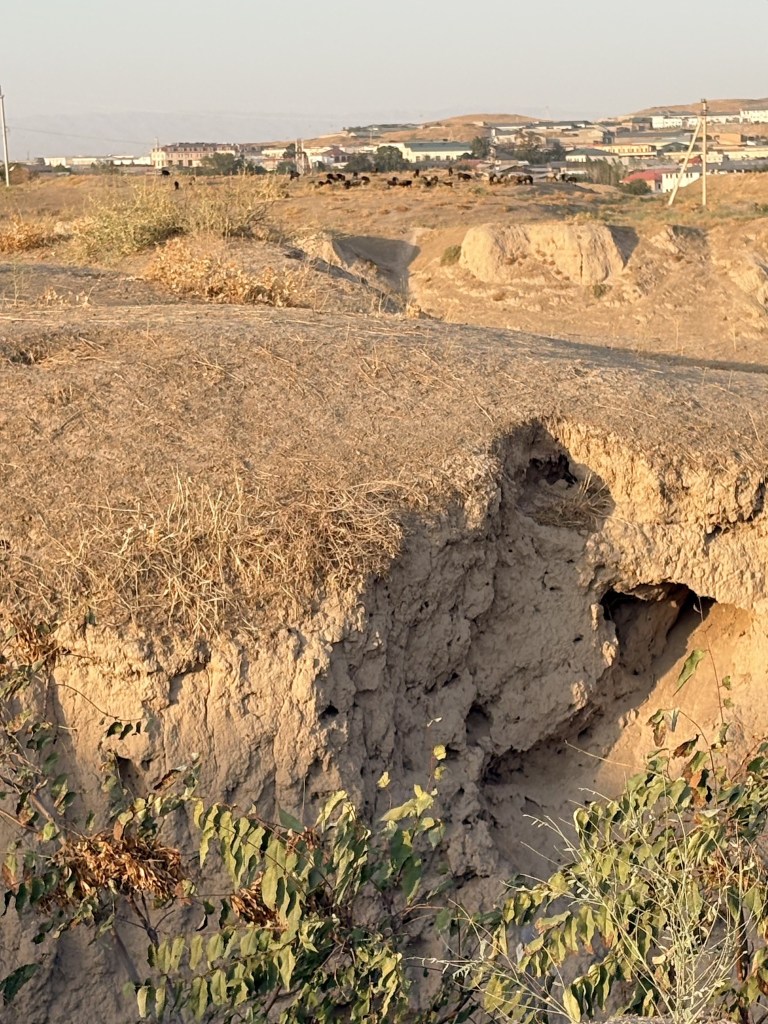
Took me a minute for it to sink in that “afro” is in no way connected to the continent of Africa. Afro-siyob is the word for “big hill.”
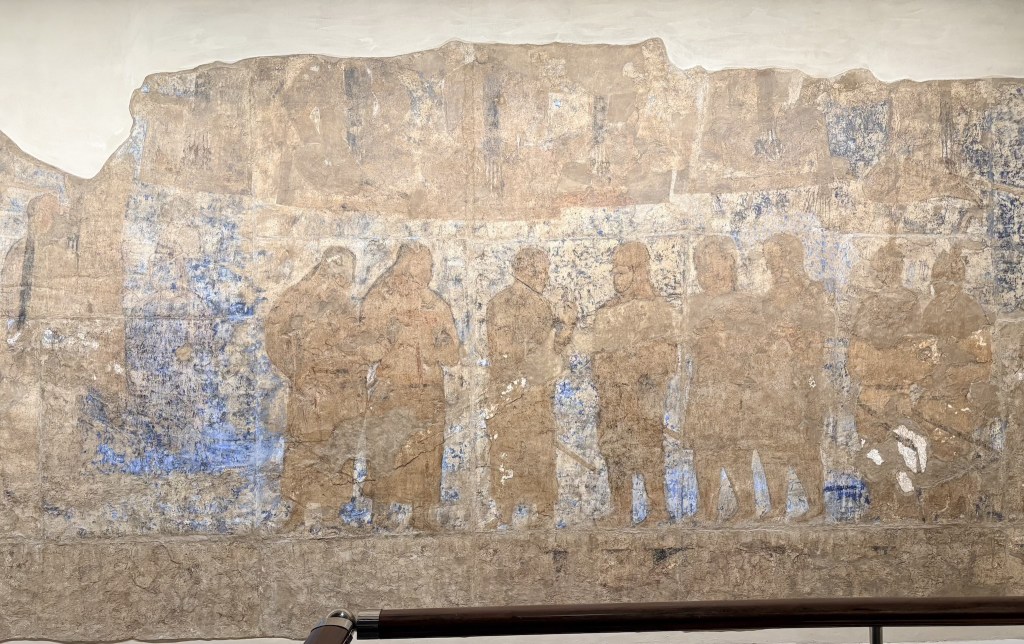
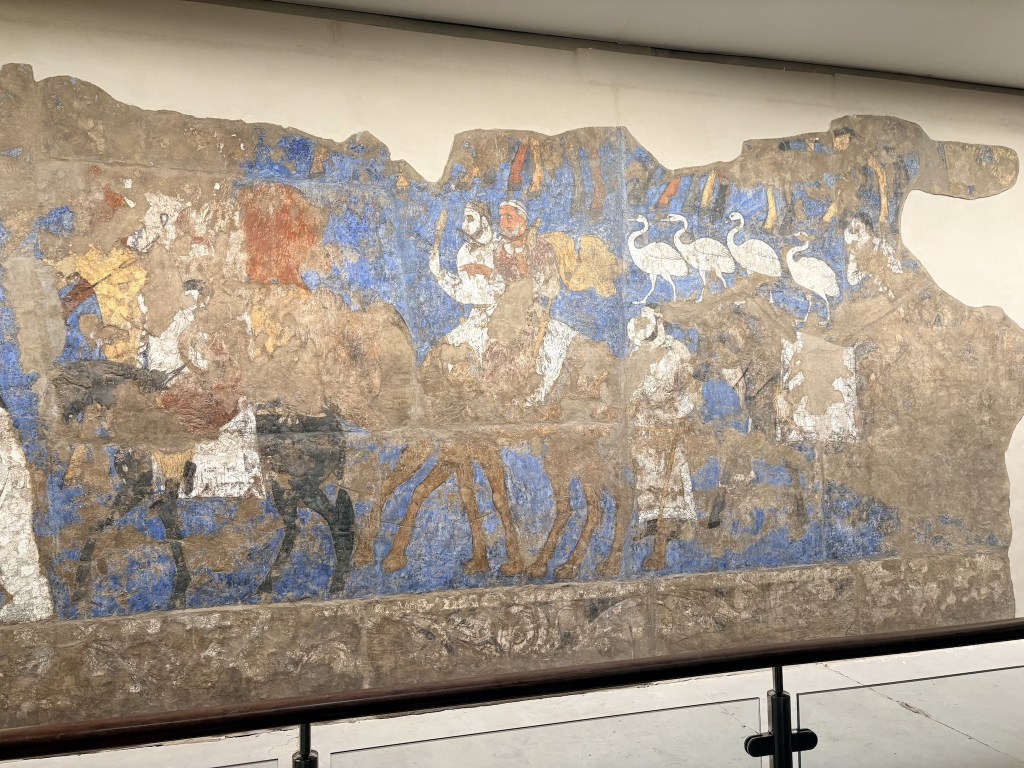
I loved the fresco. It was discovered in 1965 and dates to 600-700 AD. You can tell who the king/khan is because he is depicted larger than other people. Sogdians have a mustache and beard whereas Turks have mustache only.
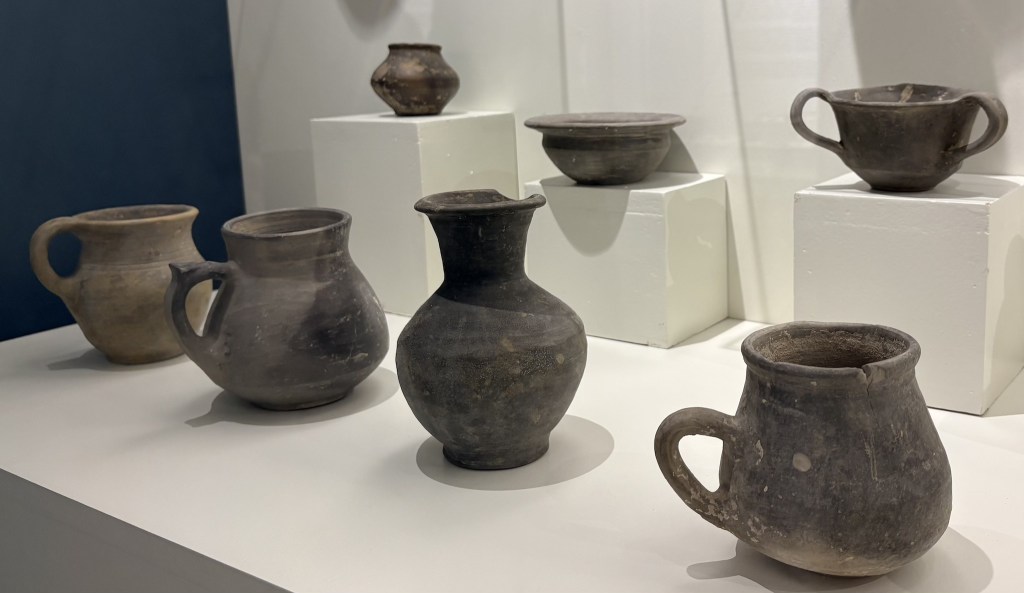
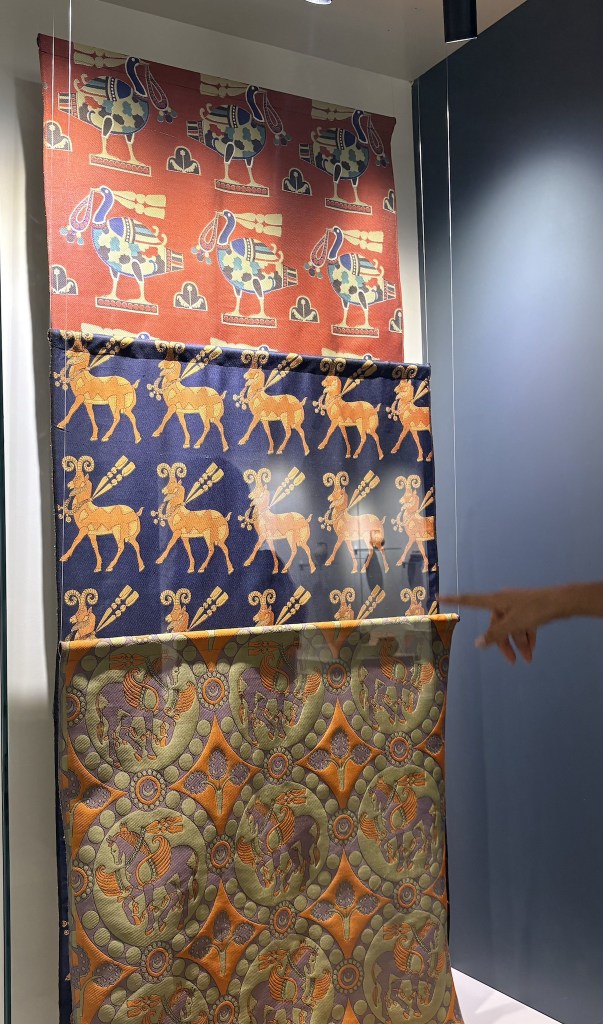
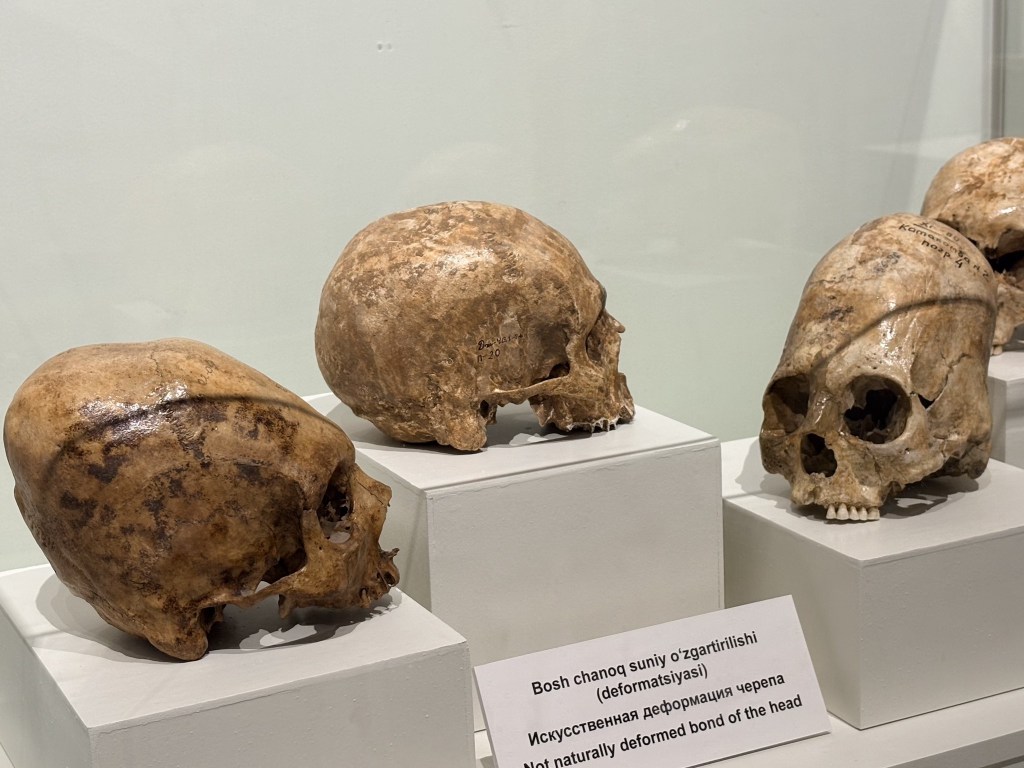
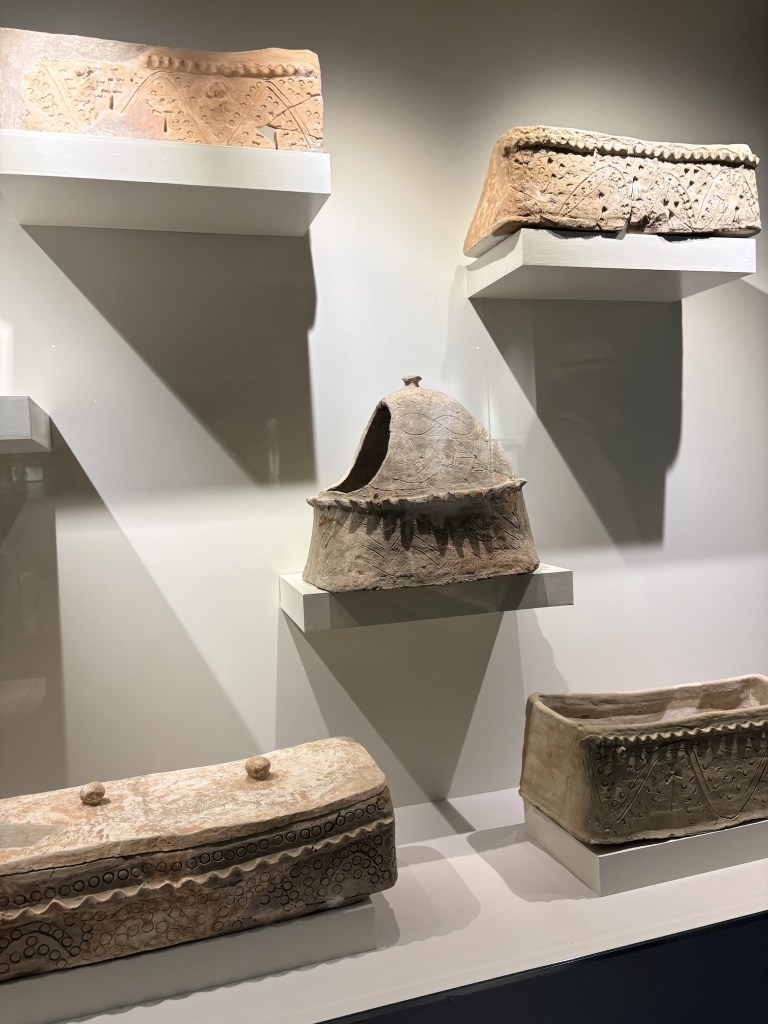
Not just consanguinity (eg cousin marriage) but what we would today consider incest was acceptable within Zoroastrian society. As you can see, they bound baby skulls with silk ties. The boxes are ossuaries to transport the bones of loved ones – after birds ate away the flesh when the deceased was initially placed on the mountaintop.
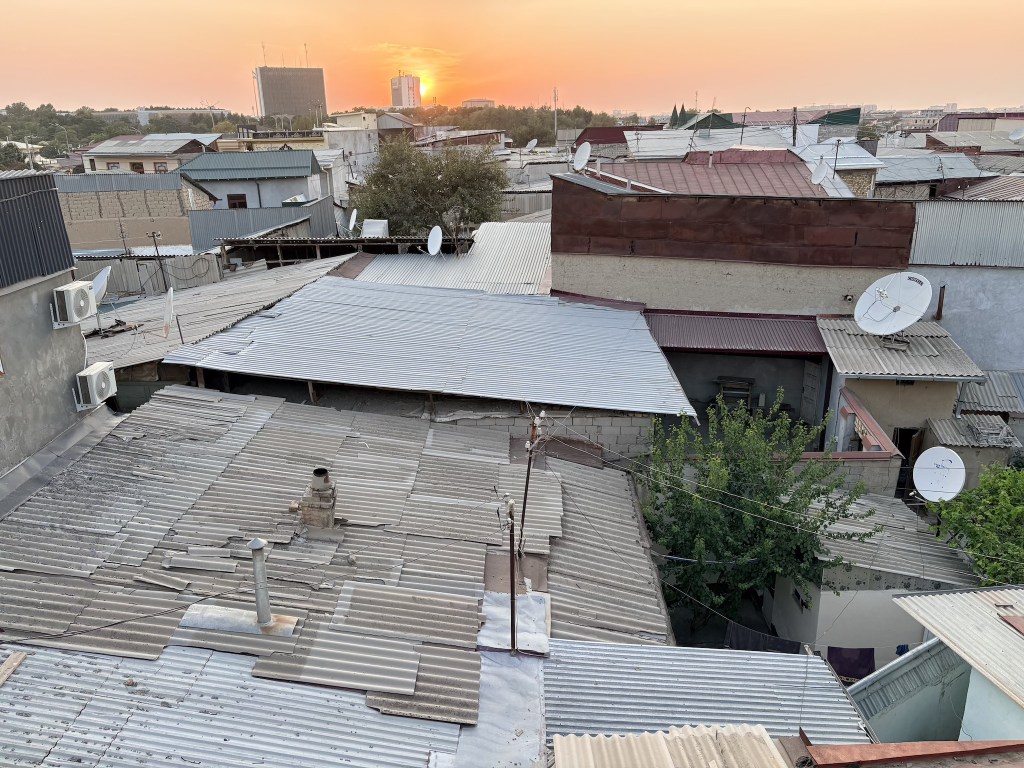
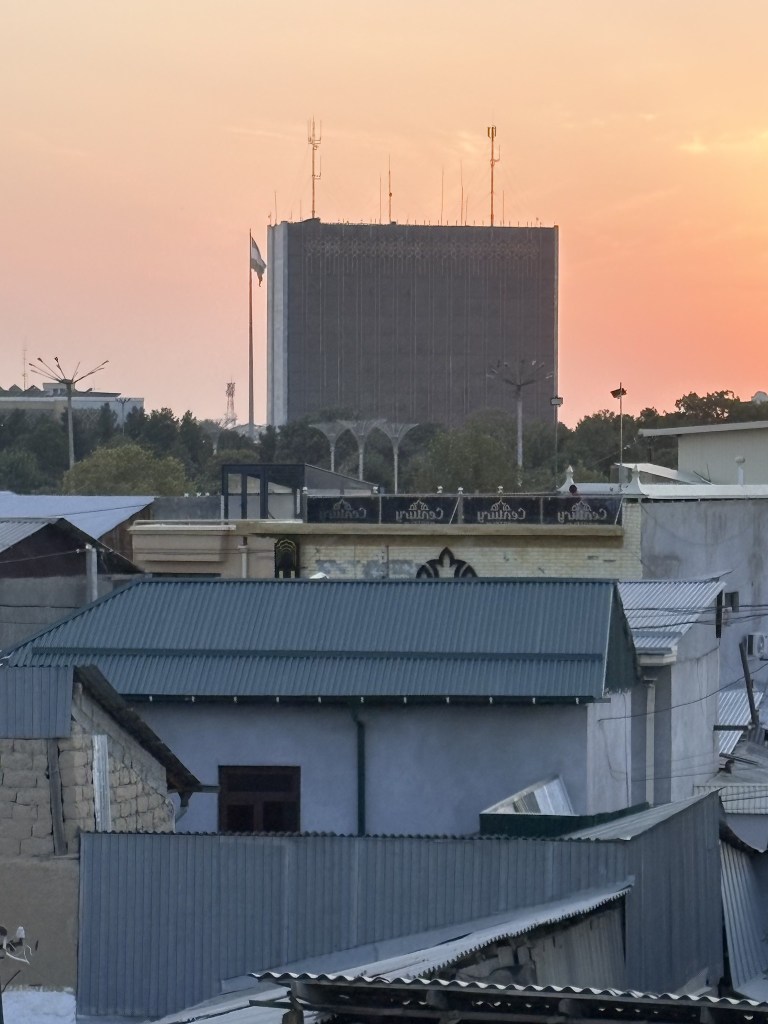
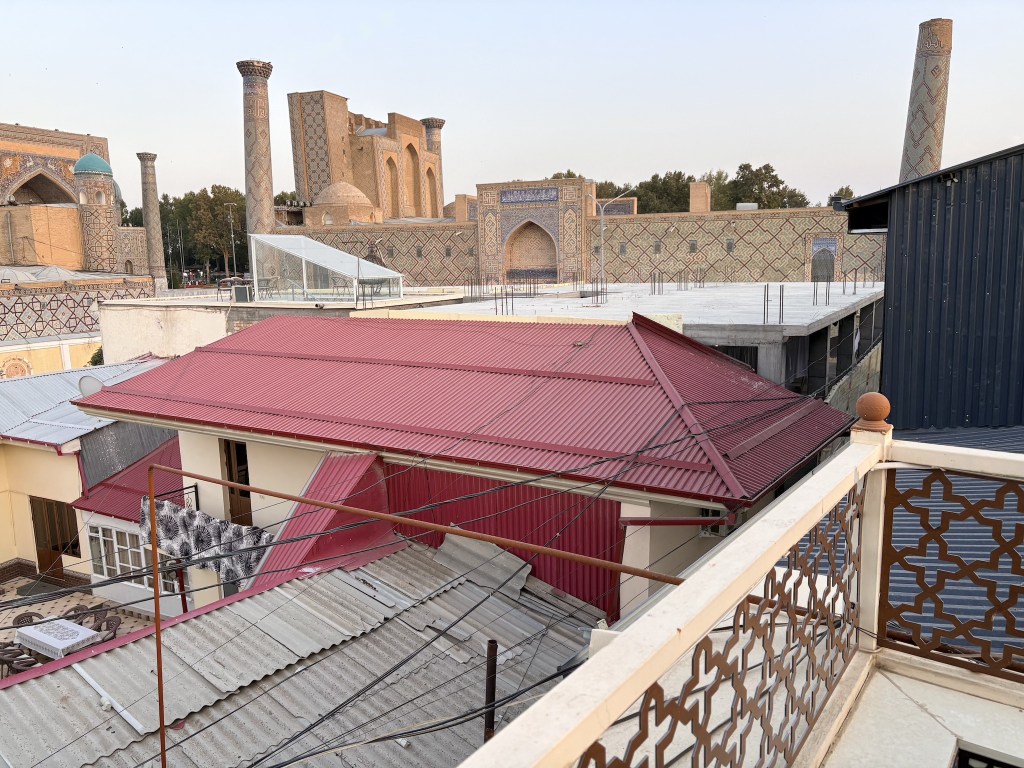
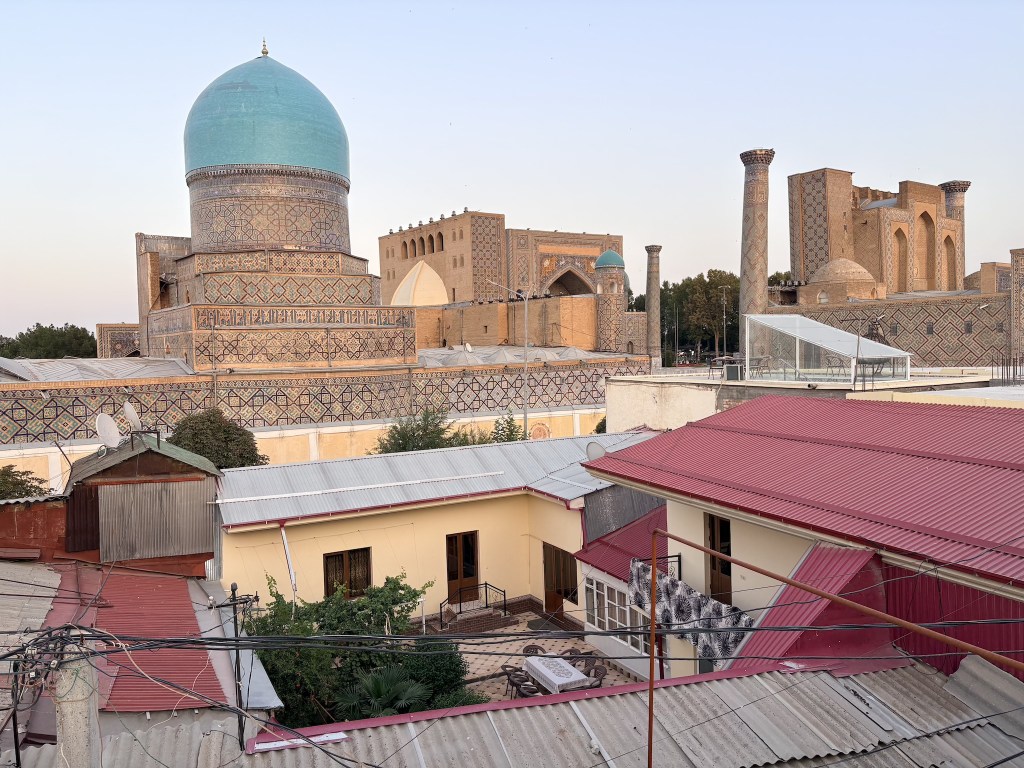
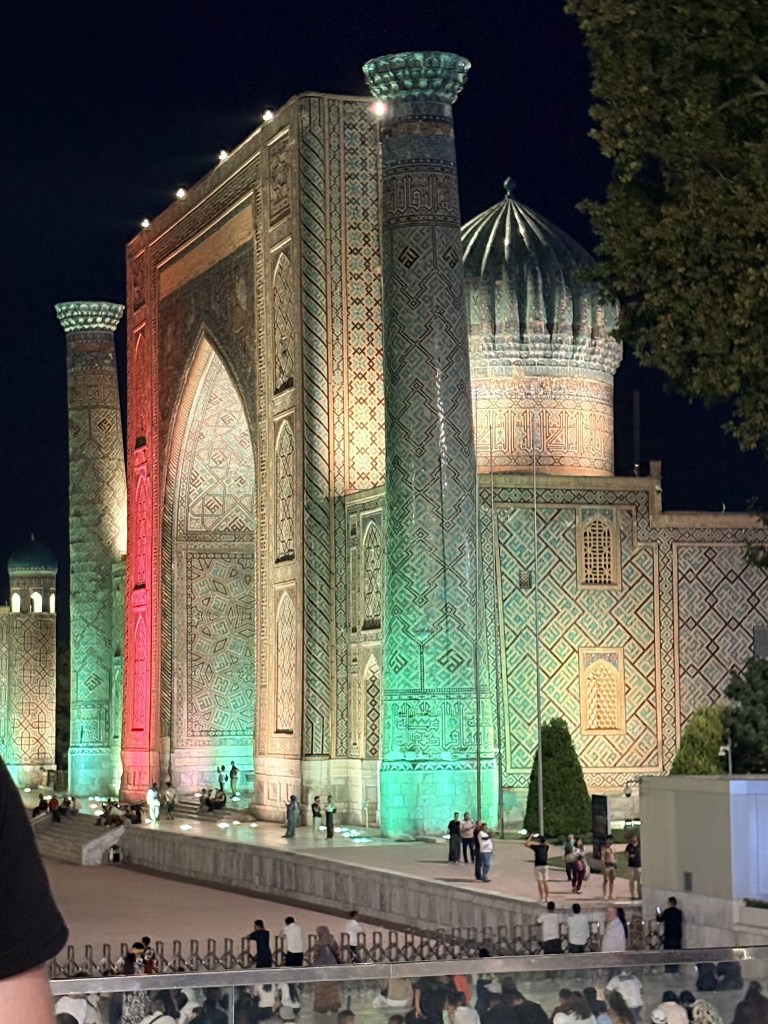
Our guide took us to the rooftop bar of Kamila Hotel to watch the sun set over Registan Square. Okay, to be fair, we were looking eastward, so I did take photos of the sun setting over ordinary buildings too.
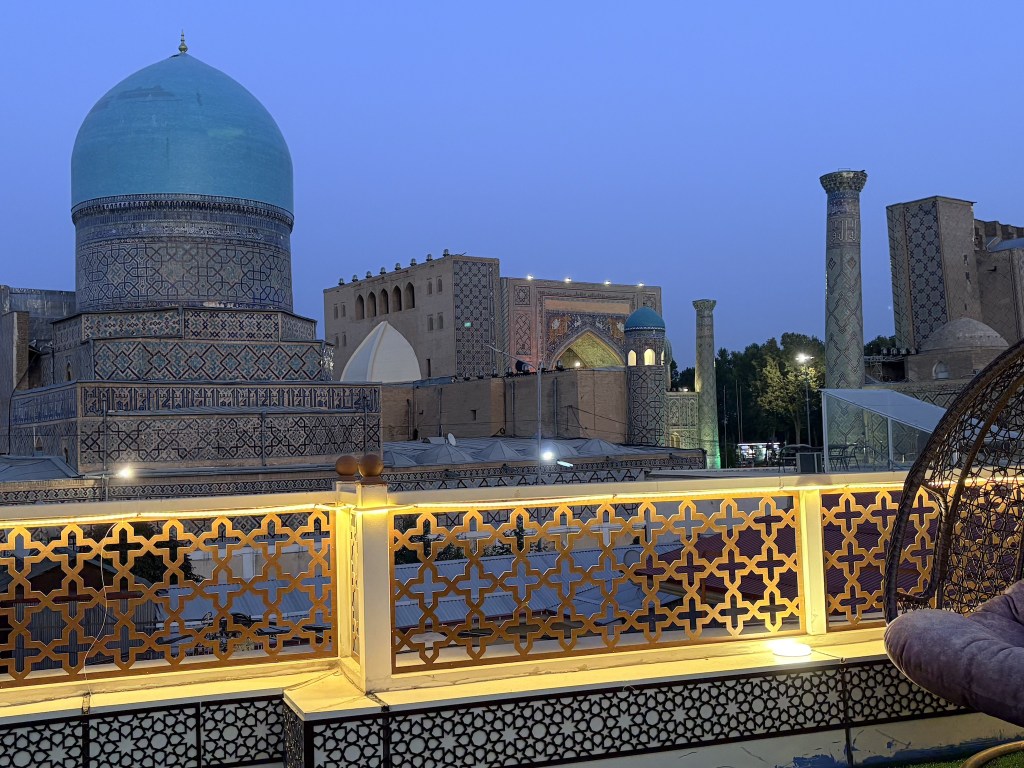
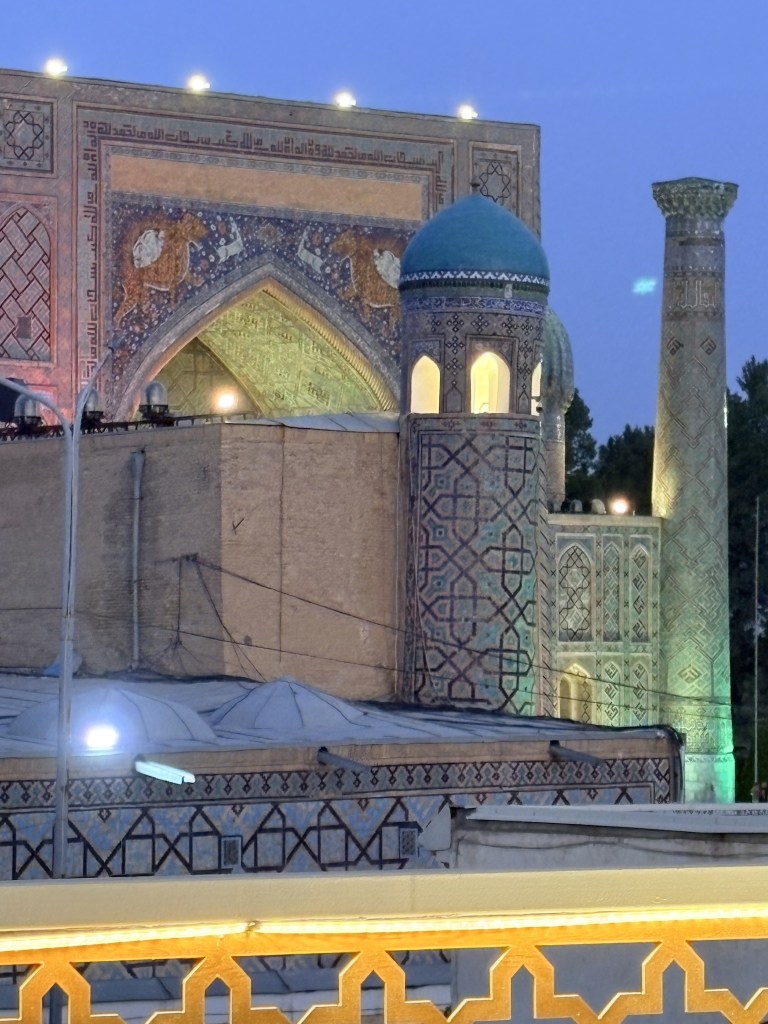
Then we made our driver stop out front so we could get a few more night shots.
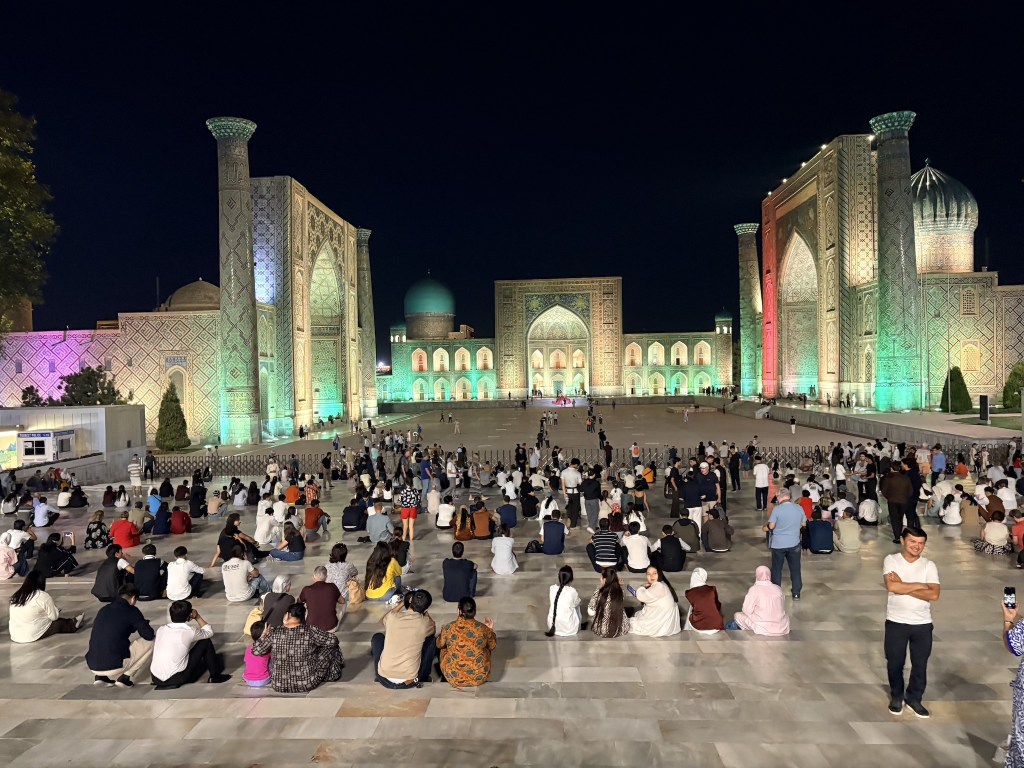
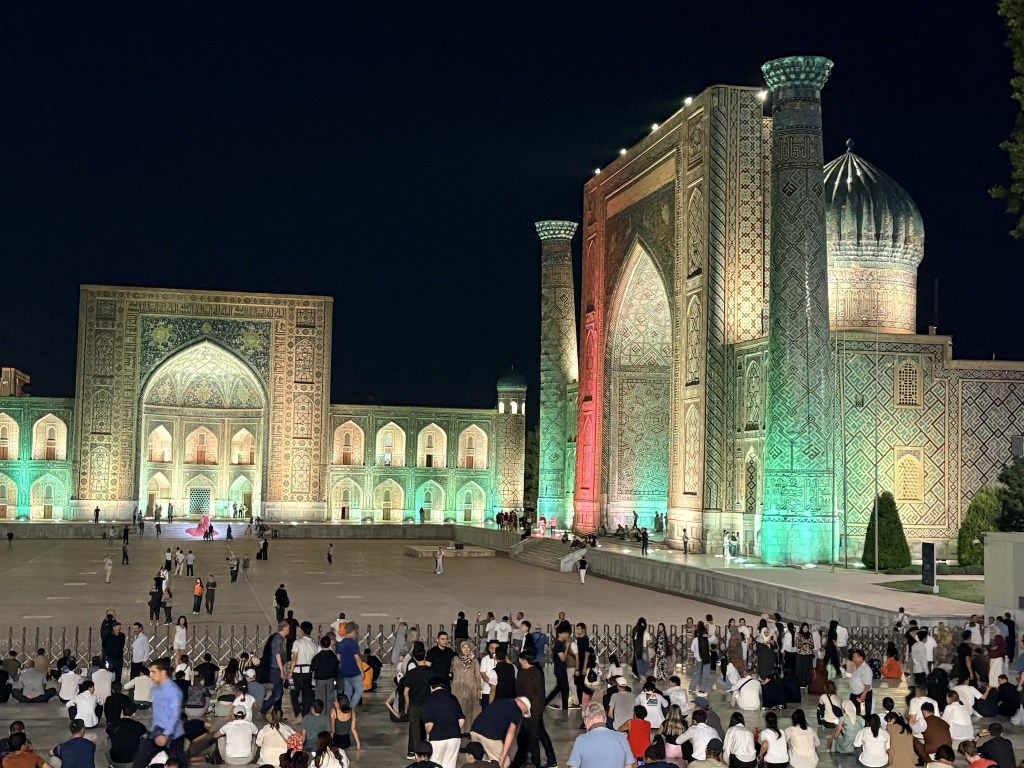
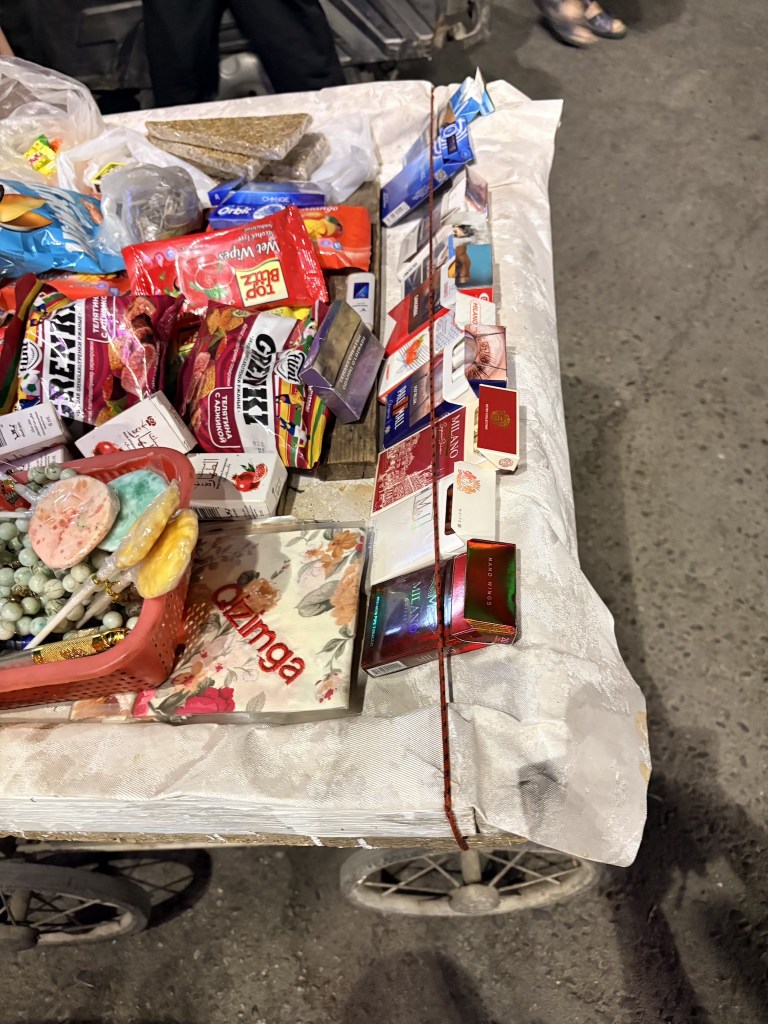
Ended the day with one of those translations that just makes you laugh.